Awake at Two With Your Jaw Tight — What the One-to-Three Window Says About the Liver
The classics say blood returns to the Liver when you lie down. This is the hour it is meant to be doing it.
Reviewed by Jimmy Yu, Certified Acupuncturist · Updated 2026-07-13
Quick answer
In the Chinese medicine body clock, one to three in the morning belongs to the Liver. Repeated waking in that window with a racing mind, irritability, a tight jaw or heat is read as constrained Liver qi rather than as a sleep problem, and the classical response is to move things during the day rather than at night.
The Two O’Clock Committee Meeting
People describe this one with a certain black humour. Asleep by eleven with no trouble, and then wide awake at two, running through a conversation from Tuesday that will not seem important at nine in the morning.
It has a texture that distinguishes it from ordinary bad sleep. Not drowsy-awake but alert-awake, often with a warm face, a tight jaw, and an irritability that has arrived before there is anything to be irritable about.
Then the return to sleep somewhere around four, and an alarm that goes off into a heavy, unrefreshed hour.
And the thing that makes it a pattern worth reading rather than a run of bad nights: it clusters. Bad weeks at work, a difficult stretch at home, and there it is again at ten past two.
How Chinese Medicine Reads It
Classical medicine divides the day into twelve two-hour periods and assigns each to an organ system. One to three in the morning is the Liver period, and eleven at night to one belongs to the Gallbladder, its paired system.
The Suwen chapter "Wu Zang Sheng Cheng" (《黄帝内经·素问·五脏生成》) gives the classical line about what should be happening then
人卧血归于肝
when a person lies down, the blood returns to the Liver. The night is when this system is meant to be receiving rather than working.
《黄帝内经·素问·五脏生成》
The Lingshu chapter "Ben Shen" (《灵枢·本神》) adds the other half
肝藏血,血舍魂
the Liver stores blood, and the blood houses the hun, the part of the mind associated with dreaming, imagination and the wandering of thought at night. When the blood is not settling there, the mind does not settle either.
《灵枢·本神》
The Liver in this system governs the smooth, even movement of qi. Its characteristic failure is constraint rather than weakness, and constrained qi that has nowhere to go through the day tends to surface when everything else quietens down.
That is why the two o’clock waking so reliably tracks with difficult weeks. Nothing has gone wrong with your sleep; the day has left a residue and this is the hour it shows up in.
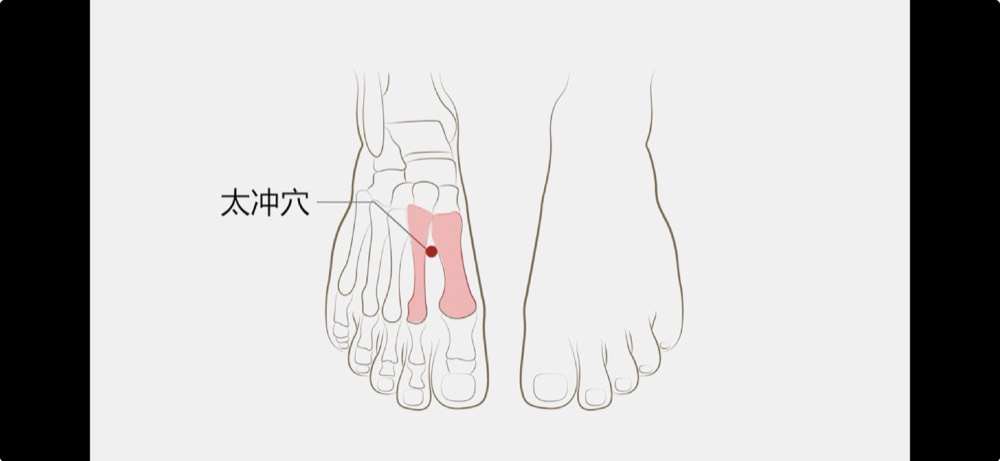
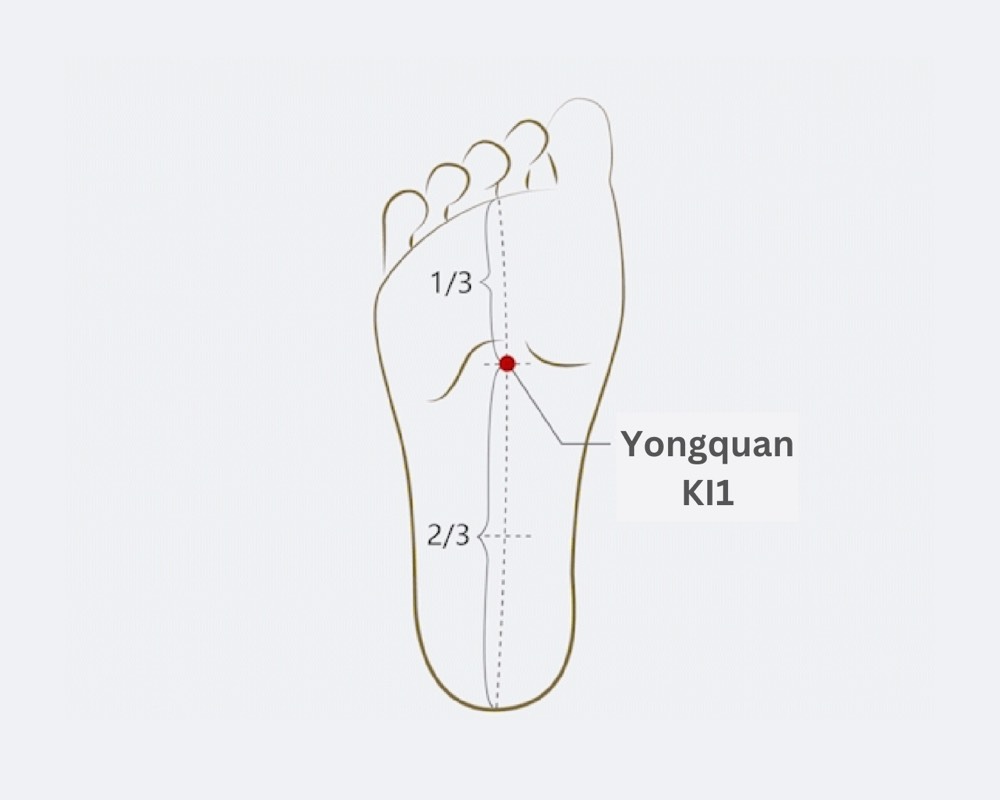
The points follow the channel. Taichong LR-3 ("Great Surge") sits on the top of the foot in the groove between the first and second bones. Xingjian LR-2 ("Moving Between") sits closer to the web of the toes and is the one classical practice favours when heat signs dominate — red eyes, a bitter taste on waking, headache at the temples. Yongquan KI-1 ("Bubbling Spring") sits in the hollow on the sole and is the classical anchor for drawing things back down.
What’s Real, What’s Myth
Myth: waking at two proves your liver is struggling. The body clock is a pointer, not a verdict, and the organ names in this system are patterns rather than anatomy. Alcohol, a late heavy meal, an overheated bedroom, a full bladder and disturbed breathing in sleep all produce this waking and are far more common. Rule those out first — alcohol in particular is the single most frequent cause and it wakes people at almost exactly this hour.
Myth: you should do the point work at two in the morning when you wake. Late afternoon and early evening work far better. Pressing a moving point in the middle of the night makes some people more alert, not less, and the aim is to leave less residue at bedtime rather than to intervene at two.
Myth: a nightcap helps you sleep. It gets people to sleep and then wakes them in the small hours as it clears. For anyone with this pattern it is the first thing I would change, and the results usually show within three or four nights.
Myth: if you wake up you should get up and be productive. For this pattern, opening a laptop at two entrenches it. Staying warm, in the dark, breathing out slowly and not checking the time works better — knowing it is ten past two is what turns waking into a bad night.
Real: the daytime is where this is changed. Brisk walking, in the late afternoon if you can, does more for the two o’clock waking than any evening ritual. It is the least appealing answer and the most consistent one.
Six Things You Can Do This Week
1. Cut the evening alcohol for two weeks and see what happens. This is the experiment worth running first, before anything else on this list. If the waking stops, you have your answer and can skip the rest.
2. Walk briskly for twenty to thirty minutes, four times a week, at a pace where your breathing changes. Late afternoon is ideal. Constrained qi needs somewhere to go, and this is where it goes.
3. Work Taichong LR-3 ("Great Surge") in the early evening, not at night. Slide your thumb along the groove between the first and second foot bones toward the toes, thirty slow strokes each foot, moderate pressure. If red eyes, a bitter taste on waking and temple headaches are prominent, work Xingjian LR-2 ("Moving Between") closer to the toe web instead.
4. Finish downward at Yongquan KI-1 ("Bubbling Spring"). Rub the hollow on each sole briskly for a minute at the end, or rub the soles together. This is the step that stops people feeling stirred up by the point work.
5. Finish eating three hours before bed, and keep the bedroom cool. A late heavy meal and a warm room are the two mechanical contributors people most often overlook, and both are easy to change.
6. Put the day down before you get into bed. Ten minutes without a screen, and if a particular conversation is going to come back at two, write it down before eleven. Unglamorous, and it works often enough that I keep suggesting it.
When to See a Doctor
Sleep apnoea is the most important thing to rule out and the most often missed. If you snore loudly, if anyone has noticed you stop breathing, if you wake gasping, or if you fall asleep easily during the day, ask your GP about a sleep study.
See your GP if waking has persisted more than a month, if you are exhausted during the day, or if you have been using alcohol or sleeping tablets to manage it. Insomnia responds well to proper approaches, and cognitive behavioural therapy for insomnia is more effective than most people realise.
Book an appointment for night sweats that soak the bedding, particularly with fevers or unintended weight loss; for palpitations that wake you; and for waking with breathlessness that eases when you sit up. These are not pattern questions.
And on mood, plainly: if the irritability has become anger you are uncomfortable with, if your mood has been low most days for a fortnight, or if you are drinking more to get through the week, please speak with your GP. Early-hours waking with low mood is a recognised pattern that responds well to proper support.
Which Constitution This Usually Points To
Waking at two with a racing mind, a tight jaw, irritability and a pattern that tracks with your workload points toward a qi stagnation constitution (气郁质). The order for this pattern is fixed in classical practice: move the qi during the day, and the nights follow.
If heat signs dominate — red eyes, a bitter taste on waking, temple headaches, vivid or agitated dreams — constraint has generated heat on top, and that is where Xingjian LR-2 belongs rather than Taichong LR-3.
If the waking comes instead with a dry mouth, warm palms and soles and light dreamy sleep, and sits closer to three or four, a yin-deficient constitution (阴虚质) is the more likely reading, and nourishing rather than moving is the direction.
The quick assessment on this site walks you through 29 gentle questions in about three minutes and gives you a daily plan matched to your type, including which evening habits actually suit you.
Keep Reading
Anxious or Qi Stagnant?
Tight chest, constant sighing, symptoms that move around — the pattern behind stress held in the body.
Read →The Foot Point Pressed Wrong
Why grinding into the point between your first two toes can leave you more wound up than before.
Read →Three Points for Desk Tension
A five-minute sequence for the chest tightness that arrives every afternoon around three.
Read →Stress Sits Under Your Ribs
Tight ribs, bloating that tracks with your workload, and a short fuse by six — one pattern, not three.
Read →The Jaw You Clench
Tight jaw, morning ache and grinding — and why the base of the skull matters more than the jaw.
Read →Cold Hands, Warm Body
When the warmth is stuck rather than missing — and the one clue that tells you which you have.
Read →Find Your Constitution
29 gentle questions, about three minutes, and you have your TCM body type — so this guidance actually fits you.
Take the quick quiz →Related
Learn about the Qi Stagnation constitution →Frequently Asked Questions
Does waking at two always mean the Liver?
No. The hour is a pointer worth noticing alongside everything else, not a conclusion. Alcohol, late heavy meals, a warm room, a full bladder and disturbed breathing in sleep all produce waking at this time and are more common explanations. Rule them out before reading anything into the clock.
What is the difference between waking at two and waking at four?
In the body clock, one to three belongs to the Liver and typically comes with a racing mind, irritability and a tight jaw. Three to five belongs to the Lung and comes more with flat sadness, a dry cough or a tight chest. The accompanying feeling is more informative than the exact minute.
Should I press points when I wake up?
Generally no. Point work for this pattern belongs to the late afternoon and early evening, so that there is less residue to surface at two. Pressing a moving point in the middle of the night leaves some people more alert. If you want something at two, slow breathing out is the better option.
Why does it happen in clusters?
Because in this framework it tracks with how much the day has left unmoved rather than with anything structural. Difficult weeks produce it, holidays usually do not, and that correlation is itself the most useful piece of information you have about your own pattern.
Last updated: 2026-07-13
This page offers general TCM educational perspectives, not medical advice or a diagnosis. For any health concern, please consult a licensed healthcare professional.