Are You Anxious, or Is Your Qi Stuck? — How the Body Holds On to Stress
Tight ribs, endless sighing and symptoms that move around are a recognised pattern, not a personality flaw.
Reviewed by Jimmy Yu, Certified Acupuncturist · Updated 2026-07-13
Quick answer
Qi stagnation is the Chinese medicine pattern behind a tight chest, frequent sighing, a lump-in-the-throat sensation and symptoms that move around and change with mood. Unlike a deficiency pattern, nothing is missing — the qi is present but not moving. That is why movement and release help more than rest and tonics.
The Sigh You Didn’t Notice You Were Doing
Someone will be telling me about their shoulder, and in five minutes they will sigh four times without hearing themselves do it. When I point it out, the usual reply is a laugh and then, quietly, "my partner says I do that all day."
The rest of the picture is remarkably consistent. A band of tightness under the ribs or across the chest. A feeling of something in the throat that comes and goes and never interferes with swallowing food. Cold fingers while the trunk stays perfectly warm.
And the symptoms move. This week it is the neck, next week the jaw, the week after the stomach — which is exactly why so many people have been told everything looks fine, and have started to wonder whether they are imagining it.
The most telling detail is usually the holiday. Three days away and much of it lifts; back at the desk on Tuesday and it is all there again by lunchtime.
How Chinese Medicine Reads It
The Huangdi Neijing describes the Liver in the Suwen chapter "Ling Lan Mi Dian Lun" (《黄帝内经·素问·灵兰秘典论》) as "the office of the general, from which strategy and deliberation emerge" (肝者,将军之官,谋虑出焉). The Liver in this system is not primarily an organ of digestion — it is the part of you that plans, pushes forward, and gets frustrated when blocked.
The same text, in "Ju Tong Lun" (《素问·举痛论》), lists what emotions do to qi with unusual precision: anger sends qi upward, fear sends it down, and — the line that matters here — "overthinking knots the qi" (思则气结). Knotted, not depleted. That distinction is the whole point.
This is why a qi stagnation picture feels so different from an exhaustion picture. Nothing is missing. The energy is there, it is simply not circulating, and stuck energy produces tightness, distension, and a restlessness that rest does not settle.
The classical instruction is in "Liu Yuan Zheng Ji Da Lun" (《素问·六元正纪大论》): 木郁达之 — when wood is constrained, let it through. Not press it down, not push harder. Let it move.
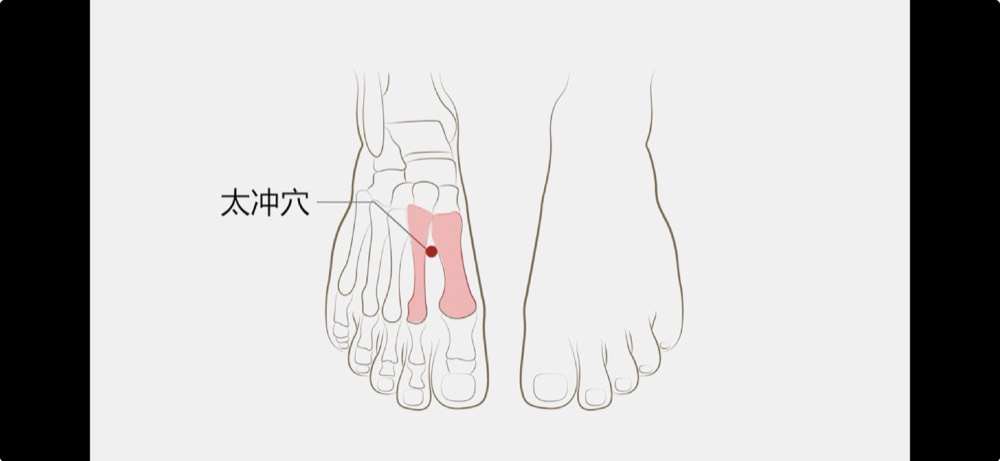
The points that follow from this are all about movement rather than building. Taichong LR-3 ("Great Surge") sits on the top of the foot in the groove between the first and second bones. Neiguan PC-6 ("Inner Pass") sits three finger-widths above the wrist crease between the two tendons. Danzhong CV-17 ("Chest Centre") sits on the midline, in the centre of the breastbone — on the bone itself, not on the breast tissue. Yanglingquan GB-34 ("Yang Mound Spring") sits in the dip just below and in front of the head of the fibula, below the outside of the knee.
One more clinical note. Qi stagnation left running for years tends to recruit company — heat, phlegm, or blood stasis layered on top. This is why it is worth taking seriously early, when it is still a single pattern and still simple.
What’s Real, What’s Myth
Myth: if the tests are normal, it is all in your head. What Chinese medicine offers here is a description of the body side of stress — the physical pattern that a normal scan does not capture. That said, this framing is not a substitute for mental health care, and I want to be clear about that: if anxiety is persistent, if you are having panic attacks, or if your mood is low most days, a GP or psychologist is the right person to see alongside anything described here.
Myth: gentle walking is enough for this pattern. It is not, and this is the correction I make most often. Stuck qi needs enough intensity to actually move — a brisk walk where your breathing changes and you could not comfortably hold a long conversation. Twenty minutes of strolling feels pleasant and shifts very little.
Myth: sighing is a bad habit worth stopping. Sighing is the body doing the one thing it knows how to do about a tight chest. I have never once asked someone to stop; I ask what would need to change for them to stop needing to.
Myth: rose tea is a mild daily drink anyone can have indefinitely. Rose is a qi-moving herb, and qi-moving herbs used continuously over months can deplete what they are moving and irritate the stomach. Classical formulas pair them with something protective for exactly this reason. Rose is also contraindicated in pregnancy and for anyone with heavy periods.
Real: the pattern responds faster than most. Of everything I see, qi stagnation is the one where people report a change within days rather than months — because you are not rebuilding anything, only getting it moving again.
Six Things You Can Do This Week
1. Walk briskly for twenty to thirty minutes, four times a week, at a pace that changes your breathing. This is the single most effective item on the list and the one most often done at half strength. If you finish able to sing, it was too slow.
2. Work Taichong LR-3 ("Great Surge") with direction rather than force. Find the groove between the first and second foot bones, above the web of the big toe, and slide your thumb along the groove toward the toes with moderate pressure, thirty slow strokes each foot. Sliding outward suits this pattern far better than digging into one spot.
3. Hold Neiguan PC-6 ("Inner Pass") when your chest tightens. Three finger-widths up from the wrist crease, between the two tendons, steady thumb pressure for a minute each side, breathing out slowly. This is the one to use at your desk.
4. Tap Danzhong CV-17 ("Chest Centre") lightly with your fingertips for a minute — on the midline of the breastbone, on the bone, level roughly with the fourth rib space. Light tapping, not pressing.
5. Make a pot of rose (玫瑰花), Buddha’s hand (佛手) and honey tea, two or three times a week rather than daily. The honey is not for flavour — it softens the drying edge of the qi-moving herbs and protects the stomach. Not for use in pregnancy, or if your periods are heavy.
6. Open the ribs before bed. Stand, clasp your hands overhead, and lean slowly to each side for three slow breaths, four times. Then sit for five minutes with no screen and let yourself sigh as often as you like. Most people find they stop needing to after the fourth or fifth.
When to See a Doctor
Chest tightness is the symptom where I would rather you over-check than under-check. Chest pain or pressure that spreads to the jaw, neck, back or arm, or comes with breathlessness, sweating or nausea, needs emergency care immediately — do not sit with it and do not press a point.
See your GP soon if the lump-in-the-throat feeling starts to interfere with swallowing, if it is constant rather than coming and going, if food sticks, if your voice changes and stays changed, or if there is unintended weight loss. The classical pattern is a sensation that never obstructs anything; anything that genuinely obstructs belongs to a doctor.
Book an appointment for palpitations that come with dizziness or fainting, for breathlessness that is new or worsening, or for reflux and upper abdominal pain that persists for weeks, particularly if you are over fifty.
And on the mental health side, plainly: if anxiety is interfering with your work, sleep or relationships, if you are having panic attacks, or if you have any thoughts of harming yourself, please speak to your GP or a mental health professional. That is not a step down from what is described here — it is the right care, and this article is not a substitute for it.
Which Constitution This Usually Points To
Symptoms that move around, tighten under pressure and ease on holiday point clearly toward a qi stagnation constitution (气郁质). The signature is the combination: sighing, rib or chest tightness, a throat sensation, and a mood that tracks with how blocked things feel.
Where it gets complicated is the overlays. Add irritability, red eyes and disturbed sleep and there is heat on top; add heaviness and a thick tongue coating and there is damp; add fixed, stabbing pain and dark clots and blood stasis has joined in. The order matters — classical practice moves the qi first, because once qi moves, much of the rest follows.
If you want to know which layer you are actually dealing with, the quick assessment on this site walks you through 29 gentle questions in about three minutes and gives you a daily plan matched to your type, including which teas and points suit you and which ones to leave alone.
Watch: Jimmy explains this in the clinic
Keep Reading
The Foot Point Pressed Wrong
Why grinding into the point between your first two toes can leave you more wound up than before.
Read →Three Points for Desk Tension
A five-minute sequence for the chest tightness that arrives every afternoon around three.
Read →Stress Sits Under Your Ribs
Tight ribs, bloating that tracks with your workload, and a short fuse by six — one pattern, not three.
Read →Awake at Two Again
A racing mind and a tight jaw at two in the morning — the hour the body clock assigns to the Liver.
Read →The Jaw You Clench
Tight jaw, morning ache and grinding — and why the base of the skull matters more than the jaw.
Read →Cold Hands, Warm Body
When the warmth is stuck rather than missing — and the one clue that tells you which you have.
Read →Find Your Constitution
29 gentle questions, about three minutes, and you have your TCM body type — so this guidance actually fits you.
Take the quick quiz →Related
Learn about the Qi Stagnation constitution →Frequently Asked Questions
What is the difference between qi stagnation and simple stress?
Stress is the input; qi stagnation is what the body does with it when it has nowhere to go. Two people under identical pressure can look completely different — one sleeps badly and loses weight, the other develops tight ribs, constant sighing and a throat sensation. The second picture is the pattern being described here.
Why do my hands go cold when my body is warm?
That combination is characteristic of stuck qi rather than low warmth. In a yang-deficient picture the whole person runs cold, including the low back and abdomen. In a stagnation picture the trunk stays warm while the extremities go cold, it worsens with stress, and it eases with movement rather than with a blanket.
Can I press Taichong LR-3 if I am pregnant?
Check with your own practitioner first. Taichong is traditionally cautioned in pregnancy, particularly when combined with Hegu LI-4, and that combination is best avoided entirely. During pregnancy the safer items on this list are the breathing, the rib stretch and gentle walking.
How soon should I notice a change?
Faster than most patterns. Many people notice looser ribs and less sighing within a week of proper brisk walking, and a clearer difference by three weeks. If six weeks of consistent effort changes nothing at all, that is worth reassessing — either the pattern is not stagnation, or something else is sitting underneath it.
Last updated: 2026-07-13
This page offers general TCM educational perspectives, not medical advice or a diagnosis. For any health concern, please consult a licensed healthcare professional.