You Clench Your Jaw All Day Without Noticing — The Channel That Runs From Your Jaw to the Base of Your Skull
The jaw is where you feel it. The base of the skull is usually where it lets go.
Reviewed by Jimmy Yu, Certified Acupuncturist · Updated 2026-07-13
Quick answer
A tight jaw, morning jaw ache and night-time grinding sit on channels that run from the jaw around the ear and into the base of the skull. Chinese medicine works Fengchi GB-20 ("Wind Pool") at the base of the skull alongside the jaw muscles themselves, because releasing only the jaw usually does not hold.
You Are Doing It Right Now
Check where your teeth are. If they are touching, that is the thing — the jaw is designed to rest with the teeth slightly apart, and a great many people spend the whole working day with them lightly clamped together.
The picture people describe is consistent. A jaw that aches in the morning, sometimes more on one side. A dull headache at the temples. Ears that feel full without being blocked. A partner who has mentioned the grinding.
It tracks with pressure. Deadline weeks are worse, holidays are better, and the muscle at the angle of the jaw is noticeably firmer than the surrounding tissue when you press it.
Most people work on the jaw itself — massage, heat, a night guard from the dentist. Those all have their place. What tends to be missed is that the muscles doing the clenching are the near end of something longer.
How Chinese Medicine Reads It
The Lingshu chapter "Jing Mai" (《灵枢·经脉》) traces the Gallbladder channel from the outer corner of the eye, around the ear, in a zigzag across the side of the skull, down the side of the neck and on down the outside of the body. The jaw, the temple and the base of the skull all sit on that line.
The Lingshu chapter "Jing Jin" (《灵枢·经筋》) — the sinew channels — describes the Stomach sinews reaching the cheek and jaw, and notes that when there is cold in the cheek sinews they tighten and pull at the mouth. That is a two-thousand-year-old description of one-sided jaw tightness.
The Gallbladder is paired with the Liver in this system, and the Liver governs the smooth movement of qi. Constraint is its characteristic failure, and constraint expresses itself as tightness along the sides of the body — the ribs, the outer legs, and the side of the head and jaw.
This is why the clenching tracks so precisely with pressure at work. It is not a habit that happens to worsen under stress; in this framework it is the same pattern as the tight ribs and the six o’clock irritability, showing up in the most muscular joint you own.
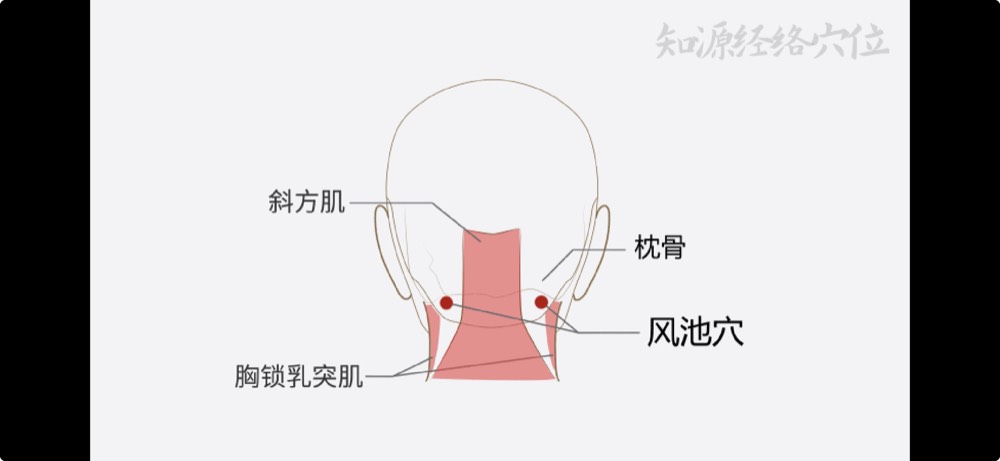
Fengchi GB-20 ("Wind Pool") sits in the two hollows at the base of the skull, either side of the neck muscles. Jiache ST-6 ("Jaw Chariot") sits on the muscle at the angle of the jaw — the one that bulges when you clench. Xiaguan ST-7 ("Below the Joint") sits in the hollow just in front of the ear that appears when your mouth is closed and disappears when you open it.
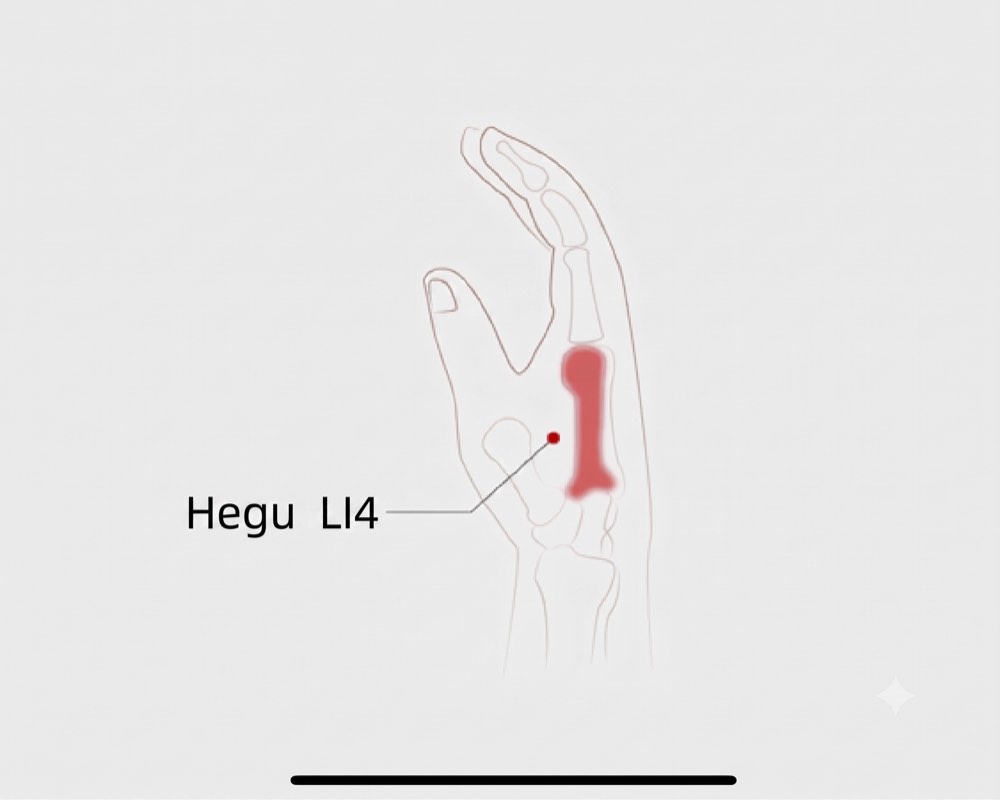
The four command points verse adds one more: 面口合谷收 — for the face and mouth, gather at Hegu. Hegu LI-4 ("Joining Valley") sits in the web between thumb and index finger, and is the classical distal point for anything in the face. Note that it is contraindicated in pregnancy.
What’s Real, What’s Myth
Myth: a night guard fixes it. A night guard protects your teeth, which matters and is worth having. It does not stop the clenching, and people are often disappointed to find the morning ache continues. Both things can be true: wear the guard, and work on why the jaw is gripping.
Myth: it is only a night-time problem. Most people who grind at night also clench during the day without noticing, and the daytime clenching is the part you can actually influence. Checking where your teeth are, several times a day, is the intervention that changes it.
Myth: massage the jaw harder and it will let go. The jaw muscles are strong and they respond badly to heavy pressure — people frequently make themselves more sore. Moderate pressure with small circles, and more attention to the base of the skull, works better.
Myth: cracking and clicking in the jaw means damage. Painless clicking is common and often unremarkable. Clicking with pain, a jaw that locks open or closed, or a marked change in how your teeth meet are different, and those need a dentist or doctor rather than a self-applied routine.
Real: the base of the skull is where most people feel the release. Of everything in this article, the two hollows at the base of the skull are what people report back about — and they are the part that gets ignored because the jaw is where it hurts.
Six Things You Can Do This Week
1. Check where your teeth are, six times a day. Set a repeating reminder for a week. Lips together, teeth slightly apart, tongue resting on the roof of the mouth. This is the single most effective item here and it costs nothing.
2. Work Fengchi GB-20 ("Wind Pool") for a minute. Both thumbs into the hollows at the base of the skull, either side of the neck muscles, pressing slightly upward and inward while letting your head tip back a little. Gentle — this is a sensitive area and does not need force.
3. Small circles on Jiache ST-6 ("Jaw Chariot"). Clench once to find the muscle at the angle of the jaw, then unclench and make small slow circles with your fingertips for a minute each side. Moderate pressure, and stop if it becomes sharp.
4. Hold Xiaguan ST-7 ("Below the Joint") gently for thirty seconds each side. It sits in the hollow just in front of the ear that closes when you open your mouth. Light pressure only, mouth relaxed.
5. Add Hegu LI-4 ("Joining Valley") for a minute each side, in the web between thumb and index finger. This is the classical distal point for the face. Not in pregnancy — skip it entirely if you are pregnant or might be.
6. Walk briskly for twenty minutes, four times a week. The jaw is the visible end of a constraint pattern, and moving the pattern does more over six weeks than any amount of local work. If your jaw is worse in deadline weeks, this is the part that addresses why.
When to See a Doctor or Dentist
See a dentist if you are grinding at night — worn or chipped teeth, sensitivity and cracked fillings are the consequences worth preventing, and a guard is straightforward to have made. Also for a marked change in how your teeth meet, or for tooth pain that is constant.
See your doctor or dentist promptly for a jaw that locks open or closed, for clicking that comes with pain, for jaw pain that is severe or worsening, for swelling in front of the ear, or for difficulty opening your mouth more than a couple of finger-widths.
Jaw pain that comes on with exertion, or comes with chest discomfort, breathlessness, sweating or nausea, needs emergency care immediately. Jaw pain can be a presentation of a cardiac event, and it is more common in women and in older adults. Do not massage it and wait.
Book an appointment for one-sided jaw pain with tenderness at the temple, particularly over fifty and especially with headache or any visual change — that needs urgent assessment. And for new numbness in the face, or headaches that are severe, sudden or different from your usual pattern.
Which Constitution This Usually Points To
Jaw tightness that worsens under pressure and eases on holiday, alongside tight ribs, sighing and a short fuse in the evening, points toward a qi stagnation constitution (气郁质). The jaw is the local expression; the pattern is systemic, which is why local work alone rarely holds.
If it comes with red eyes, a bitter taste on waking, temple headaches and disturbed sleep, constraint has generated heat on top, and that usually means the evening alcohol and the late nights are contributing more than they seem to.
If the jaw and neck are stiff and cold rather than tight, and worse in cold wind, that is a different reading and warmth matters more than movement.
The quick assessment on this site walks you through 29 gentle questions in about three minutes and gives you a daily plan matched to your type.
Keep Reading
Anxious or Qi Stagnant?
Tight chest, constant sighing, symptoms that move around — the pattern behind stress held in the body.
Read →The Foot Point Pressed Wrong
Why grinding into the point between your first two toes can leave you more wound up than before.
Read →Three Points for Desk Tension
A five-minute sequence for the chest tightness that arrives every afternoon around three.
Read →Stress Sits Under Your Ribs
Tight ribs, bloating that tracks with your workload, and a short fuse by six — one pattern, not three.
Read →Awake at Two Again
A racing mind and a tight jaw at two in the morning — the hour the body clock assigns to the Liver.
Read →Cold Hands, Warm Body
When the warmth is stuck rather than missing — and the one clue that tells you which you have.
Read →Find Your Constitution
29 gentle questions, about three minutes, and you have your TCM body type — so this guidance actually fits you.
Take the quick quiz →Related
Learn about the Qi Stagnation constitution →Frequently Asked Questions
Where should my tongue and teeth sit at rest?
Lips together, teeth slightly apart, tongue resting lightly on the roof of the mouth just behind the front teeth. Most people find their teeth are touching when they check. Six checks a day for a week is usually enough to start noticing it on your own.
Does a night guard help or not?
It protects your teeth from the consequences of grinding, which is worth doing, and your dentist is the right person for it. It does not stop the clenching itself, so the morning ache often continues. Wearing one and working on the pattern are complementary, not alternatives.
Why does the base of my skull feel worse than my jaw?
Because the muscles that hold a clenched jaw run up into the base of the skull, and the channel described in the classics runs the same way. Many people find that once the base of the skull releases, the jaw follows — which is why the routine here starts there.
Can I press Hegu LI-4 if I am pregnant?
No. Hegu LI-4 is contraindicated in pregnancy, and the combination with Taichong LR-3 is avoided entirely. If you are pregnant or might be, skip it and use the base of the skull, the jaw muscles and the teeth-apart check instead.
Last updated: 2026-07-13
This page offers general TCM educational perspectives, not medical advice or a diagnosis. For any health concern, please consult a licensed healthcare professional.