The Foot Point Everyone Presses Too Hard — Why It Can Leave You More Irritable, Not Less
The most-shared point on the internet, and the technique almost everyone gets backwards.
Reviewed by Jimmy Yu, Certified Acupuncturist · Updated 2026-07-13
Quick answer
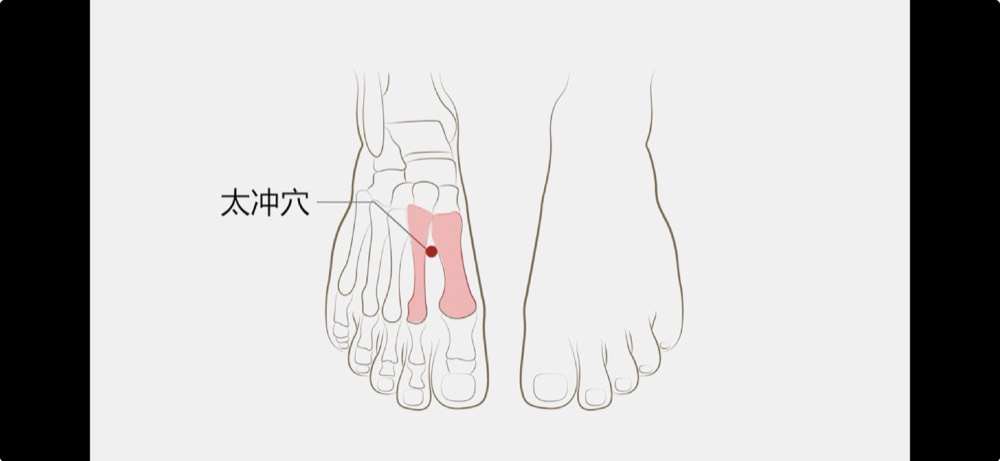
Taichong LR-3 ("Great Surge") sits in the groove between the first and second foot bones. Digging into it hard often leaves people wired and irritable rather than settled. Classical practice works this point with direction — sliding along the groove toward the toes with moderate pressure — rather than with force in one spot.
The Bruise on the Top of the Foot
People show me this one with a certain pride. They have found the point on the top of the foot, they press it every night, and it hurts a great deal — which they have been told means it is working.
What they report afterwards is more mixed than the videos suggest. Some feel calmer. A surprising number feel wound up, warm in the face, and less settled than before, and a few have a genuinely tender bruise between the bones by the end of the week.
When I ask how they are doing it, the answer is almost always the same: thumb pressed straight down into one spot, as hard as they can stand, for as long as they can stand it.
That is the part worth changing. This point is not a button, and the difference between helpful and counterproductive here is mostly technique.
How Chinese Medicine Reads It
The point is Taichong LR-3 ("Great Surge"), and in classical terms it is the yuan-source point of the Liver channel. The Lingshu chapter "Jiu Zhen Shi Er Yuan" (《灵枢·九针十二原》) sets out the principle: when the five organs are disordered, work is done at the twelve source points. LR-3 is the Liver’s entry on that list, which is why it carries so much weight in the tradition.
To find it, run your finger up the groove between the first and second bones on the top of your foot, starting from the web of the big toe. Your finger will stop where the two bones meet, roughly two thumb-widths up. That hollow is the point.
The Liver in this system governs the smooth, even movement of qi through the whole body. Its characteristic failure is not weakness — it is constraint, which produces tightness, irritability, and a pressure that builds without release.
This is where the Suwen chapter "Liu Yuan Zheng Ji Da Lun" (《素问·六元正纪大论》) gives the clearest instruction in four characters: 木郁达之 — when wood is constrained, let it through. Let it through. Not force it, not crush it, not push harder against it.
Direction matters because the Liver channel runs upward from the foot toward the trunk. Working along the groove toward the toes moves against that flow, which is the draining direction in classical technique. Grinding straight down into the point does neither one thing nor the other; it mostly generates pain, and pain in an already tight person adds tension rather than releasing it.
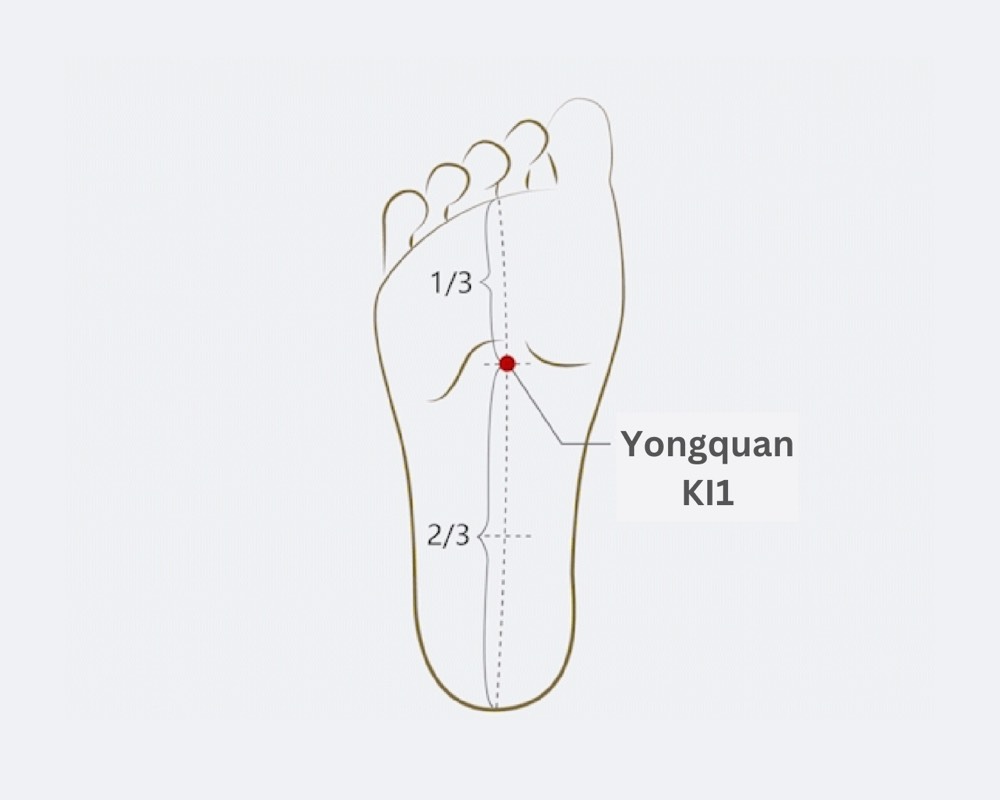
Two neighbours are worth knowing. Xingjian LR-2 ("Moving Between") sits closer to the web of the toes and is the one classical practice favours when there are clear heat signs — red eyes, a bitter taste, headache at the temples. Yongquan KI-1 ("Bubbling Spring"), in the hollow on the sole about a third of the way down from the toes, is the classical anchor point when everything feels like it has risen upward into the head and chest.
What’s Real, What’s Myth
Myth: the more it hurts, the better it works. This idea has no basis in classical technique and a good deal of evidence against it in my clinic. Sensation should be a clear, tolerable ache that you could hold a conversation through. Pain that makes you brace does the opposite of what you want, because bracing is more tension.
Myth: it works for everyone. This point suits a tight, constrained picture — sighing, rib tightness, symptoms that move with mood. In someone who is genuinely depleted, pale and exhausted, strong draining work on this point often leaves them flatter and more tired afterwards, and they usually report it the same day.
Myth: press it before bed for sleep. For many people this is the wrong end of the day. If pressing it leaves you alert, do it in the late afternoon or early evening instead and finish the evening with Yongquan KI-1 on the soles, which settles things downward rather than stirring them.
Real: the direction changes the result. This is not folklore — draining along the channel against its flow and tonifying with it are basic classical technique, and people notice the difference the first time they change what they are doing.
Real: the point is often exquisitely tender in a constrained pattern, and less so once things loosen. Several people have told me they only realised it had changed when they went back to it a month later and it barely registered.
Five Things You Can Do This Week
1. Change the technique. Place your thumb in the groove between the first and second foot bones and slide it along the groove toward the toes, with moderate steady pressure, about thirty slow strokes on each foot. Sliding, not digging. If you are bracing, you are pressing too hard.
2. Set a level, not a limit. Aim for a clear ache at roughly six out of ten, held comfortably, rather than the hardest you can bear. Once a week is not enough and twice a day is usually too much — most people do best with one session in the late afternoon or early evening.
3. Finish downward at Yongquan KI-1 ("Bubbling Spring"). Rub the hollow on each sole briskly with your thumb for a minute at the end, or rub the soles together. In classical language this draws things back down; in practice, it is the step that stops people feeling stirred up afterwards.
4. Move before you press. Twenty minutes of brisk walking at a pace that changes your breathing does more for a constrained pattern than any point does, and the point work lands better afterwards. Points support the movement; they do not replace it.
5. Give it a fair trial and note one marker. Two weeks, one marker — how tight your ribs feel in the evening, or how often you catch yourself sighing. If nothing has shifted after two weeks of correct technique, the pattern probably is not constraint, and pressing harder will not change that.
When to See a Doctor
Stop pressing and see your GP if the top of your foot is painful in its own right — swollen, red, hot, or painful to walk on. Tenderness at the point is expected; a foot that hurts on its own is a foot problem and belongs to a doctor, not to a point routine.
Anyone with diabetes, neuropathy or reduced sensation in the feet should be cautious with self-applied pressure anywhere on the foot, because you cannot reliably feel when it has become too much. Speak to your doctor before making this a habit.
During pregnancy, this point is traditionally cautioned, and the combination of Taichong LR-3 with Hegu LI-4 is avoided entirely. If you are pregnant or might be, check with your own registered practitioner before using either.
And for the picture that brings people here in the first place: headaches that are new, severe or different from your usual pattern, irritability that comes with confusion or memory change, or a mood that has been low most days for a fortnight — all of these belong with your GP first, alongside anything described here.
Which Constitution This Usually Points To
A point that is markedly tender, alongside sighing, rib or chest tightness, symptoms that move around and a mood that tracks with pressure at work, points toward a qi stagnation constitution (气郁质). This is the pattern this point was made for.
If pressing it firmly leaves you drained, pale and flatter for the rest of the day, that is worth taking seriously as information. It usually means a qi-deficient (气虚质) base sits underneath, and draining techniques are the wrong direction until the base is stronger.
If you are unsure which of those two you are, the quick assessment on this site walks you through 29 gentle questions in about three minutes and gives you a daily plan matched to your type, including which points suit you and which technique to use on them.
Watch: Jimmy explains this in the clinic
Keep Reading
Anxious or Qi Stagnant?
Tight chest, constant sighing, symptoms that move around — the pattern behind stress held in the body.
Read →Three Points for Desk Tension
A five-minute sequence for the chest tightness that arrives every afternoon around three.
Read →Stress Sits Under Your Ribs
Tight ribs, bloating that tracks with your workload, and a short fuse by six — one pattern, not three.
Read →Awake at Two Again
A racing mind and a tight jaw at two in the morning — the hour the body clock assigns to the Liver.
Read →The Jaw You Clench
Tight jaw, morning ache and grinding — and why the base of the skull matters more than the jaw.
Read →Cold Hands, Warm Body
When the warmth is stuck rather than missing — and the one clue that tells you which you have.
Read →Find Your Constitution
29 gentle questions, about three minutes, and you have your TCM body type — so this guidance actually fits you.
Take the quick quiz →Related
Learn about the Qi Stagnation constitution →Frequently Asked Questions
Which direction should I actually slide?
Toward the toes, along the groove between the first and second foot bones. The Liver channel runs upward from the foot, so working against that flow is the draining direction in classical technique — the one that suits a tight, constrained pattern. Sliding upward toward the ankle is the gentler, supporting direction, and it suits a depleted person better.
How hard is hard enough?
A clear ache you could talk through, around six out of ten. If your shoulders lift or your breath catches, ease off. In my clinic the people who report feeling more irritable afterwards are almost always the ones pressing at nine out of ten in a single spot.
Why do I feel warm in the face after pressing it?
That usually means things have been stirred upward without anything bringing them back down. Finish with a minute of brisk rubbing on the soles at Yongquan KI-1 ("Bubbling Spring"), and consider moving the session to late afternoon rather than just before bed.
Can I use this point every day?
Once daily is reasonable for a constrained pattern during a demanding stretch, but it is not meant to be permanent. Qi-moving work over long periods without anything supportive alongside tends to leave people depleted, which is exactly why classical formulas always pair moving herbs with something protective.
Last updated: 2026-07-13
This page offers general TCM educational perspectives, not medical advice or a diagnosis. For any health concern, please consult a licensed healthcare professional.