The Week Before Your Period Isn’t the Problem — The Two Weeks Before It Are
By the time the fuse is short, the window has closed. Classical practice works in the quiet half of the cycle.
Reviewed by Jimmy Yu, Certified Acupuncturist · Updated 2026-07-13
Quick answer
Irritability, tension across the chest and a short fuse before a period are read in Chinese medicine as constrained qi becoming obvious under pressure. The classical response is to keep qi moving through the second half of the cycle rather than to intervene in the difficult week, when the window has largely closed.
You Can See It Coming and Not Stop It
Most women can name the day. Something turns, and for the next week everything lands harder than it should — a comment from a colleague, a delay, a small piece of bad news.
The physical side is consistent. Tension and tenderness across the chest wall, tight ribs, a headache at the temples, sleep that gets lighter, and a wish to be left alone that is hard to explain to anyone.
And the part women find most frustrating: it lifts almost the moment the period arrives, which makes the whole week feel like something that could have been prevented.
There is a real observation underneath that frustration. In this tradition, the fortnight before is where the leverage is, and the difficult week itself is mostly too late.
How Chinese Medicine Reads It
The Suwen chapter "Ling Lan Mi Dian Lun" (《黄帝内经·素问·灵兰秘典论》) describes the Liver as 将军之官 — the office of the general, from which planning and deliberation emerge. It is the part of the system that pushes forward, and its characteristic failure is constraint rather than weakness.
The Suwen chapter "Ju Tong Lun" (《素问·举痛论》) supplies the mechanism in three characters: 思则气结 — overthinking knots the qi. Knotted rather than depleted, which is why rest alone does so little for this particular week.
Zhang Zhongjing, in the Jingui Yaolue (《金匮要略》), summarises women’s patterns in six characters that are still quoted in every clinic
因虚、积冷、结气
deficiency, accumulated cold, and knotted qi. The third of those is what this article is about, and it is the one most visible in modern working life.
《金匮要略》
Here is why the timing matters. In classical terms the second half of the cycle is when the body is gathering rather than releasing, and constraint that builds through that fortnight has nowhere to go until the period arrives. That is exactly what women describe: pressure that accumulates, then releases the moment bleeding starts.
So the intervention belongs in the gathering half, not in the week when the pressure is already at the top. By the time the fuse is short, you are managing rather than preventing.
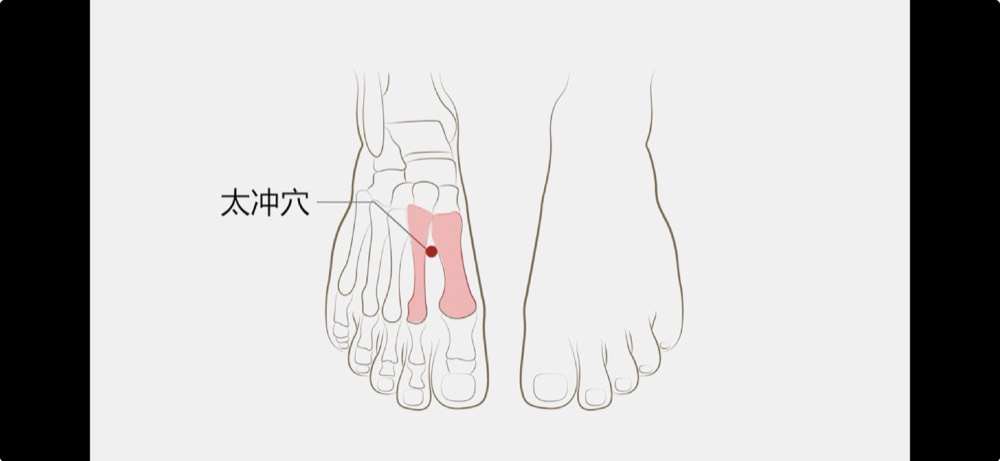
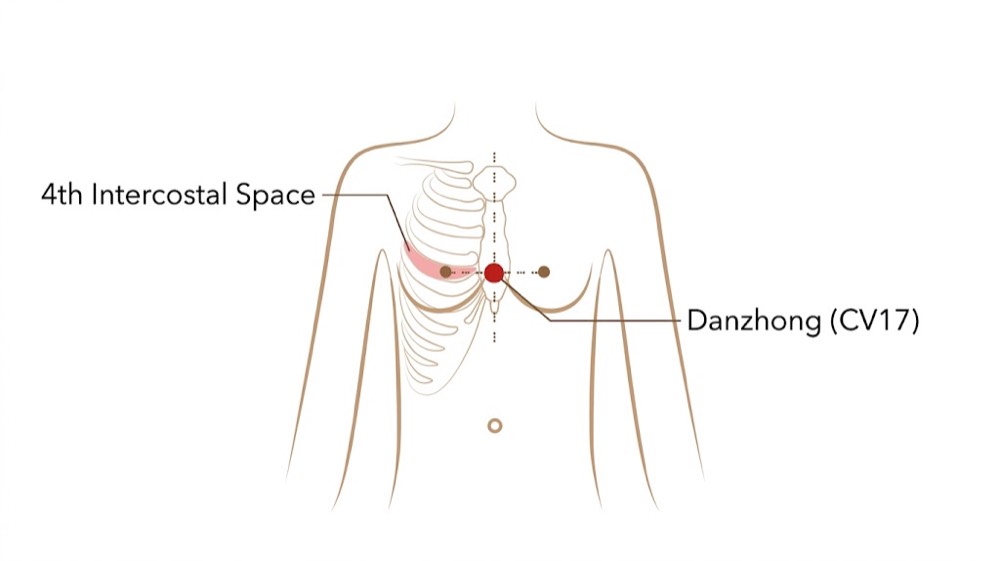
The points are all about movement. Taichong LR-3 ("Great Surge") sits on the top of the foot in the groove between the first and second bones. Neiguan PC-6 ("Inner Pass") sits three finger-widths above the wrist crease between the two tendons. Danzhong CV-17 ("Chest Centre") sits on the midline in the centre of the breastbone — on the bone itself, not on breast tissue. Yanglingquan GB-34 ("Yang Mound Spring") sits below the outside of the knee.
What’s Real, What’s Myth
Myth: it is a character problem you should be able to override. It follows a cycle, it lifts within hours of the period arriving, and it happens to women who are otherwise even-tempered. Framing it as a failure of temperament is both inaccurate and, in my experience, actively unhelpful.
Myth: rest is what you need in the difficult week. Rest helps a depletion pattern. This is a constraint pattern, and constraint responds to movement — a brisk walk at a pace where your breathing changes does more than an evening on the sofa. The instinct to withdraw is understandable and it works against you.
Myth: gentle walking is enough. It is not, and this is the correction I make most often. Stuck qi needs enough intensity to actually move. If you finish able to hold a long conversation comfortably, it was too slow to do the job.
Myth: rose tea is a mild daily drink anyone can have. Rose is a qi-moving herb, and taken continuously over months it can deplete what it is moving. Classical formulas pair it with honey for exactly that reason. It is contraindicated in pregnancy and for anyone with heavy periods — as are hawthorn (山楂) and notchleaf (三七).
Real: two cycles is the honest timeframe. One cycle tells you very little because month-to-month variation is normal. Two shows a direction, and three is enough to be confident. Track the same two or three things each month so you are comparing like with like.
Six Things to Do in the Fortnight Before
1. Start on the day you ovulate, or roughly two weeks before your period is due. Put it in the calendar as a recurring event. This single scheduling change is what turns the rest of this list from good intentions into something that happens.
2. Walk briskly for twenty to thirty minutes, four times a week, at a pace where your breathing changes. In that fortnight specifically, this is the item with the largest effect and the one most often reduced because you feel like doing less.
3. Hold Neiguan PC-6 ("Inner Pass") for a minute each side when the chest feels tight. Three finger-widths above the wrist crease, between the two tendons, breathing out slowly. This is the one to use at a desk or in a meeting.
4. Tap Danzhong CV-17 ("Chest Centre") lightly for a minute. Fingertips on the midline of the breastbone, on the bone, level roughly with the fourth rib space. Light tapping rather than pressing. Most women find themselves sighing partway through, which is the point.
5. Work Taichong LR-3 ("Great Surge") in the evening. Slide your thumb along the groove between the first and second foot bones toward the toes, thirty slow strokes each foot. Add Yanglingquan GB-34 ("Yang Mound Spring") below the outside of the knee for a minute each side if your ribs and shoulders are tight.
6. Make a weak pot of rose (玫瑰花) and Buddha’s hand (佛手) tea with honey, two or three times a week in that fortnight rather than daily. The honey is not for flavour — it softens the drying quality of the qi-moving herbs. Not in pregnancy, and not if your periods are heavy.
When to See a Doctor
Some premenstrual patterns need medical support rather than a self-directed routine, and that is not a lesser option. See your GP if the mood changes are severe, if they affect your work or relationships, if you feel unlike yourself in a way that frightens you, or if there is any thought of harming yourself. Severe premenstrual mood symptoms are a recognised condition with effective medical options, and it is not something to manage alone.
Book an appointment for tenderness across the chest wall that is one-sided, persistent through the whole cycle, or associated with a lump, skin change, or discharge — that needs assessing regardless of where you are in your cycle.
See your GP for periods that have become much heavier, that last longer than seven days, that leave you dizzy or breathless, for bleeding between periods or after intercourse, or for period pain that has become severe when it was not before. Also for cycles that have become markedly irregular.
And ask for iron and ferritin and thyroid function if fatigue is part of the picture. Low iron is common, it worsens mood and energy, and it is straightforward to correct once it is identified.
Which Constitution This Usually Points To
Irritability, tight ribs, tenderness across the chest wall, sighing, and a pattern that eases the moment bleeding starts points clearly toward a qi stagnation constitution (气郁质). The classical order is fixed: move the qi first, and the rest of the cycle usually settles behind it.
Two overlays are common. Add red eyes, a bitter taste on waking, temple headaches and disturbed sleep, and constraint has generated heat. Add dark clotted blood and sharp pain that eases once flow is established, and blood stasis (血瘀质) has joined in — same order, qi before blood.
If the dominant experience is exhaustion, a dull ache and a wish to lie down rather than irritability, a qi-deficient picture (气虚质) is underneath, and the plan is closer to warmth and building than to movement.
The quick assessment on this site walks you through 29 gentle questions in about three minutes and gives you a daily plan matched to your type, including which teas suit your cycle and which to leave alone.
Keep Reading
Anxious or Qi Stagnant?
Tight chest, constant sighing, symptoms that move around — the pattern behind stress held in the body.
Read →The Foot Point Pressed Wrong
Why grinding into the point between your first two toes can leave you more wound up than before.
Read →Three Points for Desk Tension
A five-minute sequence for the chest tightness that arrives every afternoon around three.
Read →Stress Sits Under Your Ribs
Tight ribs, bloating that tracks with your workload, and a short fuse by six — one pattern, not three.
Read →Awake at Two Again
A racing mind and a tight jaw at two in the morning — the hour the body clock assigns to the Liver.
Read →The Jaw You Clench
Tight jaw, morning ache and grinding — and why the base of the skull matters more than the jaw.
Read →Find Your Constitution
29 gentle questions, about three minutes, and you have your TCM body type — so this guidance actually fits you.
Take the quick quiz →Related
Learn about the Qi Stagnation constitution →Frequently Asked Questions
When exactly should I start?
Around ovulation, or roughly two weeks before your period is due. If your cycle is irregular, count backwards from the last few periods and use an average. Putting it in the calendar as a recurring event is what makes it happen in practice.
Why does walking help more than resting?
Because this is a constraint pattern rather than a depletion one — nothing is missing, it is simply not moving. Rest suits depletion; movement suits constraint. The instinct to withdraw in that week is understandable and it usually makes the week harder.
Can I drink rose tea every day?
Better two or three times a week during the fortnight before, with honey, rather than daily all month. Qi-moving herbs used continuously can deplete what they are moving. Rose, hawthorn and notchleaf are all contraindicated in pregnancy and in heavy periods.
How many cycles before I know if it is working?
Two to see a direction and three to be confident, since month-to-month variation is normal. Track the same two or three markers each cycle — how tight the ribs feel, how many days the fuse is short, how you sleep — so you are comparing like with like.
Last updated: 2026-07-13
This page offers general TCM educational perspectives, not medical advice or a diagnosis. For any health concern, please consult a licensed healthcare professional.