The Back of Your Neck Is the Weak Spot — Protecting Your Defences on Cold-Weather Runs
Two thousand years of texts point at the same few inches of skin, and every runner leaves them uncovered.
Reviewed by Jimmy Yu, Certified Acupuncturist · Updated 2026-07-13
Quick answer
Chinese medicine describes wind and cold entering the body at the back of the neck, where the defensive qi is thinnest. This is why a cold, windy run followed by a damp shirt and a cooling car so often ends in sneezing the next day. Covering the neck and changing promptly does more than anything you can take afterwards.
The Sneeze That Arrives the Next Morning
The sequence is so consistent that people describe it in the same order. A run in cold wind, a good session, then standing around talking in a wet shirt, then a cold car, then a hot shower. Fine that evening. Sneezing by nine the next morning, with a scratchy throat and a stiff neck.
It happens more to the fit than the unfit, which surprises people. It is the ones running hardest in the worst weather who report it most, and often they are the ones who feel it is beneath them to wear a scarf.
When I ask where it starts, most people point without hesitating to the back of the neck. Stiff, cold, slightly sore, and it began there before it became anything else.
The tradition has been pointing at that spot for two thousand years, and there is a practical routine that follows from it.
How Chinese Medicine Reads It
The Suwen chapter "Sheng Qi Tong Tian Lun" (《黄帝内经·素问·生气通天论》) states it directly
风者,百病之始也
wind is the beginning of a hundred problems. Wind, in this system, is not weather so much as a category of how things arrive: suddenly, at the surface, from outside, and usually at the top of the body.
《黄帝内经·素问·生气通天论》
The Suwen chapter "Gu Kong Lun" (《素问·骨空论》) then describes what it looks like when it lands
风从外入,令人振寒汗出头痛
wind entering from outside makes a person shiver, sweat and ache in the head. That is the next morning, described before anyone had a word for a virus.
《素问·骨空论》
The layer that is supposed to prevent this is wei qi, the defensive qi. The Lingshu chapter "Ben Zang" (《灵枢·本脏》) describes it as what warms the flesh, fills the skin and governs the opening and closing of the surface.
Here is the part that matters for runners. Exercise opens the surface — that is what sweating is. So the twenty minutes after a hard session are precisely when your defensive layer is at its most open, and that is the window in which cold wind on a wet neck does its work.
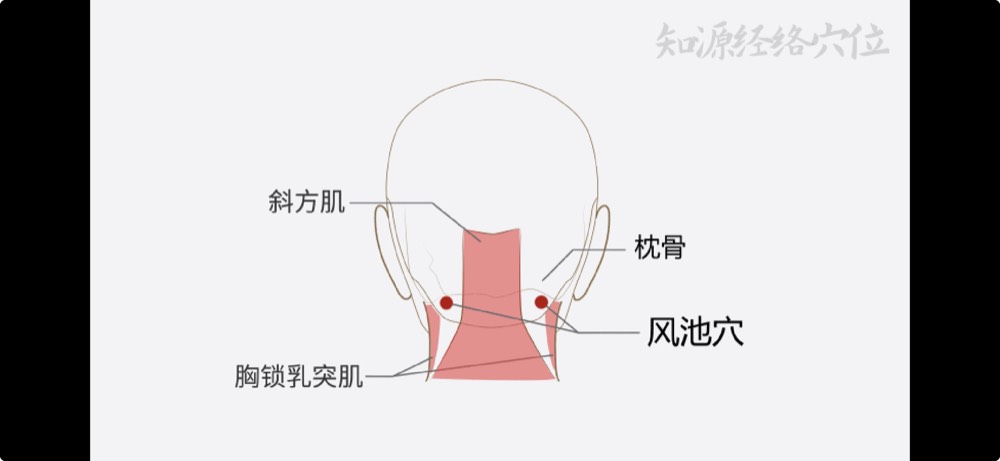
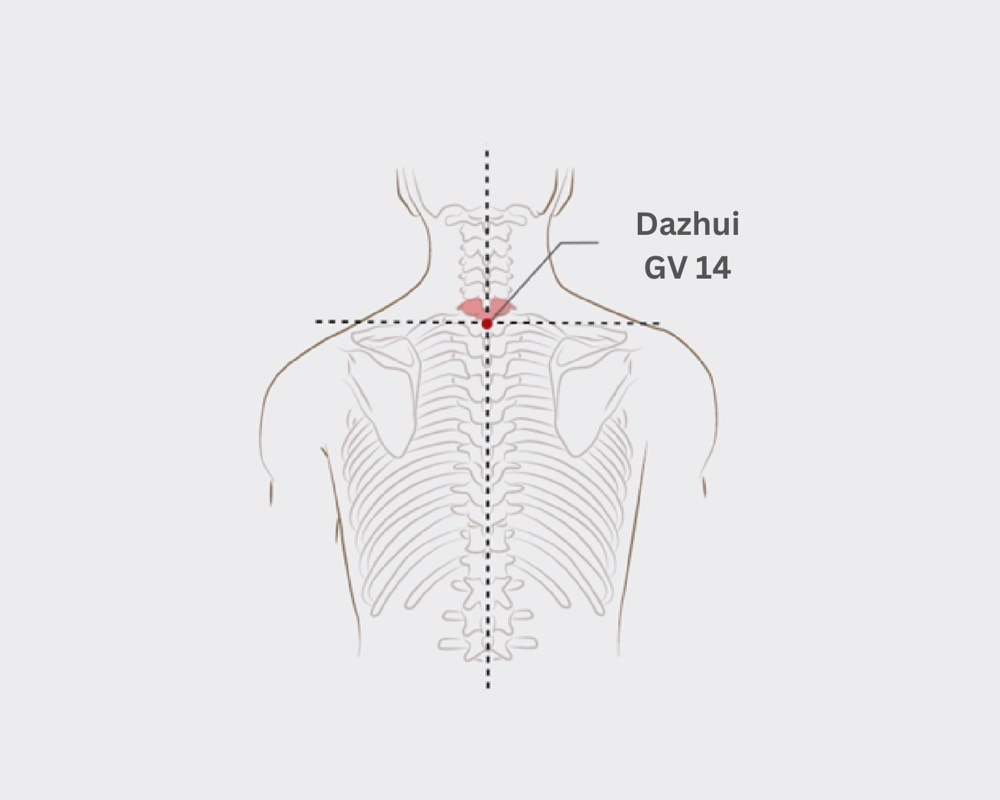
The points named for this are not subtle about it. Fengchi GB-20 ("Wind Pool") sits in the two hollows at the base of the skull. Fengmen BL-12 ("Wind Gate") sits on the upper back, either side of the spine between the shoulder blades. Dazhui GV-14 ("Great Hammer") sits on the midline in the dip below the big bump at the base of your neck when you bow your head.
Wind Pool, Wind Gate. The naming is a public health message from a civilisation without printing presses, and it points at the same few inches of skin every time.
What’s Real, What’s Myth
Myth: cold weather itself makes you unwell. It does not, and this is worth being accurate about — the tradition is describing a susceptibility, not a cause. What the classical framework claims is that an open surface plus cold wind plus a depleted runner is a combination worth avoiding, and that is a reasonable thing to act on regardless of what you think causes what.
Myth: hardening yourself by training in the cold builds resistance. Sensible cold exposure while you are well-rested is one thing. Doing it while already run down, on short sleep, in a wet shirt, is where the tradition draws the line — and where most people’s pattern of getting unwell actually lives.
Myth: sweating more will push out whatever is starting. This is the mistake that turns a scratchy throat into a fortnight. Heavy sweating spends the same qi that holds the surface closed, and a hot session at the first sign of something coming on is the classic way to make it worse.
Myth: if you are prone to this, take a strengthening herb like astragalus (黄芪) whenever you like. This one needs care. Astragalus belongs to a cold, deficient picture where the surface is loose — the runner who sneezes in the cold and sweats too easily. In a person whose sensitivity shows up as hot, itchy, weeping skin instead, warming and strengthening herbs are the wrong direction and can make things worse. The two tracks are not interchangeable, and if your reactions are mostly skin rather than nose, get advice before taking anything.
Real: the change of shirt is the most effective item here. Not the most interesting, but the one that separates the people who get the next-day sneeze from the people who do not.
Five Things You Can Do This Week
1. Cover the back of the neck before you go out in wind or cold. A buff, a high collar, anything. This is the recommendation the entire classical literature converges on, and it costs you nothing.
2. Change within ten minutes of finishing. Dry top, dry base layer, and something over your neck for the walk to the car. Standing around talking in a wet shirt in a car park is the single riskiest habit in recreational running.
3. Warm the neck points when you have been out in the cold. Rub Fengchi GB-20 ("Wind Pool") — the two hollows at the base of the skull — with your thumbs for a minute, then rub Dazhui GV-14 ("Great Hammer") and the area between the shoulder blades briskly with your palm until warm. Warmth rather than pressure is the point.
4. Have a ginger and spring onion drink at the first hint of a scratchy throat and a stiff neck. Three slices of fresh ginger and the white parts of two spring onions, simmered five minutes, drunk hot, then rest somewhere warm. This is the oldest first-response in the tradition for exactly this presentation, and it is most useful in the first few hours.
5. Skip the hard session when you are already run down. Sleep under six hours, a heavy week, or something already going around the household — those are the days to walk instead. This is the item people ignore and then explain away later.
When to See a Doctor
Most of what is described here is a mild, self-limiting nuisance. See your GP if a fever goes above 38.5°C or lasts more than three days, if breathing becomes difficult or fast, if you have chest pain, or if you cough up blood or discoloured phlegm with fever.
Get medical attention promptly for a severe headache with a stiff neck that makes it painful to bend your chin to your chest, especially with fever, sensitivity to light or a rash. That combination is not the pattern this article is about and needs to be seen the same day.
Book an appointment if symptoms drag past ten days, if they improve and then clearly worsen again, if you have ongoing lung or heart conditions, or if a cough lasts more than three weeks. If you are on medication that affects your immune system, ask your doctor before doing anything self-directed.
On the sensitivity side: seasonal sneezing that has become year-round, nasal blockage that only affects one side, or any wheezing or breathlessness with exercise is worth proper assessment. And do not start herbs alongside prescribed medication without checking — astragalus in particular is best discussed with your doctor if you take anything regularly.
Which Constitution This Usually Points To
Reacting to cold wind with sneezing, a runny nose and a stiff neck, especially if it happens every season and other people in the same conditions are fine, points toward a special-sensitivity constitution (特禀质) — the pattern the tradition describes as a surface that does not hold well.
This constitution runs on two quite separate tracks, and mixing them up is the error that matters. The nose-and-cold track needs the surface strengthened and warmed. The skin track — itching, redness, weeping eczema — sits on a hot, damp base and needs the opposite direction. Warming, strengthening food and herbs suit the first and can aggravate the second.
If your reactions are more about tiredness and catching every chill than about sensitivity as such, a qi-deficient constitution (气虚质) is the more likely reading. The quick assessment on this site walks you through 29 gentle questions in about three minutes and sorts out which track you are on before you start taking anything.
Watch: Jimmy explains this in the clinic
Keep Reading
Prepare Before Pollen
Why the tradition starts six weeks early — and the two tracks you must not mix up.
Read →Late Autumn Burnout in Men
Why the same flat, heavy tiredness arrives every year around the same time — and what the classics said to do about it.
Read →Training Harder, Feeling Worse
When more sessions make you flatter, the low back is where the classics said to look first.
Read →Stress Sits Under Your Ribs
Tight ribs, bloating that tracks with your workload, and a short fuse by six — one pattern, not three.
Read →Ice Baths After Forty
Why the same cold plunge sharpens one man and flattens another — and how to tell which you are.
Read →Jittery, Not Strong
When the double espresso before training makes your hands shake and your legs weak.
Read →Find Your Constitution
29 gentle questions, about three minutes, and you have your TCM body type — so this guidance actually fits you.
Take the quick quiz →Related
Learn about the Inherited Special constitution →Frequently Asked Questions
Does covering my neck really make a difference?
It is the recommendation the whole classical literature converges on, and in practice it is the runners who cover up and change promptly who report fewer next-day sneezes. It costs nothing to test for a season, which is more than can be said for most of the alternatives.
Should I still run when I feel something coming on?
For a scratchy throat and a stiff neck with no fever, a gentle walk is fine and a hard session is not — heavy sweating at that point tends to prolong things. With a fever, body aches or a chesty cough, do not run at all until you have been clear for a few days.
Can I take astragalus to stop getting these?
Only if your picture is the cold, sneezy, easily-sweating one. If your sensitivity shows up as hot, itchy or weeping skin, astragalus is the wrong direction and can aggravate it. Get advice specific to your pattern before taking it, and check with your doctor if you take any regular medication.
Why does this happen to me and not my running partner?
In this framework it comes down to how well your surface holds — the defensive layer described in the classics. Short sleep, heavy training loads and a run of stressful weeks all thin it. That is also why the same person can be fine all winter one year and catch everything the next.
Last updated: 2026-07-13
This page offers general TCM educational perspectives, not medical advice or a diagnosis. For any health concern, please consult a licensed healthcare professional.