The Pre-Workout Coffee That Makes You Shaky, Not Strong — What’s Actually Running Low
The Neijing says a big fire consumes qi and a gentle fire generates it. Your pre-workout is a big fire.
Reviewed by Jimmy Yu, Certified Acupuncturist · Updated 2026-07-13
Quick answer
Feeling jittery, hot and weak rather than energised after a strong pre-workout coffee is read in Chinese medicine as stimulation borrowing from a reserve that is already low. The classics put it directly: a big fire consumes qi, while a gentle fire generates it.
Wired at the Warm-Up, Empty by the Third Set
The sequence is precise enough that men describe it in the same order. Double espresso or a scoop of pre-workout, twenty minutes of feeling ready for anything, and then a warm-up in which the hands are faintly unsteady.
By the third set the sensation has changed. Heart going harder than the effort warrants, a hot face, and legs that feel oddly hollow — not fatigued from the work, just not there.
Afterwards there is often a poor night’s sleep even though the coffee was at four, and a following morning that starts worse than the one before.
And then the arithmetic that keeps this going: the response is to increase the dose, because the last dose clearly was not enough.
How Chinese Medicine Reads It
The Suwen chapter "Yin Yang Ying Xiang Da Lun" (《黄帝内经·素问·阴阳应象大论》) has a line that reads like it was written about pre-workout supplements
壮火食气,少火生气
a fierce fire consumes qi, while a gentle fire generates it.
《黄帝内经·素问·阴阳应象大论》
It goes on: 壮火散气,少火生气 — a fierce fire scatters qi, a gentle fire produces it. Two thousand years before anyone measured caffeine, the tradition had drawn a distinction between stimulation that builds and stimulation that spends.
That is what a strong stimulant does in this framework. It does not create energy; it makes available what you already had, faster. In a man with plenty in reserve, that is a useful trade. In a man running low, it is a withdrawal that arrives as shakiness, heat and hollow legs.
There are two quite different reasons a man might be running low, and they call for opposite approaches. In a qi-deficient picture there is simply not enough — soft voice, breathlessness on stairs, easy sweating, and a flat rather than agitated tiredness.
In a yin-deficient picture the cooling side of the body has run low, so ordinary warmth is no longer balanced. That picture is agitated rather than flat: hot palms and soles, a dry mouth, poor sleep, a fine tremor, and heat that is worse in the late afternoon and at night. Stimulants land worst here, because you are adding fire to a system that is short of water.
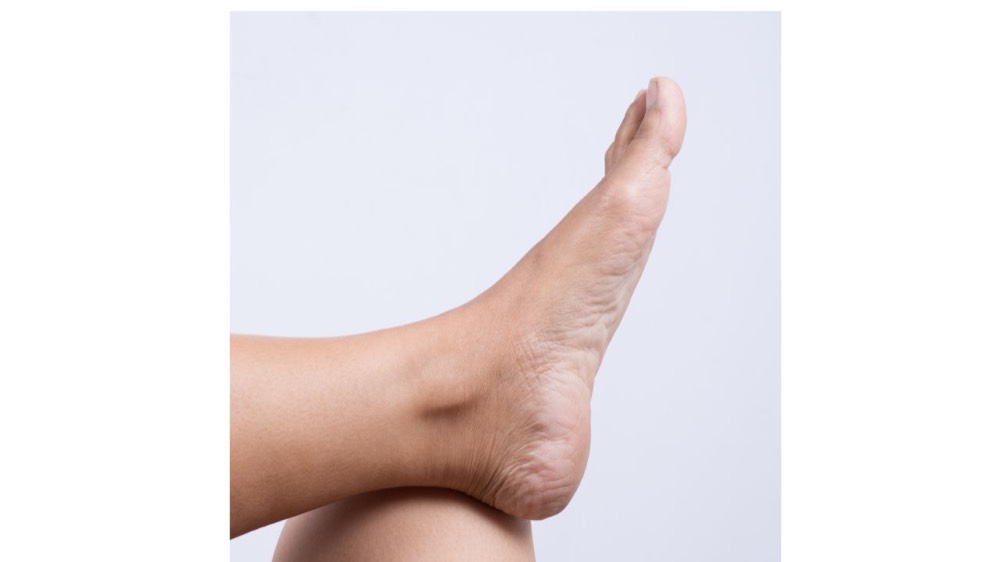
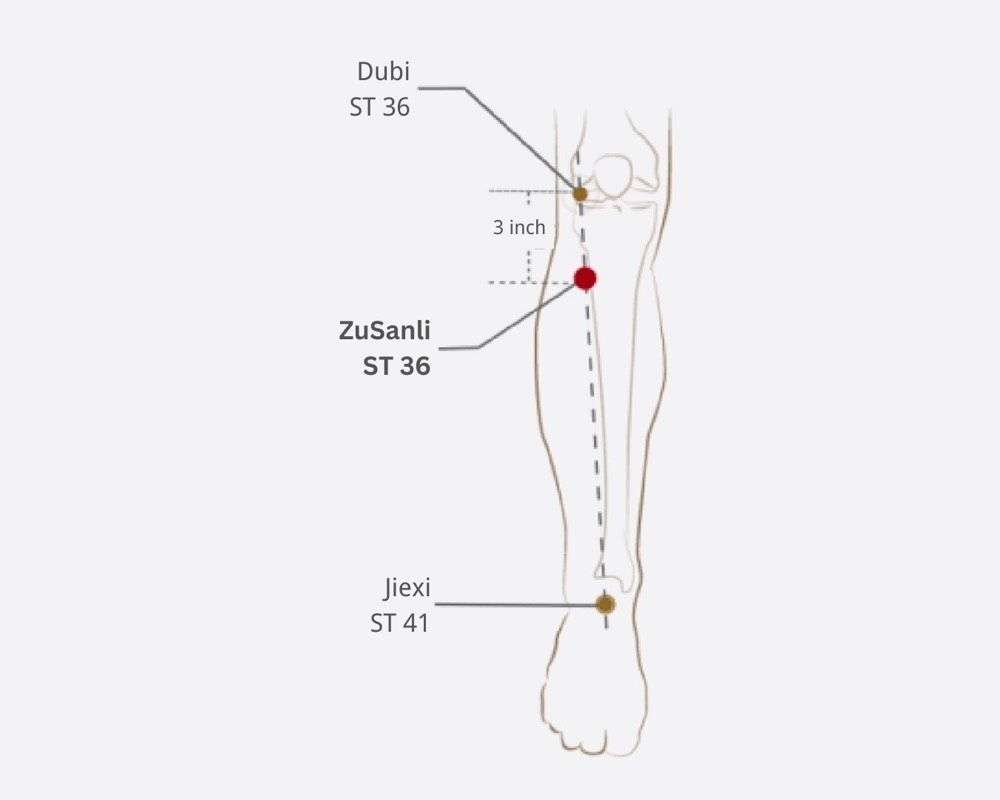
The points are quiet ones. Taixi KI-3 ("Great Ravine") sits between the inner ankle bone and the Achilles tendon and is the classical anchor for the deeper reserve. Zusanli ST-36 ("Leg Three Li") sits below the knee and supports the daily supply. Zhongwan CV-12 ("Middle Cavity") sits midway between the navel and the base of the breastbone.
What’s Real, What’s Myth
Myth: jitters mean you need to build tolerance. Tolerance means the same dose produces less effect, not that the underlying shortfall has been addressed. Men who escalate through this usually arrive six months later on triple the dose, sleeping worse, and no stronger.
Myth: caffeine is bad. It is not, and I drink it. What the tradition would say is that a moderate amount at the right time in a well-rested person behaves like a gentle fire, while a large amount in a depleted person behaves like a fierce one. Same substance, different arithmetic.
Myth: if you feel hot and wired, you are getting a strong training stimulus. Heat and agitation before you have done any work is a sign of the stimulant, not the session. The men who train best are usually the ones who feel calm and capable at the warm-up rather than buzzing.
Myth: taking it on an empty stomach makes it more effective. It makes it arrive faster and hit harder, which is not the same thing, and it is the single most common contributor to the shakiness. Eating something first flattens the spike considerably.
Real: the sleep is the scoreboard. A pre-workout that leaves you awake at midnight has cost you more than the session gained, and no amount of training quality compensates for a run of short nights.
Six Things You Can Do This Week
1. Halve the dose for two weeks. Not stop — halve. Most men find their sessions are no worse and their sleep is noticeably better, which tells you where the extra was going.
2. Eat something first, and never take it on an empty stomach. Even a small warm meal an hour before changes the shape of the spike and takes most of the shakiness out of it.
3. Move the last caffeine to before two in the afternoon. The effect shows up in the following morning rather than that evening, which is why it is so easy to miss. Give it four days before judging.
4. Try a milder pre-workout drink. Goji berries (枸杞) with a few slices of ginger in hot water is the traditional alternative — supportive rather than stimulating. Men expecting a hit are usually unimpressed for a fortnight and then notice their third set is better.
5. Press Zusanli ST-36 ("Leg Three Li") for a minute each side after your evening meal, and hold Taixi KI-3 ("Great Ravine") gently for two minutes each side before bed. Gentle sustained pressure — force is the wrong direction when the underlying issue is shortage.
6. Judge by the fourth set and the next morning. If you finish sessions able to do one more set than last month and you are sleeping, the plan is working. If you are training on stimulants and sleeping badly, the training is not the variable that needs changing.
When to See a Doctor
Some of what gets filed under jitters is worth checking properly. See your GP for palpitations, a racing or irregular heartbeat, or any chest discomfort — particularly with exertion. Chest pain or pressure with breathlessness, sweating or nausea needs emergency care immediately.
Book an appointment for a persistent tremor, for unexplained weight loss, for heat intolerance or sweating that is new, or for anxiety that has become a daily feature. Thyroid function is the obvious thing to check and it produces this exact picture.
Tell your doctor what is in your pre-workout. Some contain very high caffeine doses, some contain stimulants beyond caffeine, and several interact with medications for the heart, blood sugar and mood. This matters more than most men assume and the label is worth taking to the appointment.
And reduce caffeine gradually rather than stopping abruptly if you are on a large daily dose — headaches and flatness for a week are common otherwise. If you are using stimulants to get through days that are already too long, that is worth raising with your GP as well.
Which Constitution This Usually Points To
Feeling hot, shaky and agitated on stimulants, with warm palms and soles, a dry mouth, light dreamy sleep and heat that is worse in the late afternoon and at night, points toward a yin-deficient constitution (阴虚质). The rule for this pattern is to nourish rather than to clear or to stimulate — and hot yoga, saunas and heavy sweating suit it badly for the same reason.
If the picture is flat rather than agitated — a soft voice, breathlessness on stairs, easy sweating, and feeling wiped out rather than wired — a qi-deficient constitution (气虚质) is underneath, and the order is to stop the drain first, then build.
These two get confused constantly because both leave men reaching for the same double espresso, and the approaches point in different directions. The quick assessment on this site walks you through 29 gentle questions in about three minutes and gives you a daily plan matched to your type.
Keep Reading
Tired Body, Racing Head
Exhausted and wide awake at midnight — and the classical answer that starts at your feet.
Read →Hot Shower, No Sleep
Why a scalding shower before bed leaves some people wide awake — and what temperature suits instead.
Read →Gritty Eyes by Four
Why eye drops help for twenty minutes — and what the classics say is actually running low.
Read →When Creams Stop Working
Dry skin, dull complexion and flat energy after a demanding decade — what the classics said changes at thirty-five.
Read →Heat That Isn’t Heat
Warm palms and night heat that ice water does not touch — and the classical reason why.
Read →Dry From Indoor Heating?
The heated-room desert, the inside-out fix, and the two kinds of dryness that need a doctor.
Read →Find Your Constitution
29 gentle questions, about three minutes, and you have your TCM body type — so this guidance actually fits you.
Take the quick quiz →Related
Learn about the Yin Deficiency constitution →Frequently Asked Questions
Should I quit caffeine entirely?
Rarely necessary and it usually does not last. Halving the dose, eating first, and moving the last one to before two in the afternoon gets most of the benefit at a fraction of the cost. If you are on a large daily dose, reduce gradually rather than stopping abruptly.
What can I take before training instead?
Goji berries with a few slices of fresh ginger in hot water is the traditional supportive option, and a proper meal an hour beforehand does more than most men expect. Neither produces a hit, which is precisely the point — you are aiming to have energy rather than to borrow it.
Why is my sleep bad even though I stopped at four?
Caffeine has a long tail, and in a yin-deficient picture the evening is when heat naturally rises anyway, so a small residual amount lands harder. Moving the cut-off to two in the afternoon for a fortnight is the cleanest way to find out how much of your sleep it is costing.
How do I know which pattern I have?
Agitated or flat is the quickest distinction. Yin deficiency is agitated — hot palms, dry mouth, light sleep, worse at night. Qi deficiency is flat — soft voice, breathless on stairs, sweating easily, better after rest. Your tongue helps too: red with little coating points to the first, pale and puffy to the second.
Last updated: 2026-07-13
This page offers general TCM educational perspectives, not medical advice or a diagnosis. For any health concern, please consult a licensed healthcare professional.