Dry Skin That Creams Don’t Fix — Nourishing Yin and Blood After a Decade of Pressure
The classics put the turn at thirty-five and were specific about what changes first.
Reviewed by Jimmy Yu, Certified Acupuncturist · Updated 2026-07-13
Quick answer
When skin stays dry however much moisturiser you use, Chinese medicine looks at what is supplying it from inside rather than at the surface. The classics describe the complexion beginning to dull around thirty-five, and the approach is to nourish the moistening side of the body — slowly, through food and sleep.
The Moisturiser That Disappears
The way women describe this is memorable. The cream goes on, and within an hour the skin has drunk it and gone back to feeling tight. Then a better cream, and the same thing.
It rarely arrives alone. Hair that has lost some of its body and comes out more in the brush. Nails that split. Eyes that feel gritty by the end of a screen day. Sleep that is lighter than it used to be.
And underneath all of it, a particular kind of tiredness — not sleepiness, but a sense of running on less than there used to be. Usually after a decade that asked a lot: young children, or a demanding job, or caring for a parent, or all three at once.
The women who describe this are often doing everything right on the outside. That is exactly why it is worth looking at what is supplying the skin rather than at what is being applied to it.
How Chinese Medicine Reads It
The Suwen chapter "Shang Gu Tian Zhen Lun" (《黄帝内经·素问·上古天真论》) maps women’s life in cycles of seven years, and it is remarkably specific about this stage. At 五七 — thirty-five — 阳明脉衰,面始焦,发始堕: the yangming channel begins to weaken, the face begins to lose its lustre, and the hair begins to fall.
The yangming channel is the stomach channel, and it runs directly over the face. The classical claim is not that skin ages mysteriously, but that the digestive system supplying it becomes less efficient, and the face is simply where you see it first.
The second half of the picture is blood. The Lingshu chapter "Wu Yin Wu Wei" (《灵枢·五音五味》) observes that women tend to have enough qi and not quite enough blood —
有余于气,不足于血
and blood in this system is what moistens and nourishes: skin, hair, nails, eyes and the settledness of sleep.
《灵枢·五音五味》
Read that list again, because it is exactly the cluster women describe. Dry skin, thinning hair, splitting nails, gritty eyes, light sleep. In classical terms it is one shortfall showing up in five places, not five separate problems.
Alongside blood sits yin — the deeper cooling, moistening reserve. The two overlap, and they are spent by the same things: chronic short sleep, long stress, heavy sweating, and years of pushing on through.
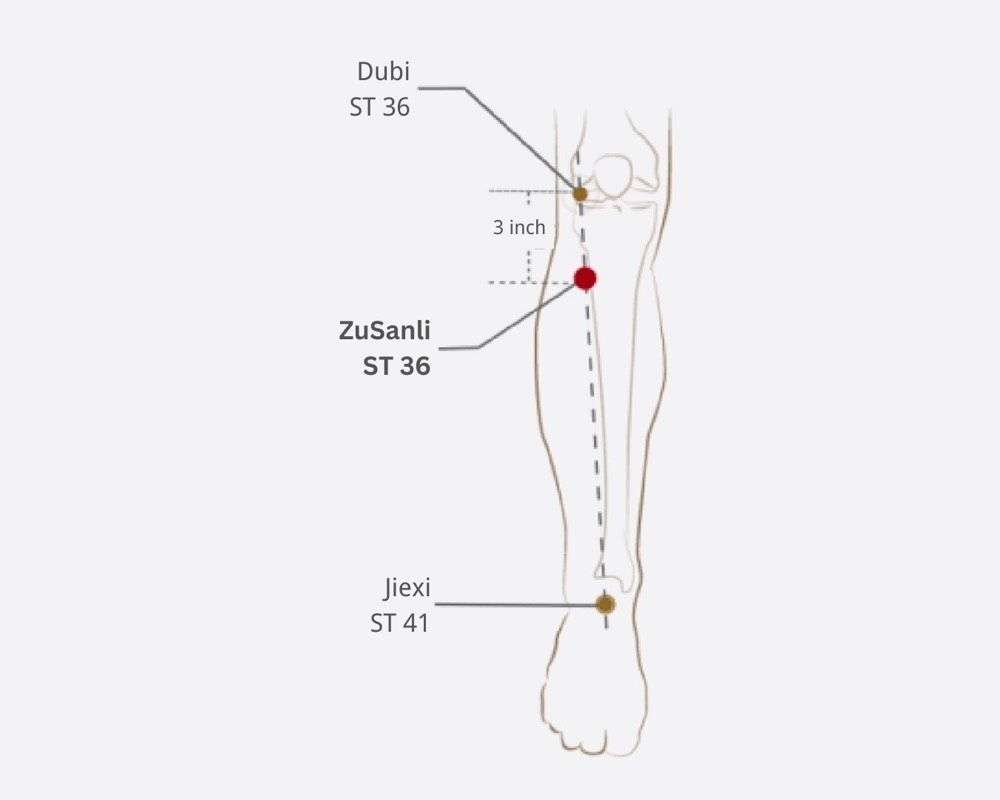
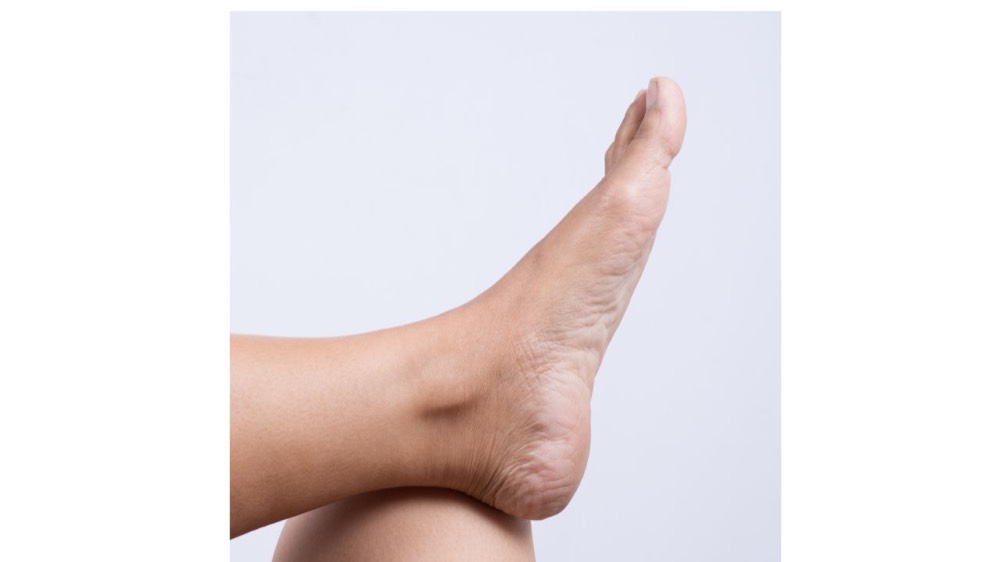
The points are ordinary and useful. Zusanli ST-36 ("Leg Three Li") supports the digestive supply line. Xuehai SP-10 ("Sea of Blood") sits two thumb-widths above the upper inner corner of the kneecap. Taixi KI-3 ("Great Ravine") sits between the inner ankle bone and the Achilles tendon, and is the classical anchor for the deeper reserve.
What’s Real, What’s Myth
Myth: dry skin means you are not drinking enough water. Drinking litres more rarely changes it, as most women have already discovered. In this framework the question is not how much fluid goes in but whether the body is turning it into something that reaches the skin, which is a digestive question rather than an intake one.
Myth: the answer is a stronger product. Moisturiser works on the surface and it is worth using, but if the supply from inside is the limiting factor, a better cream buys you an hour rather than a change. Both layers matter; only one of them is being addressed.
Myth: collagen supplements will sort it out. They may help some women and the evidence is mixed. What I would say clinically is that supplements land better in someone who is sleeping, eating warm regular meals and not sweating heavily every day — and worse in someone doing none of those things.
Myth: this pattern needs cooling because it is dryness with heat. It needs nourishing, not clearing. Where dryness comes with night heat and warm palms, the rule is to add moisture rather than to attack the heat, and cooling foods on their own tend to weaken the digestion that produces what you are short of.
Real: sleep timing does more than any food on this list. The classical view is that the deeper reserve is restored in the late-night hours, and midnight bedtimes spend precisely what you are trying to rebuild. Women who move their bedtime forward by an hour usually see it in their skin before they see it anywhere else.
Six Things You Can Do This Season
1. Be in bed before eleven, five nights out of seven. Unglamorous, free, and the item with the largest effect on this pattern. Give it a month before deciding it has not worked.
2. Eat black sesame (黑芝麻) most days. A tablespoon of ground black sesame stirred into porridge, yoghurt or congee is the classical staple for hair, skin and the deeper reserve. Ground rather than whole, or most of it passes straight through.
3. Cook a white fungus, lily bulb and pear compote once or twice a week. White fungus (银耳), lily bulb (百合) and a pear, simmered gently until soft, is the tradition’s standard dish for dryness — moistening rather than cooling, which is the distinction that matters here. Mulberries (桑葚) suit the same purpose stirred into porridge.
4. Keep breakfast warm and regular. The classical reading puts the digestive supply line at the centre of this pattern, and skipped or cold breakfasts undermine it daily. Add a thumbnail of chenpi (陈皮, aged tangerine peel) to anything rich so it does not sit heavily.
5. Stop exercising to heavy sweat. Move most days, but finish at a light sheen — heavy sweating spends the same fluid that is in short supply, which is why hot yoga so often leaves this pattern drier rather than better.
6. Press Zusanli ST-36, Xuehai SP-10 and Taixi KI-3 for a minute each side in the evening, gently. This pattern responds to consistency rather than intensity, and firm pressure is the wrong direction when the underlying problem is shortage.
When to See a Doctor
Dryness and thinning hair have medical explanations worth checking before you spend a season on food. Ask your GP for thyroid function, iron and ferritin, B12 and blood sugar. Low iron is common in menstruating women and produces dryness, hair loss and fatigue together.
Book an appointment for hair loss that is patchy rather than diffuse, for a receding hairline, for hair loss that is rapid, or for scalp redness, scaling or itching. These need looking at rather than nourishing.
See your GP if dryness affects your eyes and mouth persistently — a sensation of grit in the eyes and a mouth dry enough to need water with food — particularly alongside joint pain or fatigue. Also for skin that is itchy without an obvious rash, for new or changing moles, or for any rash that is spreading.
And if this arrived alongside changes in your cycle, disturbed sleep and heat at night, discuss it with your doctor rather than only reading about it. There are medical options worth knowing about, and understanding them puts the choice back with you.
Which Constitution This Usually Points To
Dryness with night heat, warm palms and soles, light dreamy sleep and a red tongue with little coating points toward a yin-deficient constitution (阴虚质). For this pattern the direction is to nourish rather than to clear, and the results come in seasons rather than weeks.
If the dryness comes with pallor, dizziness on standing, breathlessness on stairs and easy bruising instead, a qi-deficient constitution (气虚质) with not enough blood behind it is the more likely reading — and having your iron measured is the first step, not the last.
These two overlap in most women over forty. The quick assessment on this site walks you through 29 gentle questions in about three minutes and gives you a daily plan matched to your type, including which foods to build with and which to leave alone.
Keep Reading
Jittery, Not Strong
When the double espresso before training makes your hands shake and your legs weak.
Read →Tired Body, Racing Head
Exhausted and wide awake at midnight — and the classical answer that starts at your feet.
Read →Hot Shower, No Sleep
Why a scalding shower before bed leaves some people wide awake — and what temperature suits instead.
Read →Gritty Eyes by Four
Why eye drops help for twenty minutes — and what the classics say is actually running low.
Read →Heat That Isn’t Heat
Warm palms and night heat that ice water does not touch — and the classical reason why.
Read →Dry From Indoor Heating?
The heated-room desert, the inside-out fix, and the two kinds of dryness that need a doctor.
Read →Find Your Constitution
29 gentle questions, about three minutes, and you have your TCM body type — so this guidance actually fits you.
Take the quick quiz →Related
Learn about the Yin Deficiency constitution →Frequently Asked Questions
Why does drinking more water not help my dry skin?
Because in this framework the limiting factor is not how much fluid you take in but whether your body is converting it into something that reaches the skin. That is why the classical approach works on digestion, sleep and nourishing foods rather than on intake, and why litres of water rarely change anything.
What is the difference between yin and blood here?
They overlap considerably. Blood is the nourishing, moistening substance that reaches skin, hair, nails and eyes; yin is the deeper cooling reserve that sits behind it. In practice the same habits build both, which is why the classical food lists for the two are so similar.
Can I take prepared rehmannia or similar herbs?
Those belong in a formula chosen for you rather than taken on your own — they are rich and cloying, and in someone with a heavy tongue coating or sluggish digestion they tend to cause bloating. Start with food. If you want to go further, see a registered practitioner, and tell your doctor about anything you take alongside prescribed medication.
How long before my skin changes?
Skin turns over slowly, so expect six to eight weeks before you see much and a full season for a clear difference. Sleep and eyes usually improve first. If nothing at all has changed in three months, have your doctor check iron, thyroid function and B12 rather than adding more foods.
Last updated: 2026-07-13
This page offers general TCM educational perspectives, not medical advice or a diagnosis. For any health concern, please consult a licensed healthcare professional.