Dry, Gritty Eyes by Four O’Clock — Why the Classics Connect Your Eyes to Your Blood
One line from the Neijing explains the whole thing: prolonged looking harms the blood.
Reviewed by Jimmy Yu, Certified Acupuncturist · Updated 2026-07-13
Quick answer
The Neijing says the liver receives blood and can then see, and that prolonged looking harms the blood. Eyes that feel dry and gritty by late afternoon after a screen day are read as a supply problem rather than a surface one, which is why drops help for twenty minutes and change nothing.
Sandpaper by the End of the Working Day
The morning is fine. By four in the afternoon your eyes feel like sandpaper, the screen has developed a faint blur, and there is a dull ache behind them and out toward the temples.
Drops help for about twenty minutes. Then it is back, and by the third bottle most women have concluded that this is simply what screens do.
There is usually more, once you look for it. Blurring that comes and goes rather than staying. Floaters that appeared in the last year or two. Eyes that are worse in the week before a period and worse when you are run down.
And a set of things that seem unrelated: hair that is coming out more in the brush, nails that split, sleep that is lighter than it used to be. In this tradition those are not unrelated at all.
How Chinese Medicine Reads It
The Suwen chapter "Wu Zang Sheng Cheng" (《黄帝内经·素问·五脏生成》) states the relationship directly
肝受血而能视
the liver receives blood and can then see. Vision is described as depending on supply, not simply on the eye.
《黄帝内经·素问·五脏生成》
The Lingshu chapter "Mai Du" (《灵枢·脉度》) adds the channel connection
肝气通于目,肝和则目能辨五色矣
the liver qi opens into the eyes, and when the liver is in harmony the eyes can distinguish the five colours.
《灵枢·脉度》
Then the Suwen chapter "Xuan Ming Wu Qi" (《素问·宣明五气》) supplies the cost, in three characters that could have been written for the modern working day: 久视伤血 — prolonged looking harms the blood.
Put those three lines together and you have the whole argument. The eyes draw on blood in order to function, staring at a fixed point for hours consumes it, and when supply runs low the eyes are among the first places you notice.
This is why drops help so briefly. They address the surface, and in this framework the shortfall is behind it. It is also why the same eyes are worse in the week before a period, worse after a bad night, and worse in a run of demanding weeks — all of which draw on the same account.
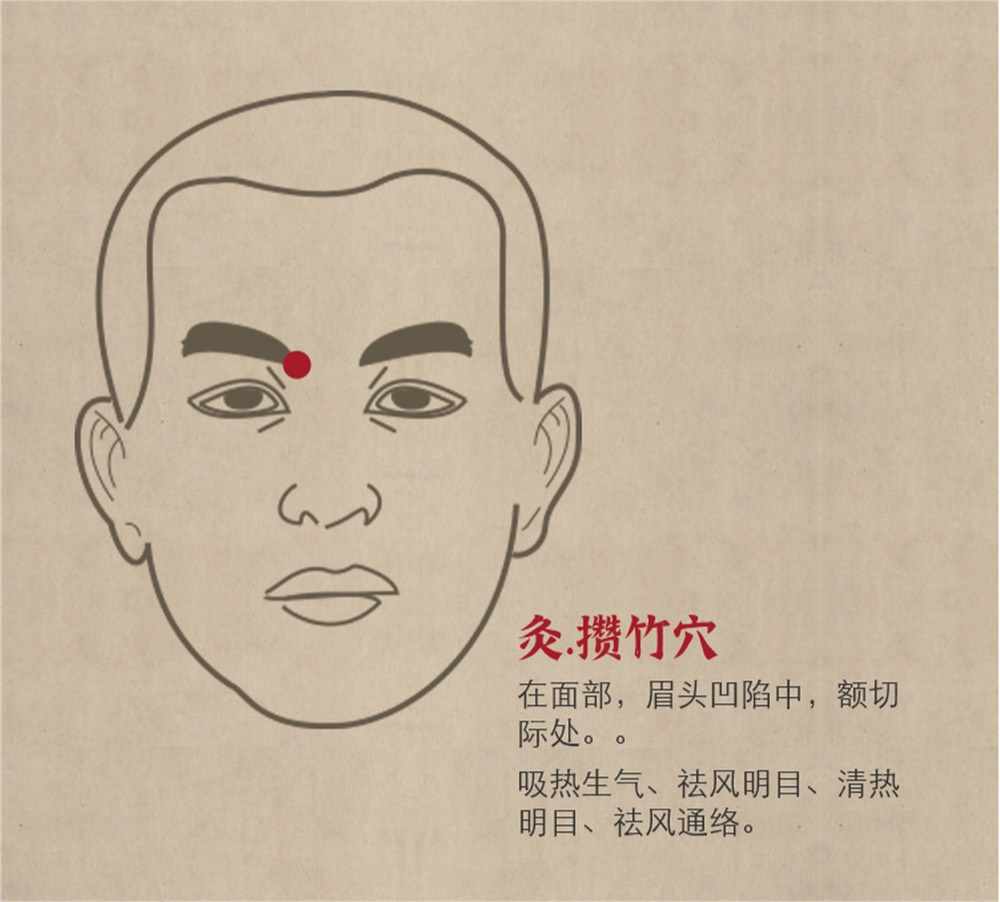
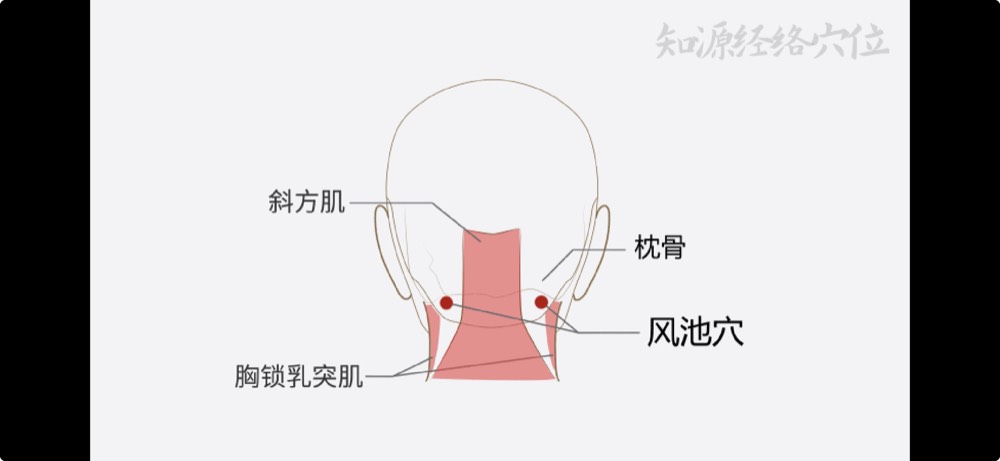
The points are all reachable and gentle. Cuanzhu BL-2 ("Bamboo Gathering") sits in the notch at the inner end of the eyebrow. Fengchi GB-20 ("Wind Pool") sits in the two hollows at the base of the skull. Taichong LR-3 ("Great Surge") sits on the top of the foot in the groove between the first and second bones. Taixi KI-3 ("Great Ravine") sits between the inner ankle bone and the Achilles tendon.
What’s Real, What’s Myth
Myth: blue light is the main problem. Screen use matters, but the mechanism most people describe is not light — it is that you blink far less when concentrating, and the fixed focal distance holds the focusing muscles in one position for hours. Blinking and changing distance address more than a filter does.
Myth: drops are the answer. They are useful and they are symptomatic. If you are on your third bottle in a month, that is information: the surface is being topped up and the supply behind it is not being addressed.
Myth: goji and chrysanthemum tea suits everyone with tired eyes. The pairing is genuinely classical for this purpose. But chrysanthemum (菊花) is cooling, and in someone who is already cold with a weak digestion, drinking it daily produces bloating and loose stools. If you run cold, use goji alone or add a slice of ginger, and use the white variety (杭白菊) rather than the bitter wild one.
Myth: floaters are nothing to worry about. Long-standing, stable floaters are usually unremarkable. A sudden shower of new floaters, flashes of light, or a shadow or curtain across your vision is an emergency, and that distinction is worth knowing rather than looking up afterwards.
Real: the twenty-twenty-twenty rule outperforms everything else here. Every twenty minutes, look at something twenty feet away for twenty seconds. Dull, free, and the single most effective item in this article.
Six Things You Can Do This Week
1. Every twenty minutes, look at something twenty feet away for twenty seconds. Set a repeating timer for a week until it becomes automatic. This is the item that changes how four o’clock feels.
2. Blink properly, on purpose, ten times an hour. Full, slow, complete closures. People concentrating on a screen blink roughly a third as often as usual and only partially, which is most of the dryness right there.
3. Warm the eyes rather than cooling them. A clean warm flannel over closed eyes for two minutes at the end of the day, then gentle pressure at Cuanzhu BL-2 ("Bamboo Gathering") in the notch at the inner eyebrow for thirty seconds each side. Warm, not hot, and gentle — this is delicate tissue.
4. Work Fengchi GB-20 ("Wind Pool") for a minute. Both thumbs into the hollows at the base of the skull, pressing slightly upward and inward while your head tips back a little. Tired eyes and a tight base of the skull travel together, and this is often where the ache actually eases.
5. Make goji (枸杞) and chrysanthemum (菊花) tea — the classical pairing for tired eyes. A small handful of goji berries and a few white chrysanthemum flowers in hot water. If you run cold or your digestion is weak, use goji alone or add a slice of fresh ginger, since chrysanthemum is cooling.
6. Support the supply side. Black sesame (黑芝麻) ground into porridge, mulberries (桑葚), dark leafy greens, and — the one people least want to hear — being in bed before eleven. In classical timing the late-night hours are when this account is restored.
When to See a Doctor or Optometrist
Some eye symptoms are emergencies and are worth knowing before you need them. A sudden shower of new floaters, flashes of light, a curtain or shadow across part of your vision, or sudden loss of vision in one eye all need same-day emergency assessment. So does a painful red eye with reduced vision, or sudden severe eye pain with headache and nausea.
See your optometrist if blurring has become constant rather than intermittent, if you are struggling to read at a distance you used to manage, or if you have not had an eye examination in two years. Uncorrected or changing prescriptions are a common and entirely fixable cause of tired eyes and headaches — and this is worth checking before any of the above.
Book a GP appointment for persistent dryness of both eyes and mouth, especially with joint pain or fatigue, since that combination needs proper assessment. Also for eye dryness that began after a new medication, since several common ones cause it.
And ask for iron and ferritin and thyroid function if the eye symptoms sit alongside hair shedding, brittle nails and fatigue. Thyroid conditions can also cause eye changes specifically, which is worth mentioning if your eyes feel gritty and look different.
Which Constitution This Usually Points To
Dryness with night heat, warm palms and soles, a dry mouth, light dreamy sleep and a red tongue with little coating points toward a yin-deficient constitution (阴虚质). For this pattern the direction is to nourish rather than to cool — and heavy sweating, hot studios and late nights are the three things that make it worse.
If the eyes are tired rather than hot, with a pale complexion, dizziness on standing, hair shedding, brittle nails and light periods, a qi-deficient constitution (气虚质) with not enough blood behind it is the more likely reading — and having your iron measured comes before anything else.
If the ache is more about tight temples, red eyes and a bitter taste in the morning, constraint has generated heat, and the brisk walking matters more than the food.
The quick assessment on this site walks you through 29 gentle questions in about three minutes and gives you a daily plan matched to your type, including whether chrysanthemum actually suits you.
Keep Reading
Jittery, Not Strong
When the double espresso before training makes your hands shake and your legs weak.
Read →Tired Body, Racing Head
Exhausted and wide awake at midnight — and the classical answer that starts at your feet.
Read →Hot Shower, No Sleep
Why a scalding shower before bed leaves some people wide awake — and what temperature suits instead.
Read →When Creams Stop Working
Dry skin, dull complexion and flat energy after a demanding decade — what the classics said changes at thirty-five.
Read →Heat That Isn’t Heat
Warm palms and night heat that ice water does not touch — and the classical reason why.
Read →Dry From Indoor Heating?
The heated-room desert, the inside-out fix, and the two kinds of dryness that need a doctor.
Read →Find Your Constitution
29 gentle questions, about three minutes, and you have your TCM body type — so this guidance actually fits you.
Take the quick quiz →Related
Learn about the Yin Deficiency constitution →Frequently Asked Questions
Do blue light glasses help?
The evidence for blue light specifically is weak. What clearly does help is blinking properly, changing focal distance every twenty minutes, and having your prescription checked. If glasses prompt you to take screen breaks, that is a real benefit — just not the one on the packaging.
Is chrysanthemum tea suitable for everyone?
No. It is cooling, and daily use in someone who is already cold with a weak digestion produces bloating and loose stools. Use the white variety rather than the bitter wild one, keep it occasional rather than as a daily drink, and if you run cold use goji berries alone or add a slice of ginger.
Why are my eyes worse before my period?
In this framework the eyes and the cycle draw on the same resource, so a shortfall becomes most visible in the days before and during a period. It is one of the more reliable confirmations of the pattern — and, again, a reason to have your iron checked if it is marked.
Should I use warm or cold compresses?
Warm, for this pattern. A clean warm flannel over closed eyes for two minutes suits dryness and tired focusing muscles better than cooling. Cold suits acute swelling or an allergic flare instead — different situation, different direction.
Last updated: 2026-07-13
This page offers general TCM educational perspectives, not medical advice or a diagnosis. For any health concern, please consult a licensed healthcare professional.