The Hot Shower That Wakes You Up — Why Very Hot Water Before Bed Backfires
The Neijing says the gates close in the evening. A scalding shower is a request to open them again.
Reviewed by Jimmy Yu, Certified Acupuncturist · Updated 2026-07-13
Quick answer
The Neijing describes yang qi as waning through the evening, with the body’s surface closing as the day ends. A very hot shower or bath reopens it and provokes sweating, which is why some people come out of the bathroom alert and hot rather than relaxed and sleepy.
Out of the Shower and Wide Awake
It is supposed to be the wind-down. Very hot shower, ten or fifteen minutes, straight into bed. For a good number of people it works exactly as intended.
For others it does the opposite, and they have usually never connected the two. Out of the bathroom red-faced and slightly buzzing, a warm face for the next hour, and sleep that arrives at midnight rather than eleven.
The tell is often the night that follows: waking at two or three feeling warm, sometimes with a damp neck or back, and a dry mouth.
These are usually the same people who feel worse after a sauna or a hot yoga class — hotter at night rather than more relaxed. That is not a coincidence, and it points at which group you are in.
How Chinese Medicine Reads It
The Suwen chapter "Sheng Qi Tong Tian Lun" (《黄帝内经·素问·生气通天论》) describes the shape of the day
平旦人气生,日中而阳气隆,日西而阳气已虚,气门乃闭
at dawn the qi rises, at midday the yang is at its height, by evening it has waned, and the gates close.
《黄帝内经·素问·生气通天论》
The gates close. In this framework the surface of the body opens through the day and shuts down at night, and that closing is part of what allows sleep to happen.
A very hot shower is a direct request to open it again. Heat brings things to the surface, provokes sweating, and undoes the transition the evening was in the middle of making.
The Suwen chapter "Yin Yang Bie Lun" (《素问·阴阳别论》) supplies the other half
阳加于阴谓之汗
when yang acts upon yin, that is sweat. Sweat in this system is not waste; it is produced from the substance you are trying to conserve, which is why heavy sweating late at night leaves some people drier and hotter rather than calmer.
《素问·阴阳别论》
This is why the same shower divides people so cleanly. Someone with plenty in reserve loses a little warmth and moisture and does not notice. Someone whose cooling side is already low spends what they are short of, at the worst hour of the day to be spending it.
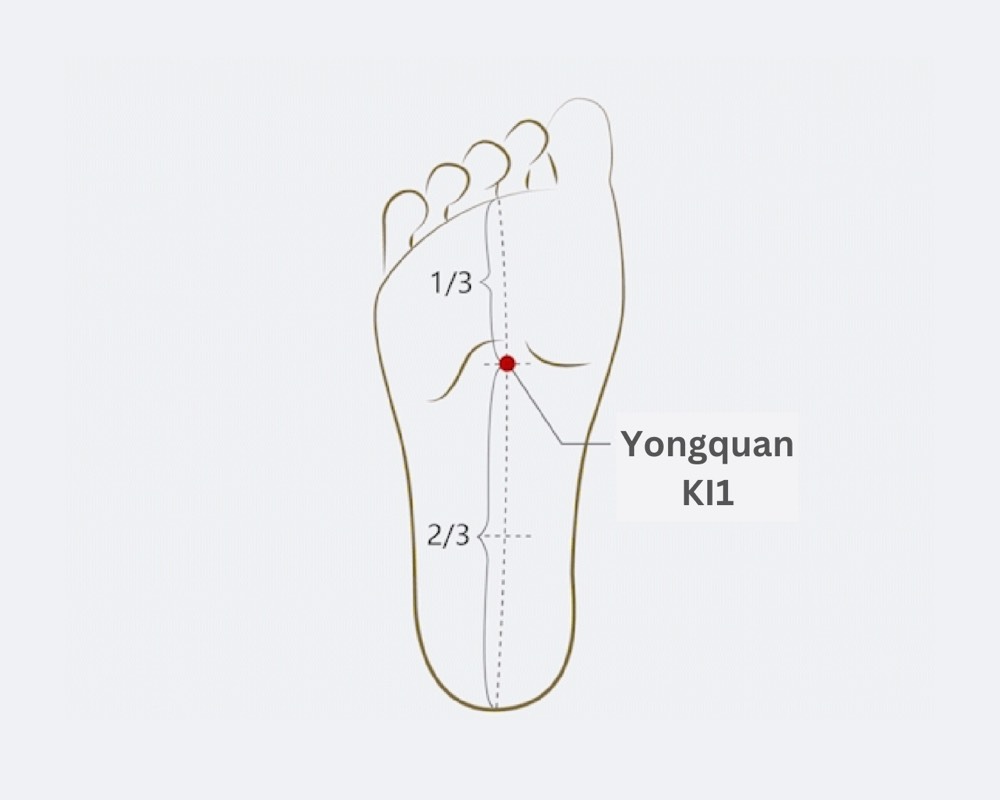
The alternative the tradition uses is a temperature gradient rather than heat all over. Warm feet, cooler head. Yongquan KI-1 ("Bubbling Spring") in the hollow on the sole, Taixi KI-3 ("Great Ravine") between the inner ankle bone and the Achilles tendon, and Yinxi HT-6 ("Yin Cleft") on the inner wrist, half a thumb-width above the crease on the little-finger side, are the points for a hot, restless night.
What’s Real, What’s Myth
Myth: a hot shower before bed helps everyone sleep. It genuinely helps a lot of people, and the mechanism most often cited is the drop in body temperature afterwards. What is less discussed is the group for whom it clearly backfires, and if you are in that group the advice has probably made you think something is wrong with you.
Myth: hotter is more relaxing. Past a certain point heat stops being relaxing and starts being a demand. If you come out red-faced and buzzing rather than heavy-limbed, that is the line, and it is worth taking seriously.
Myth: sweating in the evening clears the day out. In classical terms sweat is produced from the same substance that keeps you cool and settled overnight. A heavy sweat late in the day tends to produce a hotter, lighter, more broken night.
Myth: if you are hot at night you should have a cool shower instead. For an empty-fire picture that is the wrong direction too — cold closes the surface abruptly and does nothing about the shortfall underneath. Warm rather than hot, feet rather than whole body, is the middle path the tradition takes.
Real: the timing matters as much as the temperature. A hot shower ninety minutes before bed behaves quite differently from one at eleven fifteen. If you love a hot shower, move it earlier rather than giving it up.
Five Things You Can Do This Week
1. Run the two-week test. Keep everything else the same and move your shower to ninety minutes before bed at a comfortable rather than scalding temperature. If you fall asleep faster, you have your answer without giving anything up.
2. Swap the whole-body heat for a foot soak. Water at 38–40°C (100–104°F) for ten to fifteen minutes, half an hour before bed, stopping before you sweat. A tablespoon of ordinary salt suits a dry, hot-at-night picture; ginger belongs to a cold one instead.
3. Rub Yongquan KI-1 ("Bubbling Spring") for a minute on each sole afterwards, briskly, until the soles are warm. This is the step that produces the gradient — warm below, cooler above — that the hot shower was overriding.
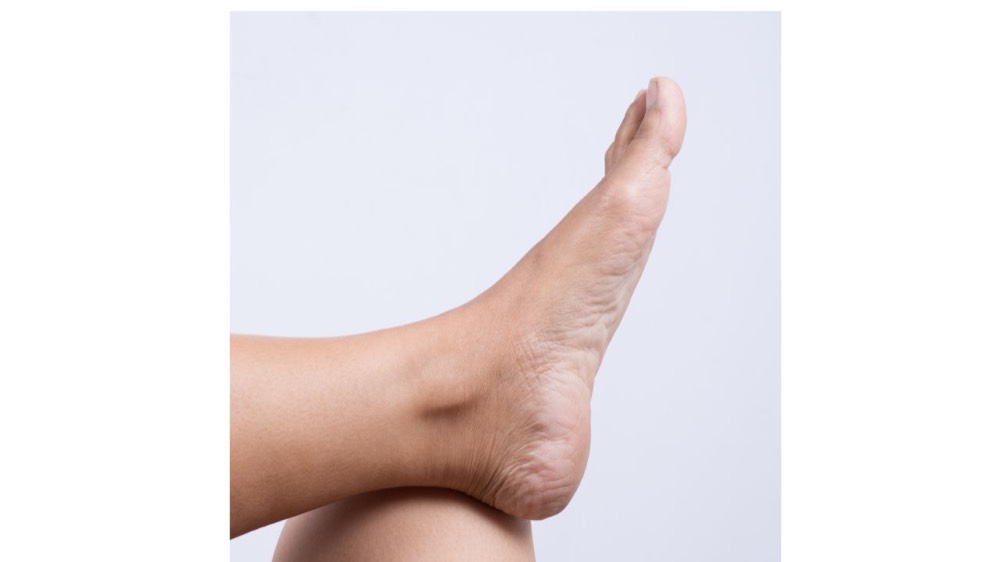
4. Add Taixi KI-3 ("Great Ravine") and, on the hot nights, Yinxi HT-6 ("Yin Cleft") for a minute each. Gentle sustained pressure. The second is the classical point for sweating at night specifically.
5. Keep the bedroom cool and be in bed before eleven. In classical timing the late-night hours are when the cooling side of the body is restored, and a warm room plus a midnight bedtime is the combination that keeps this pattern going indefinitely.
When to See a Doctor
See your GP promptly for drenching night sweats that soak the bedding, especially with fevers, unintended weight loss or new lumps. That combination is investigated for good reason and should not be filed under a hot shower.
Book an appointment for night heat with a racing heart, tremor, heat intolerance or unexplained weight loss, and ask about thyroid function. Also for any new sweating or heat that began after starting a medication, since several common ones cause it.
If you are in your forties or fifties and this arrived alongside changes in your cycle and disturbed sleep, discuss it with your GP rather than only adjusting your evening routine. There are effective medical options and knowing what is available puts the choice back with you.
Two safety notes on the steps above: if you have diabetes, neuropathy or reduced sensation in your feet, do not use hot water and check with your doctor first. And if sleep has been poor for more than a month, ask about cognitive behavioural therapy for insomnia by name — it is more effective than most people expect.
Which Constitution This Usually Points To
Feeling hot and wired after a hot shower, waking warm at two or three, a dry mouth, warm palms and soles, light dreamy sleep and a red tongue with little coating points toward a yin-deficient constitution (阴虚质). For this pattern the rule is to nourish rather than to heat or to cool, and hot baths, saunas and hot studios are the three specific things to reduce.
If a hot shower leaves you comfortable and sleepy and you feel the cold generally, a yang-deficient picture (阳虚质) is more likely, and warmth genuinely suits you — with the ginger in the foot soak rather than the salt.
If the wired feeling comes with irritability and tight ribs rather than heat, qi stagnation (气郁质) is leading, and brisk daily walking does more than any adjustment to the bathroom.
The quick assessment on this site walks you through 29 gentle questions in about three minutes and gives you a daily plan matched to your type, including whether your evening should be warming or cooling.
Keep Reading
Jittery, Not Strong
When the double espresso before training makes your hands shake and your legs weak.
Read →Tired Body, Racing Head
Exhausted and wide awake at midnight — and the classical answer that starts at your feet.
Read →Gritty Eyes by Four
Why eye drops help for twenty minutes — and what the classics say is actually running low.
Read →When Creams Stop Working
Dry skin, dull complexion and flat energy after a demanding decade — what the classics said changes at thirty-five.
Read →Heat That Isn’t Heat
Warm palms and night heat that ice water does not touch — and the classical reason why.
Read →Dry From Indoor Heating?
The heated-room desert, the inside-out fix, and the two kinds of dryness that need a doctor.
Read →Find Your Constitution
29 gentle questions, about three minutes, and you have your TCM body type — so this guidance actually fits you.
Take the quick quiz →Related
Learn about the Yin Deficiency constitution →Frequently Asked Questions
So should I stop having hot showers?
Not necessarily — move them earlier and lower the temperature first. Ninety minutes before bed at a comfortable heat suits most people who currently find them counterproductive. If that changes nothing in two weeks, temperature is not your variable.
What temperature counts as too hot?
The practical test is how you come out. Heavy-limbed and sleepy is fine. Red-faced, buzzing, or still warm half an hour later is too hot for you, whatever the number on the dial. Skin that is pink rather than red is a reasonable visual guide.
Why does a foot soak work when a shower does not?
Because it creates a gradient rather than heating everything. Warmth at the lowest point draws things downward, which is the direction the evening is supposed to go. A whole-body hot shower does the opposite — it brings everything to the surface at the hour it should be settling inward.
Is this the same reason saunas leave me feeling worse?
Usually, yes. Heavy sweating spends the same fluid that keeps this pattern settled, so people with a dry, hot-at-night picture often report hotter nights and more dryness after a few weeks of regular sauna use. Gentle movement without heavy sweating suits far better.
Last updated: 2026-07-13
This page offers general TCM educational perspectives, not medical advice or a diagnosis. For any health concern, please consult a licensed healthcare professional.