Dark Clots and Pain That Eases After Day Two — What Your Period Is Telling You About Your Body Type
Three things worth noticing each month: the colour, the clots, and exactly when the pain lets go.
Reviewed by Jimmy Yu, Certified Acupuncturist · Updated 2026-07-13
Quick answer
In Chinese medicine, dark blood with clots and cramping that eases once flow gets going points to blood stasis — movement that has become sluggish. Pale, light flow with a dull ache that worsens as the period goes on points instead to a shortfall. The two suit almost opposite approaches, so telling them apart matters.
The Three Details Nobody Asks You About
Most women have never been asked what colour their period is. They have been asked how heavy and how painful, and that is usually where it stops.
In a Chinese medicine consultation these are the first questions, and the answers sort people quickly. Dark, almost brown blood with clots, cramping that is worst on the first day and lets go once the flow is properly established — that is one picture.
Pale, thin, lighter flow with a dull dragging ache that gets worse as the days go on, and a bone-tiredness afterwards that takes most of a week — that is a different one entirely.
A third group describes cold: pain that is better with a hot water bottle and worse with cold weather or cold drinks, with dark clotted blood alongside it.
These distinctions are not trivia. They point in different directions, and the approach that suits one is often the wrong approach for another.
How Chinese Medicine Reads It
The Suwen chapter "Tiao Jing Lun" (《黄帝内经·素问·调经论》) gives the governing principle for blood in one line
血气者,喜温而恶寒,寒则泣不能流,温则消而去之
blood and qi like warmth and dislike cold; with cold they congeal and will not flow, with warmth they disperse and move on.
《黄帝内经·素问·调经论》
That sentence explains most of what women notice about their cycles. Cold thickens and slows. Warmth loosens and moves. Which is why a hot water bottle changes some period pain within minutes and does nothing at all for others.
The tradition reads pain by asking when it eases. Pain that is sharp and fixed, worst before and at the very start of a period, and clearly better once the flow gets going and the clots pass, is described as stasis — something not moving that then moves.
Pain that is dull and dragging, that worsens as the days go on and the flow reduces, that responds to pressure and warmth and leaves you exhausted afterwards, is described as a shortfall. There is not enough to nourish, and the ache is the consequence.
The other classical rule matters just as much: qi moves blood. Blood does not circulate on its own account, so where qi is constrained — tight ribs, breast tenderness, irritability in the week before — the blood tends to follow. This is why classical practice moves the qi first and the blood second, in that order.
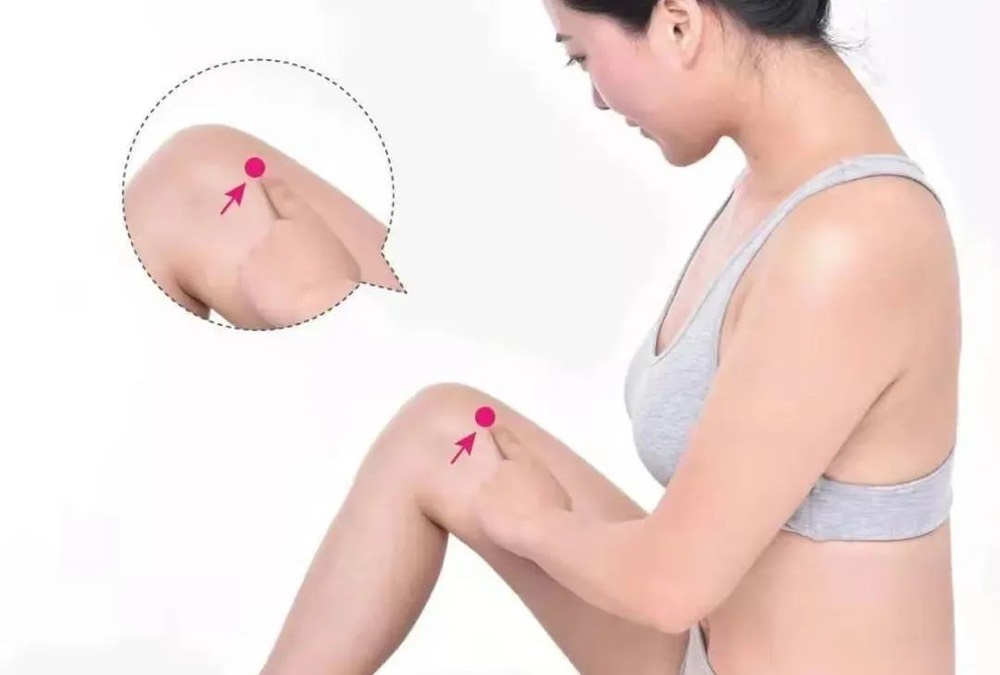
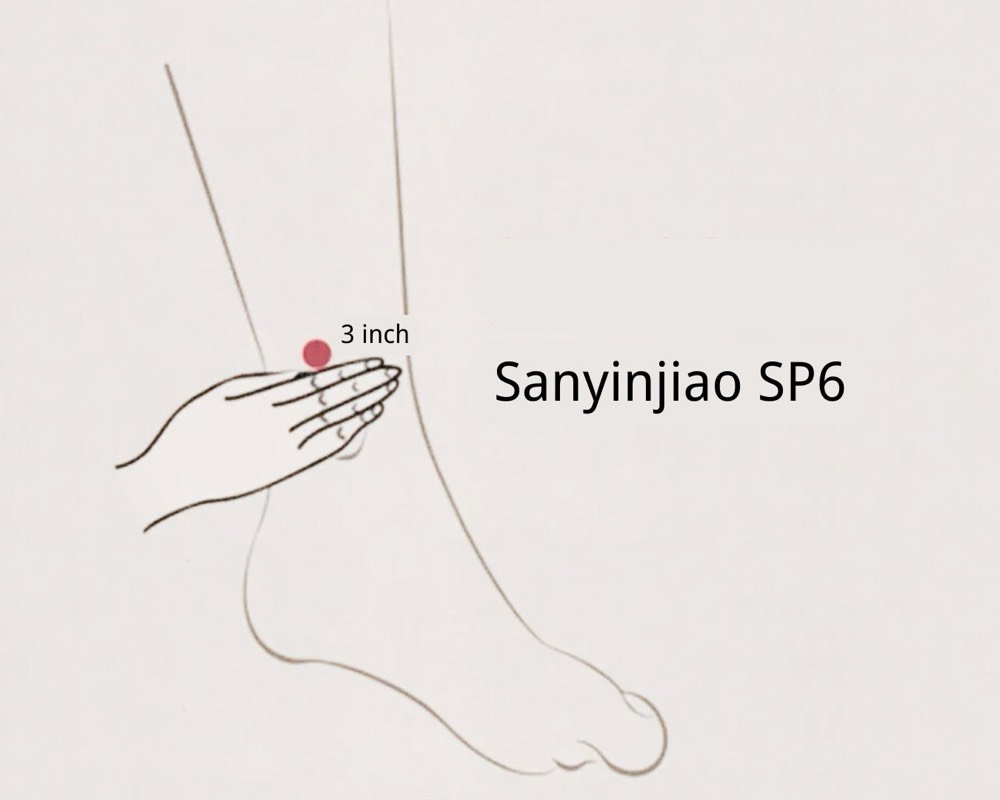
The points are few and specific. Xuehai SP-10 ("Sea of Blood") sits on the inner thigh, two thumb-widths above the upper inner corner of the kneecap. Sanyinjiao SP-6 ("Three Yin Intersection") sits four finger-widths above the inner ankle bone — and must not be used during pregnancy. Taichong LR-3 ("Great Surge") sits on the top of the foot between the first two bones. Guanyuan CV-4 ("Origin Pass") sits four finger-widths below the navel, and like all lower-abdominal points is avoided in pregnancy.
What’s Real, What’s Myth
Myth: clots always mean something is wrong. Small dark clots on the heaviest day are common and, in this framework, mostly a comment on how freely things are moving. What is worth a doctor’s attention is different: clots larger than a ten-pence coin or a quarter, soaking through protection hourly, or a marked change from your own normal.
Myth: period pain is just something to put up with. Pain severe enough to keep you off work or unresponsive to ordinary pain relief is not something to accept quietly. It should be assessed properly, and that is true whatever framework you are reading about afterwards.
Myth: warmth is always the answer for period pain. It suits a cold, clotted picture very well and can make a hot, heavy picture worse — the tell there is bright red heavy flow with a bitter taste and irritability rather than dark clots and a preference for hot water bottles. Warmth over the lower abdomen can also increase flow, which matters if yours is already heavy.
Myth: rose and hawthorn tea are gentle enough for anyone. They are not. Rose (玫瑰花), hawthorn (山楂) and notchleaf (三七) are all contraindicated in pregnancy and in heavy menstrual bleeding. If your periods are heavy, or if you take blood-thinning medication, do not take them without speaking to your doctor or practitioner first.
Real: stretching alone will not shift a stasis picture. This is the correction I make most often. Movement that raises the heart rate — brisk walking, cycling, swimming — is what gets blood moving; stretching afterwards keeps things supple. Doing only the second half is why some women stretch faithfully for a year with little change.
Six Things You Can Do This Cycle
1. Keep three notes each month: colour on the heaviest day, whether there are clots, and exactly when the pain eases. Three cycles of this tells you more than any amount of reading, and it is the single most useful thing in this article.
2. Move the qi first, in the week before. Brisk walking for twenty to thirty minutes, four times a week, at a pace where your breathing changes. In a stasis picture this matters more than anything you press, and the week before the period is when it counts.
3. Add the stretching after the walking, not instead of it. Ten minutes of hips, low back and inner thighs once you are warm. Both halves, in that order.
4. Warm the lower abdomen for a cold, clotted picture. A covered heat pack at a comfortable 40–42°C over Guanyuan CV-4 ("Origin Pass") for fifteen minutes, in the days before and at the start of your period. Absolutely not in pregnancy. If your flow is already heavy, keep it brief and check with your practitioner, and never use heat over numb skin.
5. Press Xuehai SP-10 ("Sea of Blood") and Sanyinjiao SP-6 ("Three Yin Intersection") for a minute each side in the week before. Firm comfortable pressure while sitting. Sanyinjiao SP-6 is contraindicated in pregnancy — skip it entirely if there is any chance you are.
6. For a cold, clotted picture, the classical kitchen trio is hawthorn (山楂), wood ear fungus (木耳) and chenpi (陈皮, aged tangerine peel) — hawthorn in small amounts as food, wood ear in soups and stir-fries, chenpi in anything rich. Skip the hawthorn entirely if your periods are heavy or you might be pregnant.
When to See a Doctor
This is the section that matters most in this article, because several things that change a period need proper assessment rather than a food change.
Book an appointment for periods that have become much heavier than your normal, that soak through protection every hour or two, that pass clots larger than a coin, that last longer than seven days, or that leave you dizzy and breathless. Persistent heavy bleeding is a common cause of low iron and it is worth measuring rather than guessing at.
See your GP for bleeding between periods or after intercourse, for any bleeding after menopause, for periods that have become severely painful when they were not before, for pain during intercourse, or for cycles that have become markedly irregular. Severe period pain that is not helped by ordinary pain relief also deserves a proper look — it is common and it is not something you simply have to tolerate.
Two safety notes on the steps above. Do not use warmth over the lower abdomen, Sanyinjiao SP-6, or hawthorn, rose or notchleaf during pregnancy. And if you take blood-thinning medication or have a bleeding disorder, speak to your doctor before using any of the blood-moving foods or herbs mentioned here.
Which Constitution This Usually Points To
Dark blood, clots, sharp pain that eases once the flow is properly going, and a tendency to bruise easily point toward a blood stasis constitution (血瘀质). The order for this pattern is fixed in classical practice: move the qi first, then the blood — and aerobic movement does more of the work than anything you eat.
Pale thin flow with a dull ache that worsens as the days go on, plus exhaustion afterwards and a pale complexion, points toward a qi-deficient constitution (气虚质) with not enough blood behind it. That one is built slowly with warm food, earlier nights, and having your iron checked.
If breast tenderness, irritability and tight ribs dominate the week before, a qi stagnation constitution (气郁质) is leading the picture, and the walking matters more than the warmth.
The quick assessment on this site walks you through 29 gentle questions in about three minutes and gives you a daily plan matched to your type, including which of these foods and points suit your cycle and which to leave alone.
Keep Reading
What Do My Nails Say?
Reading ridges, spots, half-moons and nail colour the TCM way.
Read →The Knot That Returns
Why deep tissue work relieves it for three days and then it is back in the same square inch.
Read →Dark Circles vs Puffiness
Two different things happening in the same square inch — and why one eye cream cannot address both.
Read →Cold Hands, Warm Body
When the warmth is stuck rather than missing — and the one clue that tells you which you have.
Read →Gritty Eyes by Four
Why eye drops help for twenty minutes — and what the classics say is actually running low.
Read →The Fortnight Before
Why the difficult week responds to what you did a fortnight earlier — and what to do in that window.
Read →Find Your Constitution
29 gentle questions, about three minutes, and you have your TCM body type — so this guidance actually fits you.
Take the quick quiz →Related
Learn about the Blood Stasis constitution →Frequently Asked Questions
Is dark blood at the start and end of a period normal?
Darker blood at the very beginning and the very end is common and simply reflects slower flow. What Chinese medicine reads more closely is the colour on your heaviest day, and whether clots come with sharp pain that eases once they pass. Any marked change from your own normal is worth a GP appointment.
Why does a hot water bottle help me and not my sister?
Because you probably have different patterns. Warmth suits a cold, clotted picture — dark blood, pain better with heat, worse with cold. It does much less for a hot, heavy picture with bright red flow, and it can increase flow when a period is already heavy.
Can I drink rose tea for period pain?
Only if your periods are not heavy and you are not pregnant or trying to conceive. Rose, hawthorn and notchleaf all move blood, and all three are contraindicated in pregnancy and in heavy bleeding. Check with your doctor first if you take blood-thinning medication.
How many cycles before I can tell whether something is helping?
Three. One cycle tells you very little because month-to-month variation is normal, two shows a direction, and three is enough to be reasonably confident. Track the same three details each month so you are comparing like with like.
Last updated: 2026-07-13
This page offers general TCM educational perspectives, not medical advice or a diagnosis. For any health concern, please consult a licensed healthcare professional.