Dark Circles or Puffy Bags — They’re Not the Same Thing, and They Don’t Share a Fix
One is about colour and one is about fluid. Look in the mirror and decide which you actually have.
Reviewed by Jimmy Yu, Certified Acupuncturist · Updated 2026-07-13
Quick answer
Chinese medicine separates darkness under the eyes from puffiness. Dark, dusky colour is read as blood that is not moving well; soft puffiness that is worst on waking is read as fluid the body is not shifting. They come from different places and respond to different things.
Look Closely Before You Buy Another Cream
Stand in daylight and look properly. Is the skin under your eyes darker than the skin on your cheek — dusky, bluish, purplish? Or is the area raised and soft, a pouch that is worst when you wake and settles a little by lunchtime?
Most women have been calling both of these the same thing for years, and buying products aimed at whichever one the packaging mentions.
They behave differently, which is the clue. The darkness is fairly constant and worse when you are tired or run down. The puffiness fluctuates — worse after a salty meal, worse after a poor night, worse in humid weather, better after a walk.
Different behaviour, different pattern, different plan. And a fair amount of money currently being spent on the wrong one of the two.
How Chinese Medicine Reads It
The Lingshu chapter "Da Huo Lun" (《灵枢·大惑论》) begins from the general principle
五脏六腑之精气,皆上注于目
the refined qi of all the organs pours upward into the eyes. The eye region is described as a place where the state of the whole system becomes visible.
《灵枢·大惑论》
From there the tradition sorts by what you can actually see. Colour is one question. Shape is another.
Dark, dusky, bluish colouring is read as blood that is not moving freely. The Suwen chapter "Ju Tong Lun" (《素问·举痛论》) gives the general rule — 不通则痛, where there is no free passage there is pain — and the same principle applied to colour produces the dusky quality you see under the eyes of someone who is exhausted, cold, or carrying long-standing stasis. The same pattern shows in dark, clotted periods and in bruises that take a while to fade.
Puffiness is a fluid question. The Suwen chapter "Zhi Zhen Yao Da Lun" (《素问·至真要大论》) states
诸湿肿满,皆属于脾
all damp swelling and fullness belongs to the Spleen. The lower eyelid is soft tissue in a dependent position, so it is one of the first places fluid that is not moving shows up, which is why it is worst on waking and eases as the day goes on.
《素问·至真要大论》
There is a third possibility worth naming: darkness that is genuinely pigment or shadow rather than either pattern. Deep tear troughs cast a shadow, thin skin shows the vessels beneath, and some darkness is simply inherited. Those do not respond to any of this, and it is more useful to know that than to keep trying.
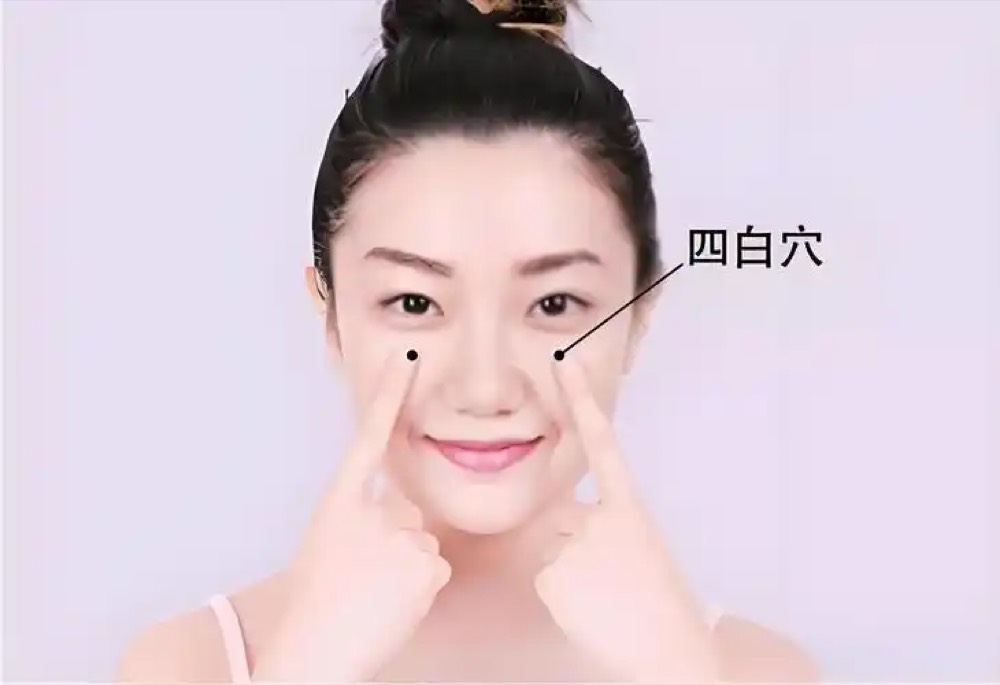
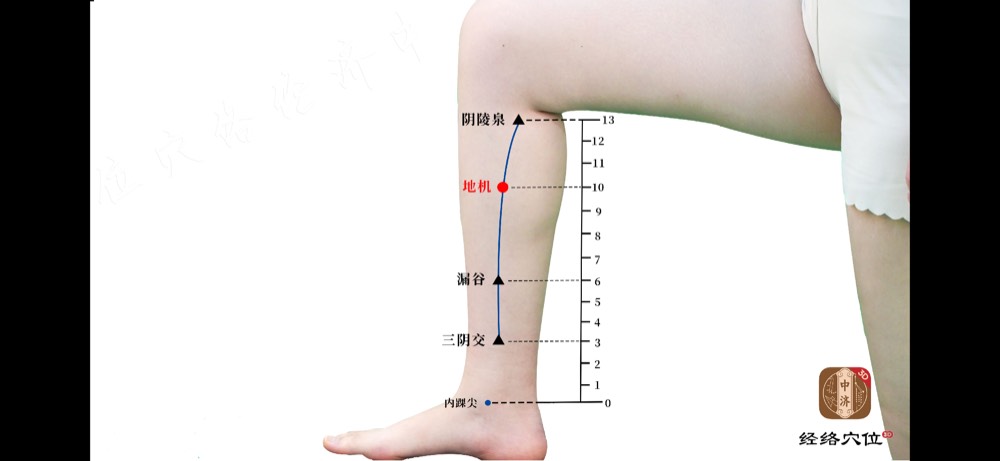
The points are gentle ones. Cuanzhu BL-2 ("Bamboo Gathering") sits in the notch at the inner end of the eyebrow. Sibai ST-2 ("Four Whites") sits in the small hollow about a finger-width below the lower edge of the eye socket, in line with the pupil. For fluid: Yinlingquan SP-9 ("Yin Mound Spring") below the inner knee and Zusanli ST-36 ("Leg Three Li") below the kneecap.
What’s Real, What’s Myth
Myth: dark circles mean you are not sleeping enough. Sleep is one contributor and rarely the whole story. Plenty of women sleeping eight hours have them, and they persist through a good holiday. Iron levels, long-standing cold, allergies and inherited skin thickness all matter more than people expect.
Myth: a good eye cream will address both. Creams work on the surface, and neither pattern here lives on the surface. That is not an argument against using one — it is an argument for not expecting it to change dusky colouring or morning puffiness.
Myth: cold spoons and caffeine patches are the answer to puffiness. They constrict things temporarily and the effect lasts an hour or two. Useful before a wedding, irrelevant to the pattern.
Myth: puffiness means you need to drink less water. Usually the opposite of what helps. In this framework the issue is fluid the body is not moving rather than fluid you took in, and salt, alcohol and stillness are the more common contributors.
Real: sleeping with your head slightly raised does more for morning puffiness than most products. An extra pillow, and cutting the evening salt and alcohol, is the unglamorous answer that actually works.
Six Things You Can Do This Month
1. Decide which one you have, in daylight, before changing anything. Darker colour than the surrounding skin, fairly constant, is the first pattern. Raised soft tissue, worst on waking, is the second. If it is both, work on the puffiness first — it moves faster.
2. For puffiness: raise the head of your bed or add a pillow, cut the evening salt and alcohol, and walk daily. These three between them account for most of what changes in the first fortnight.
3. For puffiness, press the fluid points. Yinlingquan SP-9 ("Yin Mound Spring") in the hollow below the inner knee and Zusanli ST-36 ("Leg Three Li") a hand-width below the kneecap, a minute each side. Add dry-fried coix seed (炒薏米) with a thumbnail of chenpi (陈皮) in congee if mornings are heavy generally.
4. For darkness: keep warm, and move daily. Brisk walking four times a week is the classical answer for anything described as not moving freely, and it does more here than anything applied to the skin. If you are cold generally, warmth on the lower back and abdomen belongs in the plan too.
5. Work the eye points gently, once a day. Press Cuanzhu BL-2 ("Bamboo Gathering") in the notch at the inner eyebrow for thirty seconds each side, then Sibai ST-2 ("Four Whites") a finger-width below the eye socket for thirty seconds. Very light pressure — this is delicate tissue and more is not better.
6. Have your iron checked if the darkness is marked. Low ferritin is common in menstruating women and it is one of the more correctable contributors to this particular appearance.
When to See a Doctor
See your GP for puffiness around the eyes that is new and persistent, that does not settle by the afternoon, or that comes with swelling of the ankles, breathlessness, or a change in how much you are passing water. Facial puffiness with those features is worth checking for kidney, thyroid and heart-related causes rather than reading as a pattern.
Seek urgent attention for swelling around one eye only, especially with redness, pain, fever, or any change in vision or eye movement — that needs same-day assessment. The same for sudden swelling of the face, lips or tongue with difficulty breathing.
Book an appointment for darkness that has appeared quickly, for darkness with unintended weight change, dizziness, or unusual fatigue, and for allergy symptoms year-round, since persistent nasal congestion is a genuine and correctable contributor to under-eye shadowing in some people.
Ask for iron and ferritin, thyroid function and kidney function if this is new. And if the appearance is affecting how you feel about yourself day to day, a dermatologist or an aesthetic doctor can tell you honestly which part of it is structural and which part is not — that is useful information rather than a vanity question.
Which Constitution This Usually Points To
Dusky, dark colouring under the eyes alongside dark clotted periods, bruises that take a while to fade, a fixed ache somewhere that has been there for years, and a dull complexion points toward a blood stasis constitution (血瘀质). The classical order matters here: move the qi first with brisk daily walking, then the blood, and expect a season rather than a fortnight.
Soft puffiness that is worst on waking, with heavy legs by the evening, a swollen-edged tongue with a thick coating and symptoms worse in humid weather, points toward a phlegm-damp constitution (痰湿质), where cutting salt, sugar and cold drinks does most of the work.
If both are present alongside a pale complexion, dizziness on standing and light periods, a qi-deficient constitution (气虚质) is sitting underneath both, and building it is the slower half of the plan.
The quick assessment on this site walks you through 29 gentle questions in about three minutes and gives you a daily plan matched to your type, so you are not working on the wrong one of the two.
Keep Reading
What Do My Nails Say?
Reading ridges, spots, half-moons and nail colour the TCM way.
Read →The Knot That Returns
Why deep tissue work relieves it for three days and then it is back in the same square inch.
Read →Reading Your Own Cycle
Colour, clots and the timing of the pain — three signals worth noticing each month.
Read →Cold Hands, Warm Body
When the warmth is stuck rather than missing — and the one clue that tells you which you have.
Read →Gritty Eyes by Four
Why eye drops help for twenty minutes — and what the classics say is actually running low.
Read →The Fortnight Before
Why the difficult week responds to what you did a fortnight earlier — and what to do in that window.
Read →Find Your Constitution
29 gentle questions, about three minutes, and you have your TCM body type — so this guidance actually fits you.
Take the quick quiz →Related
Learn about the Blood Stasis constitution →Frequently Asked Questions
How do I tell colour from shadow?
Look in daylight, then tilt your head back slightly and look again. Shadow from a deep tear trough changes noticeably with the angle of light; true pigment or dusky colouring does not. Gently stretching the skin sideways also lightens shadow while leaving pigment where it is.
Can dark circles really relate to my periods?
In this framework, yes — the same pattern described as blood not moving freely shows up as dark clotted periods, dull complexion, slow-fading bruises and dusky colour under the eyes. It is one pattern in several places rather than a coincidence, though it is also worth having your iron measured.
Does drinking less water reduce puffiness?
Usually not, and it can make things worse. The issue in this framework is fluid that is not moving rather than fluid taken in. Salt, alcohol, sleeping flat and sitting still all contribute more, and normal amounts of warm drinks suit this pattern better than restricting.
How long before I see a difference?
Puffiness responds fastest — often within two weeks of an extra pillow, less evening salt and alcohol, and daily walking. Dusky colouring is slower, and a season is a realistic expectation. If darkness appeared quickly or comes with other changes, see your GP first.
Last updated: 2026-07-13
This page offers general TCM educational perspectives, not medical advice or a diagnosis. For any health concern, please consult a licensed healthcare professional.