Breakouts Along Your Jaw That Arrive Before Your Period — Two Sources of Heat, Not One
One comes up from the digestion, one comes across from constraint. They look similar and they need different things.
Reviewed by Jimmy Yu, Certified Acupuncturist · Updated 2026-07-13
Quick answer
Chinese medicine reads jawline and chin breakouts as heat rising along the stomach channel, which runs around the mouth and jaw. That heat comes from two directions — rich food and alcohol generating damp-heat from below, or constraint generating heat from the side — and telling them apart changes what helps.
Always the Same Part of Your Face
They arrive on the chin and along the jawline, usually in the week or ten days before a period, and rarely anywhere else. Deep, sore ones that sit under the skin for days before they surface.
The rest of the face is often fine. That specificity is the first clue, because a skincare problem does not usually respect a boundary that neatly.
What comes with them varies, and the variation is what this article is about. For some women it is a greasy T-zone, a bitter taste in the morning, urgent bowels and a run of takeaways and wine behind it. For others it is tight ribs, a short fuse, poor sleep and a fortnight that has been relentless at work.
Same location, two different stories, and the products in the bathroom cabinet address neither of them.
How Chinese Medicine Reads It
Start with the map, because it explains the location. The Lingshu chapter "Jing Mai" (《灵枢·经脉》) traces the Stomach channel around the mouth and along the jaw —
环唇,下交承浆
encircling the lips and meeting at the chin.
《灵枢·经脉》
That is why the tradition reads chin and jawline breakouts as a digestive matter rather than a skin one. What rises along that channel expresses itself where the channel runs.
The Suwen chapter "Zhi Zhen Yao Da Lun" (《黄帝内经·素问·至真要大论》) adds the general rule for skin
诸痛痒疮,皆属于心
pain, itching and sores all relate to the Heart, which in this system carries the sense of heat and of the mind. Heat is the shared ingredient; the question is where it comes from.
《黄帝内经·素问·至真要大论》
The first source is from below. Rich, fried and sweet food, alcohol and dairy in quantity generate what the tradition calls damp-heat in the digestion, and damp-heat rises. The supporting signs are consistent: a greasy face, a yellow greasy tongue coating, a bitter taste in the morning, urgent or loose bowels, and everything worse after a heavy weekend.
The second source is from the side. Constraint — the pattern behind tight ribs, sighing and a short fuse — generates heat when it has nowhere to go, and that heat rises too. Here the signs are red eyes, temple headaches, poor sleep, breast tenderness before a period, and breakouts that track with your workload rather than your dinner.
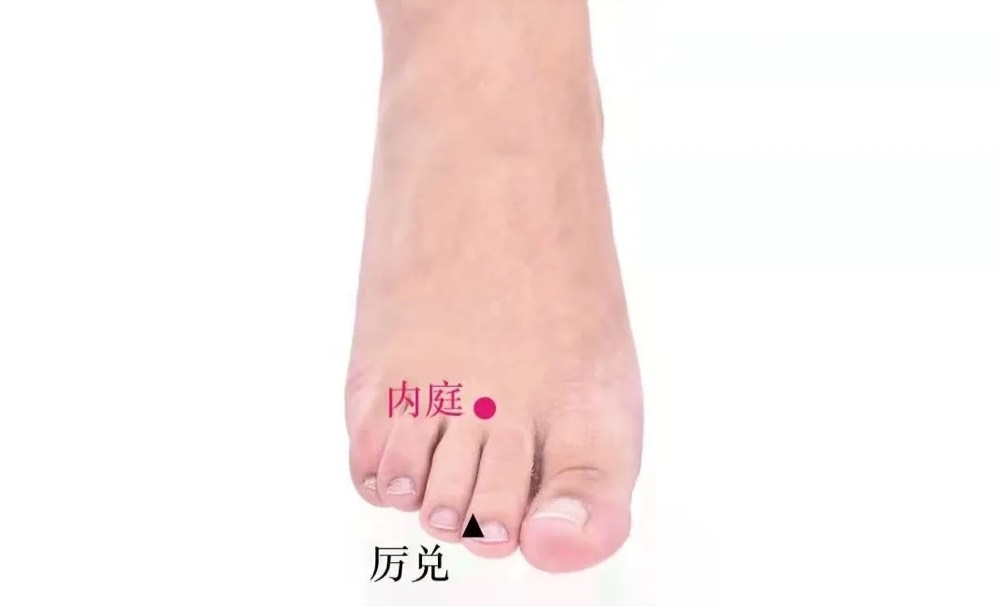
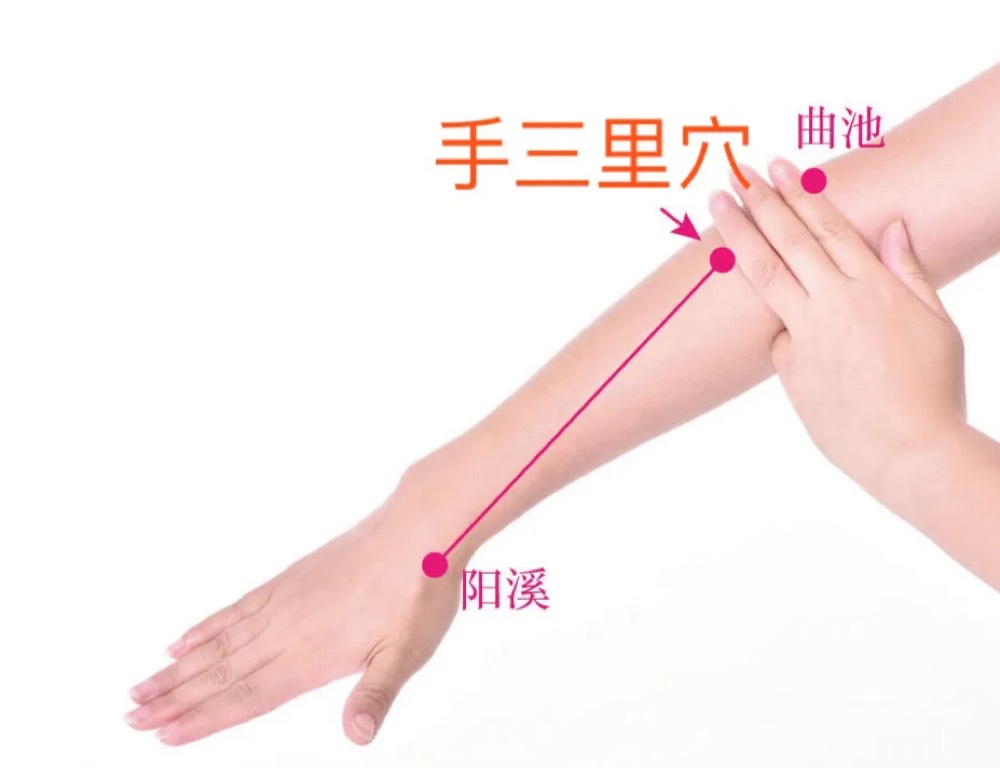
The points differ accordingly. For heat from below: Neiting ST-44 ("Inner Court"), in the web between the second and third toes, and Quchi LI-11 ("Pool at the Bend"), at the outer end of the elbow crease when the elbow is bent. For heat from the side: Taichong LR-3 ("Great Surge"), on the top of the foot in the groove between the first and second bones.
What’s Real, What’s Myth
Myth: face mapping tells you which organ is failing. The channel map is a genuine part of the tradition and it is useful for pointing you at digestion rather than at your face wash. What it does not do is identify disease in a specific organ, and the versions circulating online that assign a specific organ to every square centimetre have gone well beyond anything the classics said.
Myth: it is purely hormonal, so nothing you do matters. Cycle-related timing is real and worth acknowledging. What the pattern view adds is why the same cycle produces breakouts in some months and not others — and food, alcohol and sleep in the preceding fortnight are usually where that variation lives.
Myth: dry it out with the strongest product you can find. Stripping the skin often produces more oil and more irritation, and the deep sore ones under the jaw do not respond to surface drying anyway. Gentle cleansing plus changing what goes in works better for this pattern.
Myth: cutting dairy fixes it for everyone. It helps some women considerably and does nothing for others. In this framework dairy is rich and damp-generating, so it matters most in the damp-heat picture and much less in the constraint picture. Try it for three weeks as a single change rather than as an article of faith.
Real: the timing of the effect is slow. What you eat and drink this fortnight tends to show on your face in the next cycle rather than this week, which is exactly why people fail to connect the two.
Six Things You Can Do This Cycle
1. Work out which source you are dealing with. Greasy face, yellow greasy tongue coating, bitter morning taste, urgent bowels, worse after rich food and alcohol — heat from below. Tight ribs, irritability, poor sleep, breast tenderness, worse in heavy work weeks — heat from the side. Most women have some of both, in a proportion.
2. For heat from below, cut the source for three weeks. Less fried and rich food, less sugar, less alcohol, and less dairy if you want to test that specifically. Three weeks is roughly one cycle, which is the shortest interval at which you can judge anything here.
3. Add the classical cooling foods for this picture. Mung bean, winter melon and raw coix seed (生薏米) suit damp-heat — and note this is the raw form rather than the dry-fried one, which belongs to a cold, heavy picture instead.
4. Press Neiting ST-44 ("Inner Court") and Quchi LI-11 ("Pool at the Bend") for a minute each side. The first sits in the web between the second and third toes; the second at the outer end of the crease when your elbow is bent. Both are the classical choices for clearing heat along these channels.
5. For heat from the side, walk briskly four times a week and work Taichong LR-3 ("Great Surge") in the evening. Slide your thumb along the groove between the first and second foot bones toward the toes, thirty strokes each foot. For this half of the picture, movement does more than food.
6. Stop touching your face and change the pillowcase twice a week. Unglamorous, free, and it removes a variable so you can actually see what the other changes are doing.
When to See a Doctor
See your GP or a dermatologist if breakouts are deep, painful, leaving marks or scars, or affecting how you feel about going out. Effective medical options exist, they work considerably better started early, and scarring is much easier to prevent than to address afterwards. Waiting a year while adjusting your diet is the pattern I would most like to change.
Book an appointment if breakouts came on suddenly in adulthood, if they come with hair thinning at the scalp, new coarse facial hair, irregular or absent periods, or unexplained weight change. That combination deserves proper assessment rather than a food plan.
See your doctor promptly for any spot that is rapidly growing, bleeding, crusting or not healing, and for a rash that is spreading or comes with fever. Do not stop prescribed topical or oral medication in favour of anything described here.
And if you are on medication for skin, tell your doctor about anything herbal you plan to take, since some combinations matter. Also worth mentioning: several common medications cause breakouts, so any that started in the months before this did is worth flagging.
Which Constitution This Usually Points To
A greasy face, a yellow greasy tongue coating, a bitter taste in the morning, strong body odour, urgent bowels and breakouts that follow rich food and alcohol point toward a damp-heat constitution (湿热质). This is the picture where the raw form of coix seed, mung bean and winter melon belong, and where cutting the source does most of the work.
Breakouts that track with your workload, with tight ribs, sighing, poor sleep and tenderness across the chest before a period, point toward a qi stagnation constitution (气郁质) that has generated heat. There the brisk walking matters more than the food.
If the skin is dry rather than greasy, with night heat, a dry mouth and a red tongue with little coating, that is a yin-deficient picture (阴虚质) — and cooling, clearing approaches are the wrong direction for it entirely.
The quick assessment on this site walks you through 29 gentle questions in about three minutes and gives you a daily plan matched to your type, including which foods suit your particular source of heat.
Keep Reading
Oily Front, Thin Crown
A greasy hairline and a thinning crown are two patterns, not one — and they need different plans.
Read →Cold Hands, Warm Body
When the warmth is stuck rather than missing — and the one clue that tells you which you have.
Read →Gritty Eyes by Four
Why eye drops help for twenty minutes — and what the classics say is actually running low.
Read →The Fortnight Before
Why the difficult week responds to what you did a fortnight earlier — and what to do in that window.
Read →Dark Circles vs Puffiness
Two different things happening in the same square inch — and why one eye cream cannot address both.
Read →Sore for Four Days
When soreness lasts days and you look worse the more you train — the supply side of recovery.
Read →Find Your Constitution
29 gentle questions, about three minutes, and you have your TCM body type — so this guidance actually fits you.
Take the quick quiz →Related
Learn about the Damp-Heat constitution →Frequently Asked Questions
Why always the chin and jawline?
Because the stomach channel runs around the mouth and along the jaw in the classical map, so heat rising through that channel expresses itself there. It is the same reason forehead oiliness is read as a digestive matter — the front of the head sits on the same channel.
Is face mapping real?
The channel map is a genuine part of the tradition and useful as a pointer. The detailed versions online that assign a specific organ to every part of the face go well beyond the classics, and I would not make decisions based on them. Use it to look at digestion and stress, not to conclude anything about a specific organ.
How long before I see a change?
One full cycle at minimum, and two to judge properly. What you eat this fortnight tends to show on your face in the next cycle rather than this week, which is why three-day experiments tell you nothing. Change one thing and hold it for six weeks.
Should I cut dairy?
It is worth testing for three weeks as a single change rather than assuming. Dairy is rich and damp-generating in this framework, so it matters most in the greasy, bitter-tasting picture and much less in the constraint picture. If three weeks changes nothing, it is not your variable.
Last updated: 2026-07-13
This page offers general TCM educational perspectives, not medical advice or a diagnosis. For any health concern, please consult a licensed healthcare professional.