Freezing in the Air Conditioning While Everyone Else Is Fine — What Cold Food Costs Women
A cold room, a cold breakfast and a cold desk are three separate withdrawals from the same account.
Reviewed by Jimmy Yu, Certified Acupuncturist · Updated 2026-07-13
Quick answer
Chinese medicine describes cold as something that contracts and slows — it says cold entering the channels makes movement sluggish. Women are described in the classics as running short on blood rather than qi, which is why cold rooms and cold breakfasts show up as icy hands, sluggish digestion and a heavier, more uncomfortable cycle.
The Cardigan in Midsummer
You keep a cardigan at your desk in July. The men at the next bank of desks are in shirtsleeves and perfectly comfortable, and the thermostat is not a conversation you can win.
The details that come with it are consistent. Fingers that stay cold all day. Feet that will not warm up in bed. A period that got heavier or more uncomfortable in the last few years without anything obvious changing.
And the breakfast, which almost nobody mentions until asked. A cold smoothie, iced coffee, overnight oats from the fridge, or nothing at all until eleven.
Three separate cold inputs — the room, the meal, and sitting still for eight hours — landing on the same body, in a person who was already the coldest one in the office.
How Chinese Medicine Reads It
The Suwen chapter "Ju Tong Lun" (《黄帝内经·素问·举痛论》) describes what cold does inside the body with unusual clarity
寒气入经而稽迟,泣而不行
cold entering the channels makes things slow and halting, so movement does not flow freely. Cold contracts, and what contracts moves less.
《黄帝内经·素问·举痛论》
The Lingshu chapter "Wu Yin Wu Wei" (《灵枢·五音五味》) then makes an observation about women specifically
妇人之生,有余于气,不足于血
in women there tends to be enough qi and not quite enough blood. Two thousand years later this is still the most useful single sentence I know for explaining why the same cold office affects two people so differently.
《灵枢·五音五味》
Blood in this system is not only what a blood test measures. It is the warm, nourishing, moistening side of the body — what keeps hands warm, skin supple, sleep steady and the mind settled. When there is not quite enough, the extremities are the first place to notice.
Then there is the monthly cycle, which is a regular demand on exactly that resource. This is why the classics gave women’s wellbeing its own literature rather than filing it as a variation on men’s.
The digestive angle matters just as much. Classical practice describes the middle of the body as a warm pot over a steady flame, and a cold breakfast every day asks that flame to do extra work before anything nourishing comes out of it.
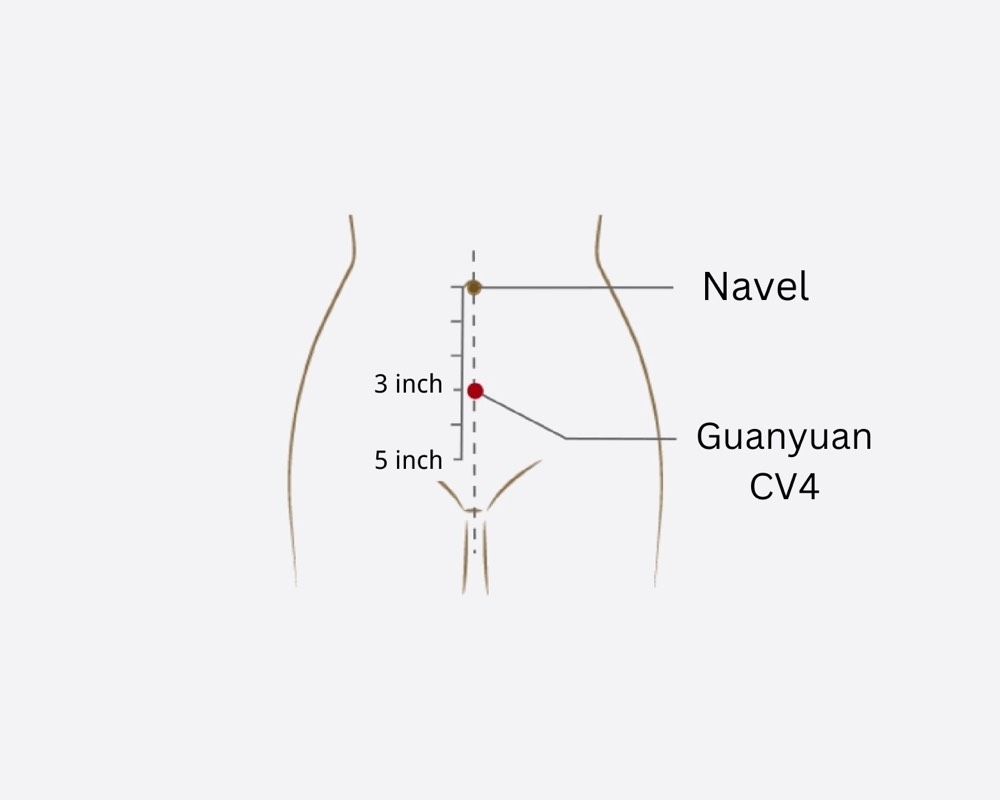
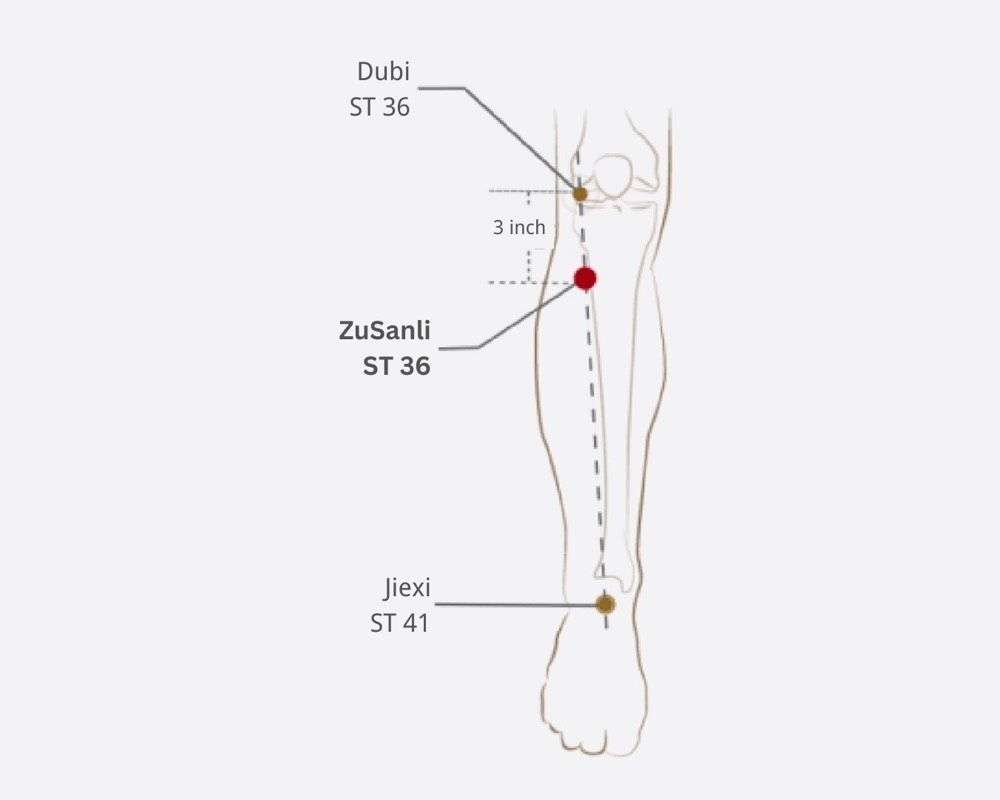
The points here are unglamorous and effective. Guanyuan CV-4 ("Origin Pass") sits four finger-widths below the navel on the midline. Zusanli ST-36 ("Leg Three Li") sits a hand-width below the kneecap, a thumb-width outside the shinbone. Taixi KI-3 ("Great Ravine") sits between the inner ankle bone and the Achilles tendon. Note that all lower-abdominal points, Guanyuan included, are avoided in pregnancy.
What’s Real, What’s Myth
Myth: cold hands just mean poor circulation and there is nothing to be done. Circulation is a description, not an explanation. What is worth noticing is what makes it better or worse — if your hands are colder in the week before your period, colder when you are tired, and warmer after a hot cooked meal, those are patterns you can work with.
Myth: a smoothie is the healthiest possible breakfast. The ingredients may be excellent; the temperature is the variable being missed. The same fruit lightly stewed with a little ginger and cinnamon delivers nearly the same nutrition and asks far less of a cold digestion.
Myth: if you feel the cold you should simply wear more. Layers help the outside. They do nothing about a cold breakfast, an iced drink at eleven and a cold desk, which is where most of the daily total is actually coming from.
Myth: cold hands and feet always mean the same thing. They do not. Icy fingers with a warm trunk that worsen under stress point to stuck qi rather than genuine cold, and warming foods do very little for that picture — movement does more. Cold that reaches the low back, belly and knees is the pattern this article is about.
Real: the lower back and abdomen are where it matters most. In classical thinking these are the areas worth keeping covered, and a bare lower back under air conditioning is the most common thing I ask women to change.
Six Things You Can Do This Week
1. Make breakfast warm for two weeks. Porridge, congee, soup, eggs, stewed fruit — anything cooked, and nothing straight from the fridge. Change nothing else, so you can see what this one variable does. In my clinic it is the change women notice fastest.
2. Keep your lower back and midriff covered at your desk. No gap between top and waistband, a wrap or scarf over the lap, and never sit directly under the air conditioning outlet. Unremarkable, and the thing that makes the office survivable.
3. Warm the lower abdomen in the evening. Rest a warm palm or a covered heat pack over Guanyuan CV-4 ("Origin Pass") for ten minutes. Keep it comfortably warm rather than hot. Skip this entirely if you are pregnant or might be, and check with your practitioner first if your periods are heavy.
4. Press Zusanli ST-36 ("Leg Three Li") for a minute each side after your evening meal, then walk for ten minutes. Sitting, not on an empty stomach, moderate pressure. This one supports the digestion that has been doing extra work all day.
5. Soak your feet at 38–40°C (100–104°F) for fifteen minutes, three or four evenings a week, then dry well and put socks on. Stop before you sweat. If you have reduced sensation in your feet, neuropathy or circulation concerns, check the temperature with a thermometer and speak to your doctor first.
6. Swap the mid-morning iced drink for warm water with two or three slices of fresh ginger. Not a herbal programme — just a change of temperature at the point in the day when most of the cold is arriving.
When to See a Doctor
Feeling the cold has ordinary medical explanations worth checking properly. If this is new, has clearly worsened over months, or comes with fatigue, hair thinning or unintended weight change, ask your GP for basic blood work — thyroid function, iron and ferritin, B12 and blood sugar. Low iron is common in menstruating women and it produces this exact picture.
Some things need same-day attention. One hand or foot that suddenly becomes cold, pale or blue, painful or numb, is urgent. So is coldness with chest pain, breathlessness or a cold sweat.
See your GP if your fingers reliably turn white, then blue, then red on cold exposure, if you have cramping in your calves when walking that eases with rest, or if the coldness comes with joint pain, rashes or persistent dryness of the eyes and mouth.
On the cycle side: periods that have become much heavier, that last longer than seven days, that soak through protection hourly, bleeding between periods or after intercourse, or periods that have become severely painful when they were not before — all of these should be assessed rather than managed at home.
Which Constitution This Usually Points To
Cold that reaches the lower back, abdomen and knees, that is there on waking, and that eases clearly with warmth points toward a yang-deficient constitution (阳虚质). For this pattern warmth is not a comfort measure — it is the whole approach, and cold food is the thing that costs you most.
If the cold tracks with tiredness instead, alongside a soft voice, breathlessness on stairs and easy bruising or a pale complexion, a qi-deficient constitution (气虚质) with not quite enough blood is the more likely reading. That pattern needs building rather than warming, and it takes longer.
These two often sit together and the balance shifts over the years. The quick assessment on this site walks you through 29 gentle questions in about three minutes and gives you a daily plan matched to your type, adjusted for the season and the climate where you live.
Keep Reading
Why Am I Always Cold?
The TCM take on cold hands, cold feet, and never feeling warm.
Read →Always Cold: Qi or Yang?
How to tell whether your cold hands and feet come from thin qi or from low inner warmth — and what each one asks for.
Read →The Iced Coffee Question
Why four cold brews a day flatten some men and not others — and the swaps that cost you nothing.
Read →The Evening Foot Soak
The right temperature for your pattern, the right timing, and who should skip it entirely.
Read →Ice Baths After Forty
Why the same cold plunge sharpens one man and flattens another — and how to tell which you are.
Read →Long Hours Sitting
What eight hours in a seat does below the waist — and the three-minute habit that answers it.
Read →Find Your Constitution
29 gentle questions, about three minutes, and you have your TCM body type — so this guidance actually fits you.
Take the quick quiz →Related
Learn about the Yang Deficiency constitution →Frequently Asked Questions
Do I have to give up cold smoothies completely?
No. Try warm breakfasts for two weeks and see what changes — if nothing does, temperature is not your variable. Most women who notice a difference end up keeping smoothies for warm afternoons rather than cold mornings, which is a much easier change to sustain.
Why are my hands colder before my period?
In classical terms the cycle draws on the same resource that keeps the extremities warm, so the days before and during a period are when a slight shortfall becomes noticeable. If it is a marked change rather than a mild one, or if your periods are heavy, ask your GP to check your iron levels.
Is a hot water bottle on the abdomen safe?
For most women, yes, kept comfortably warm rather than hot and used over clothing. Avoid it entirely in pregnancy, and check with your own practitioner first if your periods are heavy, since warmth over the lower abdomen can increase flow. Never use heat over numb skin or if you have reduced sensation.
What about the office thermostat I cannot control?
Focus on what you can: cover the lower back and midriff, keep your feet off a cold floor, avoid sitting directly under the outlet, and make sure at least two of your three daily meals are warm. Most women find the internal changes matter more than the room ever did.
Last updated: 2026-07-13
This page offers general TCM educational perspectives, not medical advice or a diagnosis. For any health concern, please consult a licensed healthcare professional.