Eight Hours in the Driver’s Seat — What Long Sitting Does Below the Waist
The classics call the area between the kidneys the root of life. It does not respond well to eight hours of stillness and a cold vent.
Reviewed by Jimmy Yu, Certified Acupuncturist · Updated 2026-07-13
Quick answer
Long driving and long desk hours leave the lower back aching, the lower body heavy and, for many men, more trips to the bathroom at night. Chinese medicine reads this as the lower region losing warmth and movement, and answers it with warmth, position changes and a short daily routine.
Out of the Car Like a Much Older Man
Long-distance drivers and men who commute two hours a day describe the same thing. Getting out of the car takes a moment of negotiation, the lower back aches in a dull, cold way, and the first few steps are careful.
There is usually more, once asked. A heaviness and a dull numb quality low down that is hard to describe. Knees that complain on stairs. And often, quietly mentioned last, waking once or twice in the night to pass water when a few years ago it was none.
The pattern is worse in winter, worse with a cold air vent aimed at the legs, and worse in the weeks with the most windscreen time.
Most men file it under age. Some of it is age. A useful amount of it is eight hours of stillness in a cold seat, and that part is worth doing something about.
How Chinese Medicine Reads It
The Nanjing, in its eighth chapter (《难经·八难》), describes what it calls 肾间动气 — the moving qi between the kidneys — and says of it 人之生命也,十二经之根本: it is a person’s life, and the root of the twelve channels. The classical name for the doorway to that region is Mingmen, the Life Gate, and it sits on the midline of the low back.
Whatever you make of the metaphysics, the practical claim is straightforward and testable against your own experience: the lower back and lower abdomen are where the tradition locates warmth and reserve, and both suffer from stillness and cold.
The Suwen chapter "Mai Yao Jing Wei Lun" (《黄帝内经·素问·脉要精微论》) adds the anatomy
腰者,肾之府
the low back is the residence of the kidneys — and notes that difficulty turning and bending there is a sign the system is becoming worn.
《黄帝内经·素问·脉要精微论》
Long sitting works against this in two specific ways. It stops movement in the region entirely, and in a car it usually adds cold — a vent aimed at the legs, a cold seat in winter, and a gap between shirt and waistband that leaves the low back exposed to it.
The Suwen chapter "Xuan Ming Wu Qi" (《素问·宣明五气》) has the general rule: 久坐伤肉 — prolonged sitting harms the flesh. Eight hours in one position is exactly what that line describes.
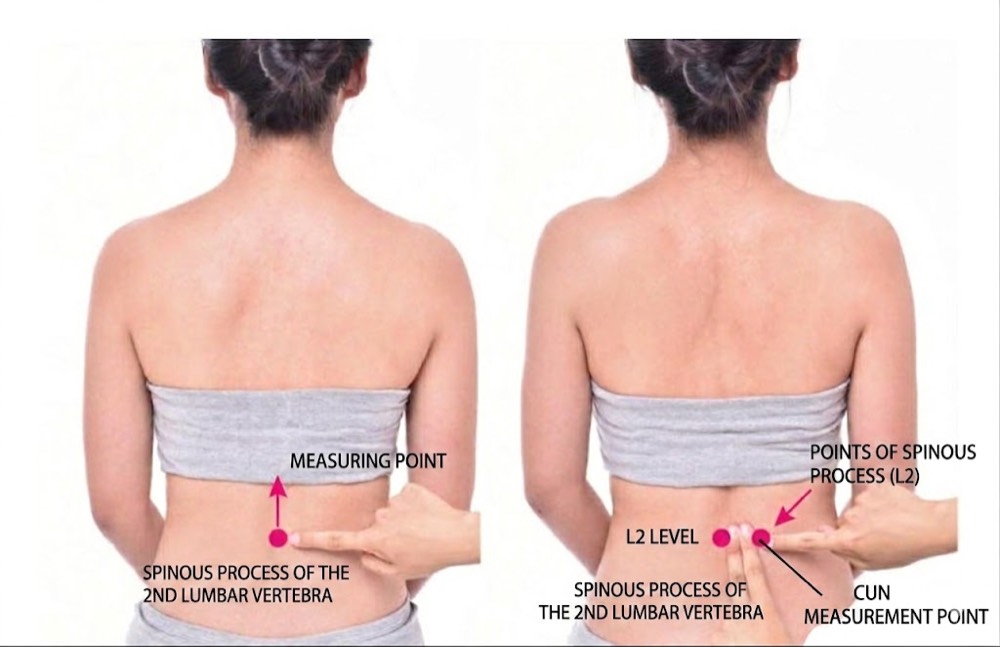
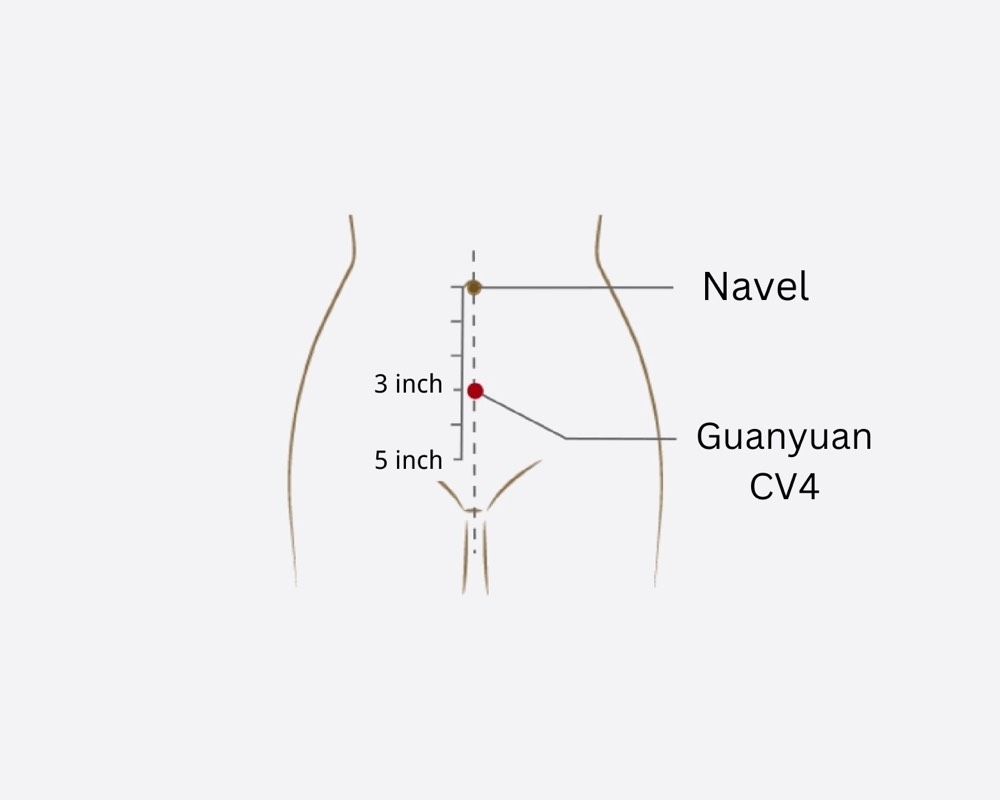
The points are all reachable. Mingmen GV-4 ("Life Gate") on the midline at waist level, Shenshu BL-23 ("Kidney Transport") either side of it, Guanyuan CV-4 ("Origin Pass") four finger-widths below the navel, and Taixi KI-3 ("Great Ravine") between the inner ankle bone and the Achilles tendon.
What’s Real, What’s Myth
Myth: getting up more often is impractical, so nothing can be done. Even on a long drive, a proper stop every ninety minutes with three minutes of walking changes how you get out of the car at the other end. This is the one thing every driver tells me is impossible and then reports back on.
Myth: a better seat cushion solves it. Cushions help the pressure and do nothing about stillness or cold. They are worth having, and they are not the answer on their own.
Myth: waking to pass water at night is just what happens after fifty. It is common, and common is not the same as inevitable or unimportant. It is worth mentioning to your GP rather than accepting quietly, because there are ordinary explanations that are worth identifying.
Myth: pelvic floor work is only for women. Men have the same muscles and the same benefit from using them, and the classical tradition has its own version of this exercise going back centuries. It is done sitting, it is invisible, and it fits perfectly into a traffic jam.
Real: the cold vent matters more than men expect. Air conditioning aimed at the legs and lower body for two hours a day is a genuine, easily fixed contributor to the cold ache — and redirecting it costs nothing.
Six Things You Can Do This Week
1. Stop every ninety minutes and walk for three. On a desk day, stand every forty minutes. This is the item that changes how the lower back feels at the end of the day, and there is no substitute for it.
2. Redirect the air vents away from your legs and lower body, and close the gap between shirt and waistband. In winter, warm the seat before a long drive. Small, free, and consistently underrated.
3. Do the three-minute low back rub daily. Rub your palms together until warm, then rub firmly up and down over Shenshu BL-23 ("Kidney Transport") and Mingmen GV-4 ("Life Gate") at waist level until the whole area feels warm. Morning or evening, every day.
4. Use the lift-and-hold exercise at traffic lights. Draw the pelvic floor gently upward as if stopping yourself from passing water, hold for three to five seconds, release fully, repeat ten times. The full release matters as much as the lift. Two or three rounds a day, sitting, invisible.
5. Warm the lower abdomen in the evening. A warm palm or a covered heat pack over Guanyuan CV-4 ("Origin Pass"), four finger-widths below the navel, for ten minutes. Comfortably warm rather than hot, and never over numb skin.
6. Hold Taixi KI-3 ("Great Ravine") for a minute each side before bed. Thumb in the hollow between the inner ankle bone and the Achilles tendon, gentle steady pressure. Quiet work — gentle beats strong for this pattern.
When to See a Doctor
Urinary changes deserve a proper conversation with your GP rather than a self-directed routine, and this is the most important paragraph here. Book an appointment for waking more than once a night to pass water, a weaker or interrupted stream, difficulty starting, urgency, a sense of not emptying, or dribbling afterwards. These are common, they are checkable, and men routinely wait far too long.
See your doctor promptly for blood in the urine or semen, for pain on passing water, for fever with lower back or pelvic pain, for new pain in the testicles, or for any lump you can feel. Being unable to pass water at all is an emergency.
For the back itself: numbness in the groin or inner thighs, difficulty controlling your bladder or bowels, or weakness in a leg all need urgent same-day assessment. Book an appointment for back pain that is severe, wakes you at night, follows a fall, comes with fever, or comes with unintended weight loss.
If you are over fifty, or over forty-five with a family history, ask your GP what men’s health checks are recommended where you live and what the current advice is. That is a conversation worth having proactively rather than after something changes.
Which Constitution This Usually Points To
A cold, aching low back, cold knees, a heaviness low down, waking at night to pass water and a clear preference for warmth point toward a yang-deficient constitution (阳虚质). For this pattern warmth on the low back is the whole approach, and cold seats and cold vents cost more than they seem to.
If the dominant experience is deep tiredness rather than cold — flat energy, breathlessness on stairs, a soft voice — a qi-deficient constitution (气虚质) is underneath, and stopping the drain matters more than adding warmth.
If the low back is stiff and heavy rather than cold, worse in humid weather and better after walking, a damp picture (痰湿质) is leading, and the food changes matter as much as the movement.
The quick assessment on this site walks you through 29 gentle questions in about three minutes and gives you a daily plan matched to your type, adjusted for the season where you live.
Keep Reading
Why Am I Always Cold?
The TCM take on cold hands, cold feet, and never feeling warm.
Read →Always Cold: Qi or Yang?
How to tell whether your cold hands and feet come from thin qi or from low inner warmth — and what each one asks for.
Read →The Iced Coffee Question
Why four cold brews a day flatten some men and not others — and the swaps that cost you nothing.
Read →The Evening Foot Soak
The right temperature for your pattern, the right timing, and who should skip it entirely.
Read →Ice Baths After Forty
Why the same cold plunge sharpens one man and flattens another — and how to tell which you are.
Read →Cold Feet, No Sleep
Why you lie awake for an hour with warm shoulders and freezing feet — and the ten-minute answer.
Read →Find Your Constitution
29 gentle questions, about three minutes, and you have your TCM body type — so this guidance actually fits you.
Take the quick quiz →Related
Learn about the Yang Deficiency constitution →Frequently Asked Questions
How often should I really stop on a long drive?
Every ninety minutes, with three minutes of actual walking rather than standing beside the car. On desk days, standing every forty minutes does the same job. Men who try this for a fortnight usually report that arriving at the other end feels different enough to keep doing it.
Is the pelvic floor exercise the same as for women?
The mechanics are much the same — a gentle lift, a hold of three to five seconds, and a full release. The full release matters as much as the lift, and doing hundreds is not better than doing thirty properly. If you have any urinary symptoms, ask your GP about a referral to a pelvic health physiotherapist.
Does a heated seat help or is it too much?
Warm is useful; hot for hours is not. Use it to take the chill off at the start of a winter drive rather than leaving it on high for two hours, and never use heat over numb skin or if you have reduced sensation.
Should I mention night-time trips to the bathroom to my doctor?
Yes, and sooner rather than later. It is common, it has several ordinary explanations, and identifying which one applies is straightforward. Waiting a year to raise it is the pattern I see most often and the one I would most like to change.
Last updated: 2026-07-13
This page offers general TCM educational perspectives, not medical advice or a diagnosis. For any health concern, please consult a licensed healthcare professional.