You Can’t Fall Asleep Because Your Feet Are Cold — What the Classics Say Has to Happen First
The Neijing describes sleep as something entering. Cold feet are where it gets stuck.
Reviewed by Jimmy Yu, Certified Acupuncturist · Updated 2026-07-13
Quick answer
The Lingshu describes sleeplessness as the defensive qi remaining on the outside and failing to enter inward. In practice, feet that stay cold in bed keep that transition from happening, which is why a warm foot soak half an hour before bed does more for this pattern than anything taken by mouth.
Warm Everywhere Except Where It Matters
You are in bed by half past ten, warm enough, tired enough, and an hour later you are still awake. Your shoulders are warm. Your feet are two blocks of ice at the end of the bed.
Socks help, though many women find they cannot sleep in them. A hot water bottle at the feet helps until it cools. And there is a particular kind of frustration in being tired and unable to go over the edge into sleep.
The signs that come with it are worth noting. Feeling the cold generally, a pale complexion, sometimes dizziness on standing, and in many women periods that are lighter than they used to be or that leave them exhausted.
And the detail that tends to confirm the pattern: everything is worse in the week before a period, and worse in winter.
How Chinese Medicine Reads It
The Lingshu chapter "Da Huo Lun" (《灵枢·大惑论》) describes sleeplessness with unusual precision: 卫气不得入于阴,常留于阳……故目不瞑 — the defensive qi cannot enter the yin, it remains in the yang, and so the eyes do not close.
Read that as a description of a transition rather than a mystical claim. Through the day, energy is described as active and at the surface. At night it should move inward and downward. Sleep, in this framework, is what happens when that transition completes.
Cold feet are where the transition visibly fails. The warmth has not reached the lowest, most distant part of the body, and everything above stays switched on — which is exactly what an active mind at eleven at night feels like.
The tradition’s phrase for correcting this is 引火归元, drawing the fire back to its source. In practice that means giving warmth to the lowest part of the body so that everything above follows it down.
For women there is a second layer. The Lingshu chapter "Wu Yin Wu Wei" (《灵枢·五音五味》) observes
妇人之生,有余于气,不足于血
women tend to have enough qi and not quite enough blood. Blood in this system is what warms and nourishes the extremities, and the monthly cycle is a regular draw on it. That is why cold feet and light sleep so often arrive together, and why both are worse in the week before a period.
《灵枢·五音五味》
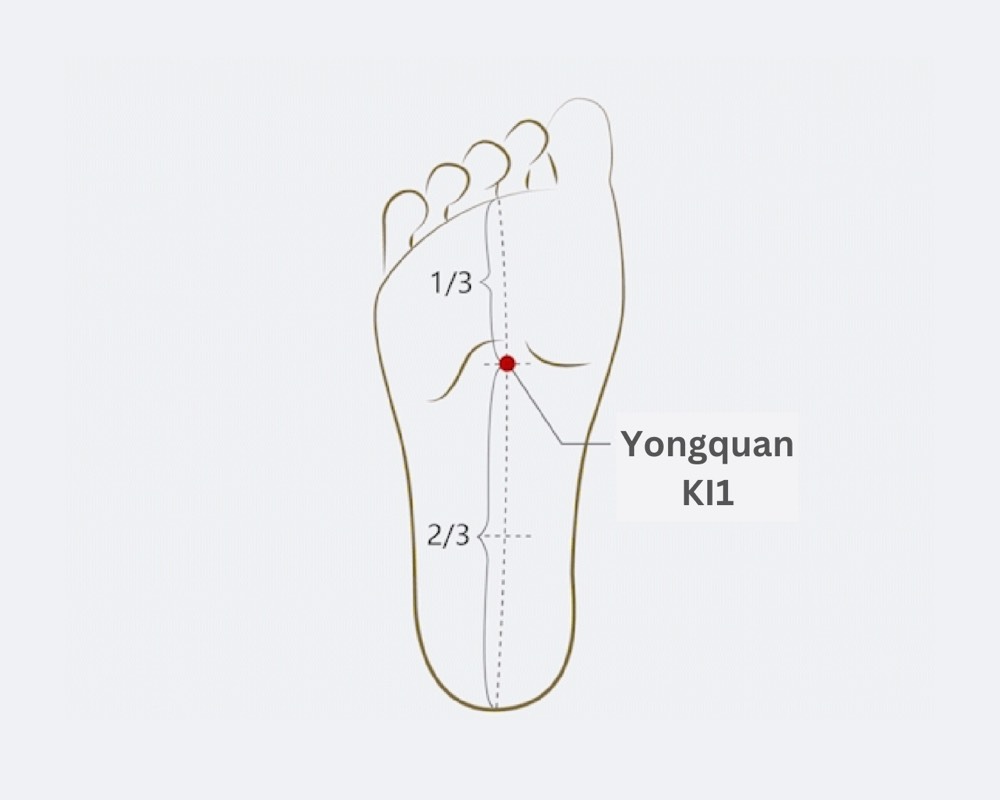
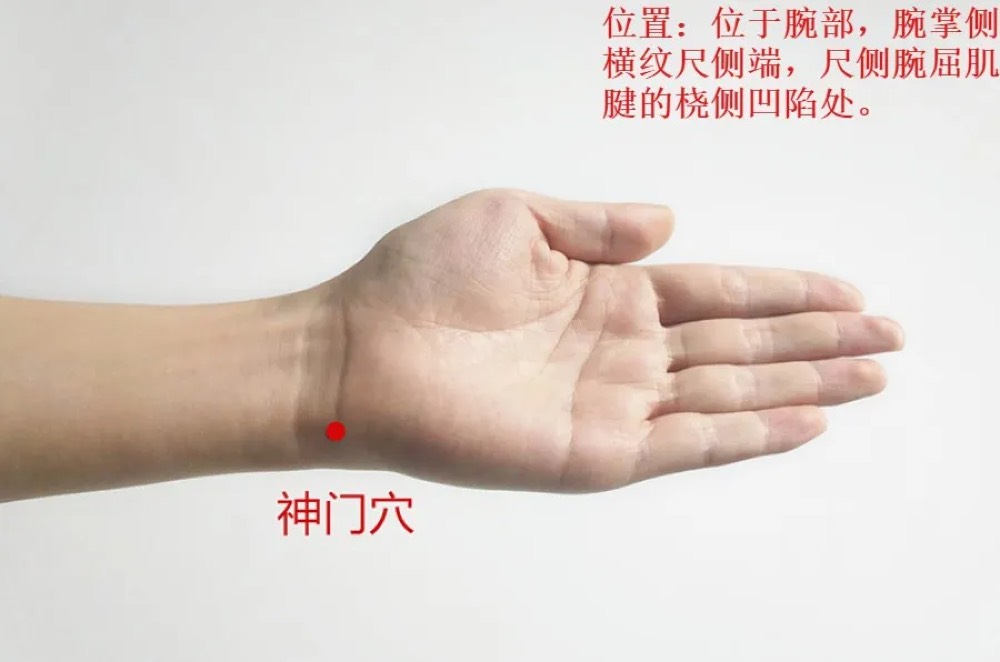
The points are all within reach of a basin. Yongquan KI-1 ("Bubbling Spring") sits in the hollow on the sole, about a third of the way down from the toes, in the dip that appears when you curl your foot. Taixi KI-3 ("Great Ravine") sits between the inner ankle bone and the Achilles tendon. Shenmen HT-7 ("Spirit Gate") sits on the wrist crease on the little-finger side, in the hollow beside the tendon.
What’s Real, What’s Myth
Myth: a hot bath before bed is the same thing. It is not, and for some women it works against them. A full hot bath heats the whole body and can leave you hot-faced and alert rather than settled, particularly if you run dry with night heat. Feet only is the point — the aim is a temperature gradient that draws things downward, not a warm body all over.
Myth: hotter water works better. Water hot enough to make you sweat undoes the purpose, since sweating spends the very qi you are trying to settle. Comfortably warm, stopping before any sweat, is the instruction across the whole tradition.
Myth: do it immediately before getting into bed. Half an hour before is better. Straight from basin to bed with damp feet cools them again quickly, which is the opposite of what you want. Dry thoroughly, socks on, then half an hour of quiet.
Myth: cold feet are trivial. In this framework they are a legible sign about warmth and blood, and in women they are frequently linked to low iron, which is worth measuring rather than assuming. Read it as a pattern and also have the ordinary causes checked.
Real: this is the highest-completion habit I suggest. Ten minutes, no equipment, and most women notice something within the first week — which is why it is still being done in Chinese households two thousand years after it was written down.
The Ten-Minute Evening Routine
1. Soak your feet for ten to fifteen minutes, half an hour before bed. Water to just above the ankle bones, comfortably warm at 38–40°C (100–104°F), and stop well before you sweat. If you run cold generally, add three or four slices of fresh ginger. If you run dry with night heat, use a tablespoon of ordinary salt instead and keep the water at the lower end.
2. Dry thoroughly and put socks on. This is the step people skip and it is what makes the difference between a pleasant soak and a warm night.
3. Rub Yongquan KI-1 ("Bubbling Spring") for a minute on each sole. Thumb into the hollow a third of the way down from the toes, brisk circular rubbing until the sole feels warm. Or simply rub the soles briskly against each other. This is the step that turns the soak into the classical practice.
4. Hold Taixi KI-3 ("Great Ravine") for a minute each side. Thumb in the hollow between the inner ankle bone and the Achilles tendon, gentle steady pressure. Quiet, unhurried work.
5. Finish at Shenmen HT-7 ("Spirit Gate") for a minute each side, on the wrist crease on the little-finger side. This one is for the mind rather than the feet, and it is worth adding on the nights when your head is still going.
6. Then bed, with no screen in between. The whole routine takes fifteen minutes including the soak, and it works because it is short enough to do every night.
When to See a Doctor
Two safety notes first. If you have diabetes, peripheral neuropathy or reduced sensation in your feet, do not use hot water and speak with your doctor before starting — you cannot reliably feel a burn coming. Avoid foot soaks entirely with open wounds, ulcers or infection on the feet, and check the water with a thermometer or your hand rather than your feet.
See your GP if cold feet are new or clearly worsening, and ask for iron and ferritin, thyroid function, B12 and blood sugar. Low iron is common in menstruating women and produces cold extremities, poor sleep and flat energy together — it is the single most useful thing to have measured here.
Seek urgent attention for one foot that suddenly becomes cold, pale or blue, painful or numb. Book an appointment for cramping in your calves when walking that eases with rest, for fingers or toes that turn white then blue in the cold, or for any slow-healing sore on the feet.
And if sleep has been poor for more than a month, if you are exhausted during the day, or if you have been using alcohol or tablets to manage it, talk to your GP. Cognitive behavioural therapy for insomnia is more effective than most people realise and is worth asking about specifically.
Which Constitution This Usually Points To
Cold that reaches the lower back, abdomen and knees as well as the feet, present on waking and eased clearly by warmth, points toward a yang-deficient constitution (阳虚质). For this pattern the ginger belongs in the water and warmth is the whole approach.
If the cold tracks with tiredness instead, with a pale complexion, dizziness on standing, breathlessness on stairs and periods that leave you drained, a qi-deficient constitution (气虚质) with not quite enough blood is the more likely reading. That one needs building — warm food, earlier nights, and having your iron measured.
If your feet are cold but your palms and chest are warm, with a dry mouth and light dreamy sleep, that is a yin-deficient picture (阴虚质), and the water must stay warm rather than hot. Same routine, different setting, and getting it wrong makes the nights worse.
The quick assessment on this site walks you through 29 gentle questions in about three minutes and gives you a daily plan matched to your type, including the water temperature that actually suits you.
Keep Reading
Why Am I Always Cold?
The TCM take on cold hands, cold feet, and never feeling warm.
Read →Always Cold: Qi or Yang?
How to tell whether your cold hands and feet come from thin qi or from low inner warmth — and what each one asks for.
Read →The Iced Coffee Question
Why four cold brews a day flatten some men and not others — and the swaps that cost you nothing.
Read →The Evening Foot Soak
The right temperature for your pattern, the right timing, and who should skip it entirely.
Read →Ice Baths After Forty
Why the same cold plunge sharpens one man and flattens another — and how to tell which you are.
Read →Long Hours Sitting
What eight hours in a seat does below the waist — and the three-minute habit that answers it.
Read →Find Your Constitution
29 gentle questions, about three minutes, and you have your TCM body type — so this guidance actually fits you.
Take the quick quiz →Related
Learn about the Yang Deficiency constitution →Frequently Asked Questions
Why does a hot bath not work as well?
Because it heats everything, and the point is a gradient that draws warmth downward. A full hot bath can leave you hot-faced and alert, particularly if you run dry with night heat. Feet only, warm rather than hot, half an hour before bed is the version the tradition uses.
Can I just wear socks to bed?
Socks help hold warmth that is already there; they do not create it in feet that are cold to start with. Many women find the soak first, then socks, is what changes the hour of lying awake. If socks alone work for you, keep doing them.
How soon should I notice something?
Most women notice within the first week, usually as falling asleep faster rather than sleeping longer. The underlying pattern — cold feet through the day, energy, how the week before a period feels — takes six to eight weeks. If nothing shifts at all, have your iron checked.
Is it safe during pregnancy?
A warm rather than hot foot soak is generally fine, but keep the temperature at the lower end, keep it short, and check with your midwife or practitioner first. Skip Sanyinjiao SP-6 entirely, and mention swollen ankles or new sleep problems to your midwife rather than managing them alone.
Last updated: 2026-07-13
This page offers general TCM educational perspectives, not medical advice or a diagnosis. For any health concern, please consult a licensed healthcare professional.