Always Cold, Even in Summer — How to Tell Qi Deficiency From True Yang Deficiency
Two very different patterns look the same from the outside, and they ask for almost opposite care.
Reviewed by Jimmy Yu, Certified Acupuncturist · Updated 2026-07-13
Quick answer
In Chinese medicine, feeling cold follows two common patterns. Qi deficiency means the warming energy is thin, so you feel cold mainly when tired, with low stamina and easy sweating. Yang deficiency means the body’s inner warmth itself runs low, so the cold sits deep in the back, belly and knees, and warmth makes a clear difference.
The Cold That Doesn’t Match the Room
People tell me some version of this every week. Everyone else in the room is comfortable, and you are the one reaching for a cardigan in the middle of summer. Most have stopped mentioning it, because it sounds more like a personality trait than something worth raising.
When I ask where the cold actually sits, the answers split into two groups. Some describe cold hands and feet that come and go with tiredness — fine at breakfast, cold by four in the afternoon. Others describe a cold that lives deeper: the lower back, the belly, the knees, the kind a hot water bottle changes within minutes.
That difference is not small talk. In Chinese medicine those two descriptions point to two different patterns, and they ask for almost opposite kinds of care. Give the second person’s approach to the first person and they often feel worse rather than better.
So before you buy another pair of wool socks, it is worth working out which cold you are carrying.
How Chinese Medicine Reads Feeling Cold
The clearest classical line on this comes from the Huangdi Neijing, Suwen chapter "Tiao Jing Lun" (《黄帝内经·素问·调经论》): "when yang is deficient, cold appears on the outside." Yang, in this language, is not a mystical force. It is simply the body’s capacity to generate and hold warmth.
The same text, in "Sheng Qi Tong Tian Lun" (《素问·生气通天论》), compares yang qi to the sun in the sky — when it is in the right place, everything else works quietly in the background. Classical practice locates the deepest reserve of that warmth at the kidneys, which is why yang-type cold so often shows up as a cold lower back, cold knees, and waking to pass urine at night.
Qi deficiency is a different story. The Lingshu chapter "Ben Zang" (《灵枢·本脏》) describes wei qi — the defensive qi — as what "warms the flesh, fills the skin, and governs the opening and closing of the pores." When that qi is thin, warmth does not reach the surface reliably and the pores do not close well, so you feel cold and you also sweat too easily.
The Suwen chapter "Ju Tong Lun" (《素问·举痛论》) adds the practical clue: "exertion consumes qi." That is why qi-deficient cold tracks with your energy through the day — mild in the morning, obvious once you are tired — and comes with a soft voice, breathlessness on stairs, and catching every chill going around.
Yang-deficient cold does not track with tiredness in the same way. It is there in the morning too. The person often has loose stools, a preference for hot drinks all year, a pale and slightly puffy tongue with a wet coating, and a clear sense that warmth on the abdomen or low back changes how they feel almost immediately.
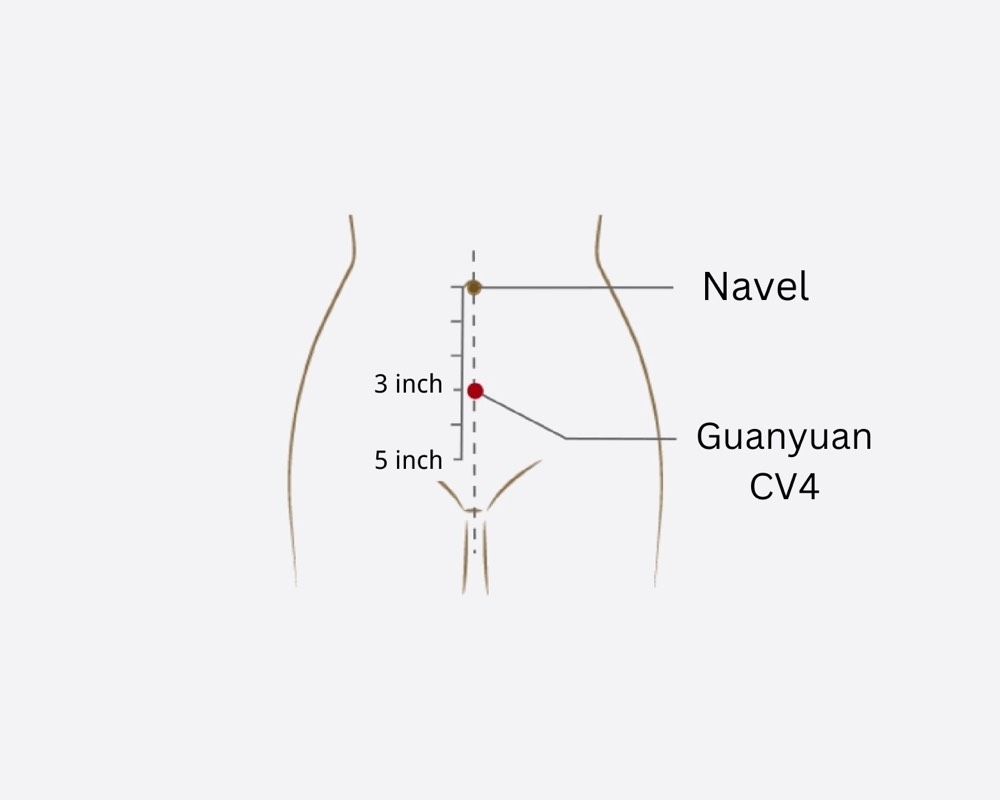
The points classical practice reaches for reflect this split. For thin qi: Zusanli ST-36 ("Leg Three Li") and Qihai CV-6 ("Sea of Qi"). For low warmth: Guanyuan CV-4 ("Origin Pass"), Mingmen GV-4 ("Life Gate"), Shenshu BL-23 ("Kidney Transport") and Taixi KI-3 ("Great Ravine").
It helps to see these as two points on one line rather than two boxes. Qi deficiency that goes unattended for years often drifts toward yang deficiency; yang deficiency is, in a sense, qi deficiency that has lost its warmth as well as its strength.
What’s Real, What’s Myth
Myth: cold hands and feet always mean yang deficiency. In practice, a good number of people with icy fingers have a perfectly warm trunk, and their hands go cold with stress, deadlines, and held-in frustration. That pattern belongs to qi stagnation — the qi is present but not moving out to the edges — and piling on warming foods does very little. Movement, shoulder and rib stretching, and unclenching the jaw do more.
Myth: the stronger the warming food, the better. Heavy warmers such as lamb, dried ginger (干姜) and large amounts of cinnamon can overwhelm a weak digestion, and people come back with bloating, mouth ulcers or restless sleep. Classical food practice almost always pairs warming and building ingredients with chenpi (陈皮, aged tangerine peel) so that what you add can actually move. Dried ginger and lamb were winter foods in that tradition, not year-round staples.
Myth: you can sweat the cold out in a sauna or a hot yoga class. In classical thinking sweat and yang leave together, which is why so many people feel colder and flatter an hour after a heavy sweat, not warmer. My working rule with qi-deficient and yang-deficient people is simple: stop at a light sheen on the skin, every time.
Myth: kidney yang is only about sexual function. In the classics it sits under everything that needs warmth — morning energy, digestion, the low back and knees, and the bladder overnight. Reading it narrowly is how people miss the more ordinary signs for years.
Six Gentle Things You Can Do This Week
1. Warm the low back. Rub your palms together, then rub firmly up and down over Shenshu BL-23 ("Kidney Transport") and Mingmen GV-4 ("Life Gate") — either side of the spine at waist level — for two to three minutes until the area feels warm. Just as important: keep that area covered, with no gap between shirt and waistband, and no air conditioning blowing onto your lower back.
2. Warm the lower abdomen. Rest a warm palm over Guanyuan CV-4 ("Origin Pass"), about four finger-widths below the navel, and make slow circles for five minutes in the evening. Important: skip all lower-abdominal points if you are pregnant or might be, and ask your own practitioner first if you have heavy periods.
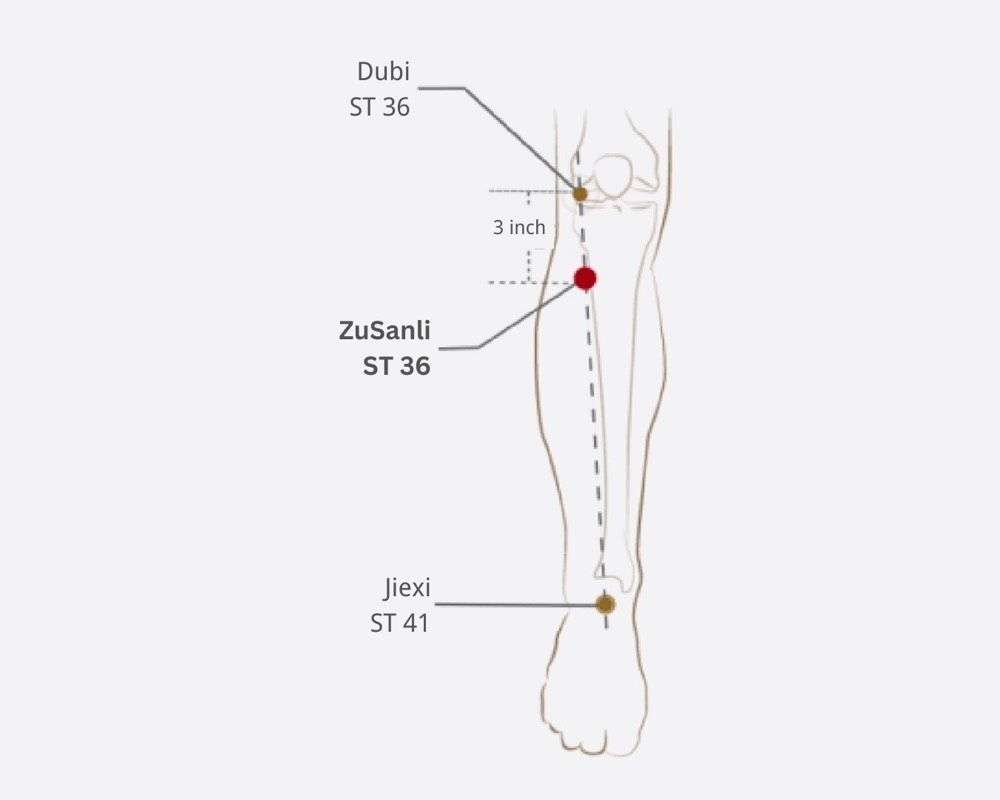
3. Build qi rather than force it. Press Zusanli ST-36 ("Leg Three Li"), one hand-width below the kneecap and a thumb-width outside the shinbone, for one to two minutes each side, then take a slow ten-minute walk after dinner. In my experience that short after-meal walk does more for daytime energy than most things people buy in a bottle.
4. Settle the evening at Taixi KI-3 ("Great Ravine"). Sitting down, place your thumb in the hollow between the inner ankle bone and the Achilles tendon and hold gentle, steady pressure for one to two minutes on each side. This is a quiet point, and gentle beats strong here.
5. Change one cold meal into a warm one. The iced coffee and cold smoothie breakfast is the single most common thing I ask people to swap — cooked oats, congee, or soup instead. A small pot of fresh ginger, two pitted red dates and a thumbnail piece of chenpi (陈皮) makes a mild daily drink; if you feel bloated or your tongue has a thick coating, use the chenpi on its own for a while.
6. Soak your feet properly. Water at 38–40°C (100–104°F), just above the ankle bones, fifteen minutes, then dry well and put socks on. Stop before you start sweating, and if you have reduced sensation in your feet or any circulation concerns, check the temperature with a thermometer and speak to your doctor before making it a habit.
When to See a Doctor
Chinese medicine reads patterns; it does not replace a medical assessment, and feeling cold has several ordinary medical explanations that are worth checking with simple blood work. If your coldness is new, has clearly worsened over a few months, or arrived alongside other changes, see your GP first and ask them to look at thyroid function, iron levels, blood sugar and any medications you have recently started.
Some situations need same-day attention. One hand or foot that suddenly turns cold, pale or blue, painful or numb, is urgent. Coldness together with chest pain, breathlessness or a cold sweat is a reason to call emergency services rather than to reach for a hot water bottle.
Book a GP appointment soon if you get cramping in your calves when walking that eases when you stop, if your fingers reliably turn white and then blue in the cold, or if the coldness comes with unexplained weight change, hair thinning, persistent low mood, or periods much heavier than your normal.
Two extra cautions for the steps above. If you live with diabetes, neuropathy or poor circulation, do not use foot soaks or heat packs without your doctor’s guidance, because reduced sensation makes burns easy. And in an older adult, feeling cold with fever, shaking chills or new confusion needs urgent medical care, not warming food.
Which Constitution This Usually Points To
Cold that sits deep in the low back, abdomen and knees, that is there from the moment you wake, and that eases noticeably with warmth, usually points toward a yang-deficient constitution (阳虚质). Cold that tracks with tiredness, with easy sweating, a soft voice and catching every chill going around, points toward a qi-deficient constitution (气虚质).
Most people are a blend, and the blend shifts with age, season and how demanding the last few years have been. Constitution is a lens for choosing what suits you, not a label to carry around.
If you are not sure which side you sit closer to, the quick assessment on this site walks you through 29 gentle questions in about three minutes and gives you a daily plan matched to your type — including which foods and which points suit you, and which ones are better left alone.
Watch: Jimmy explains this in the clinic
Keep Reading
Why Am I Always Cold?
The TCM take on cold hands, cold feet, and never feeling warm.
Read →The Iced Coffee Question
Why four cold brews a day flatten some men and not others — and the swaps that cost you nothing.
Read →The Evening Foot Soak
The right temperature for your pattern, the right timing, and who should skip it entirely.
Read →Ice Baths After Forty
Why the same cold plunge sharpens one man and flattens another — and how to tell which you are.
Read →Long Hours Sitting
What eight hours in a seat does below the waist — and the three-minute habit that answers it.
Read →Cold Feet, No Sleep
Why you lie awake for an hour with warm shoulders and freezing feet — and the ten-minute answer.
Read →Find Your Constitution
29 gentle questions, about three minutes, and you have your TCM body type — so this guidance actually fits you.
Take the quick quiz →Related
Learn about the Yang Deficiency constitution →Frequently Asked Questions
Can I have qi deficiency and yang deficiency at the same time?
Yes, and it is common. Yang deficiency almost always sits on top of a qi-deficient base, which is why classical practice builds qi first and adds gentle warmth second rather than starting with the strongest warming foods. If you are unsure, work with the milder qi-building steps for two to three weeks and see which signs shift.
Why do I feel colder after exercise instead of warmer?
That usually means the session went past a light sweat. In classical thinking sweat and yang leave the body together, so a heavy sweat can leave a qi-deficient person flatter and colder an hour later. Brisk walking, gentle cycling or tai chi to the point of a light sheen tends to suit this pattern much better than a hard gym session.
Is ginger tea good for everyone who feels cold?
Not quite. Fresh ginger is mild and suits most cold patterns, but dried ginger (干姜) is much hotter and belongs to deep winter and to clearly yang-deficient people. If you feel cold but also get mouth ulcers, night sweats or a dry throat, strong warming drinks often backfire, and a different approach suits you better.
How long before I notice a difference?
Most people notice the small things first — warmer feet at bedtime, an easier afternoon — within two to three weeks of consistent daily habits. Deeper background warmth changes more slowly, over a season or two. If nothing at all shifts in six to eight weeks, that is a good moment to have your doctor check the ordinary medical causes.
Last updated: 2026-07-13
This page offers general TCM educational perspectives, not medical advice or a diagnosis. For any health concern, please consult a licensed healthcare professional.