The Diet That Transformed Your Friend Left You Bloated — Here’s the Variable Everyone Skips
Chinese medicine has been answering this question for two thousand years, and the answer is not willpower.
Reviewed by Jimmy Yu, Certified Acupuncturist · Updated 2026-07-13
Quick answer
The same eating plan produces opposite results in different people because digestion is not identical from body to body. Chinese medicine reads this as constitution: some people run warm and damp, others cold and depleted. A plan that suits one pattern will often aggravate its opposite, which is why matching matters more than the plan itself.
The Same Plan, Two Opposite Results
Two people come in the same week having done the same thing. One has been eating a big raw salad at lunch for a month and feels sharp and light. The other has been doing exactly the same and feels bloated by two in the afternoon, with cold hands and a heaviness that was not there before.
Fasting shows the same split. Some people describe a clear head and steady energy by the second week. Others get shaky and cold before eleven, then eat everything in sight at four, and conclude that something is wrong with them.
What I notice is that the person who struggled almost never blames the plan. They blame themselves — not disciplined enough, not consistent enough. Twenty years in, I have come to think that is almost always the wrong conclusion.
None of what follows is about eating less. It is about eating what your particular digestion can actually work with.
How Chinese Medicine Reads It
The Huangdi Neijing raised this exact problem in the Suwen chapter "Yi Fa Fang Yi Lun" (《黄帝内经·素问·异法方宜论》). It observes that people in the east, west, north, south and centre of the country lived differently, ate differently and developed different complaints, and it closes with the line that the skilled physician "blends the methods, so that each person gets what suits them" (杂合以治,各得其所宜).
That is a remarkable thing to have written down. Long before anyone had a way to measure what was in food, the tradition had already concluded that the same approach applied to everybody would fail most of them.
The organ system doing the work here is the Spleen and Stomach — in this language, not the anatomical spleen but the whole capacity to turn food into usable energy. Classical practice describes it as a warm pot over a low steady flame: what you put in matters, but so does whether the flame is strong enough to cook it.
This is why raw, cold and very rich foods behave so differently in different people. A person with a strong flame handles a cold salad without noticing. A person whose flame is low is being asked to do extra work before anything useful comes out, and they feel the cost as heaviness, bloating and an afternoon that falls apart.
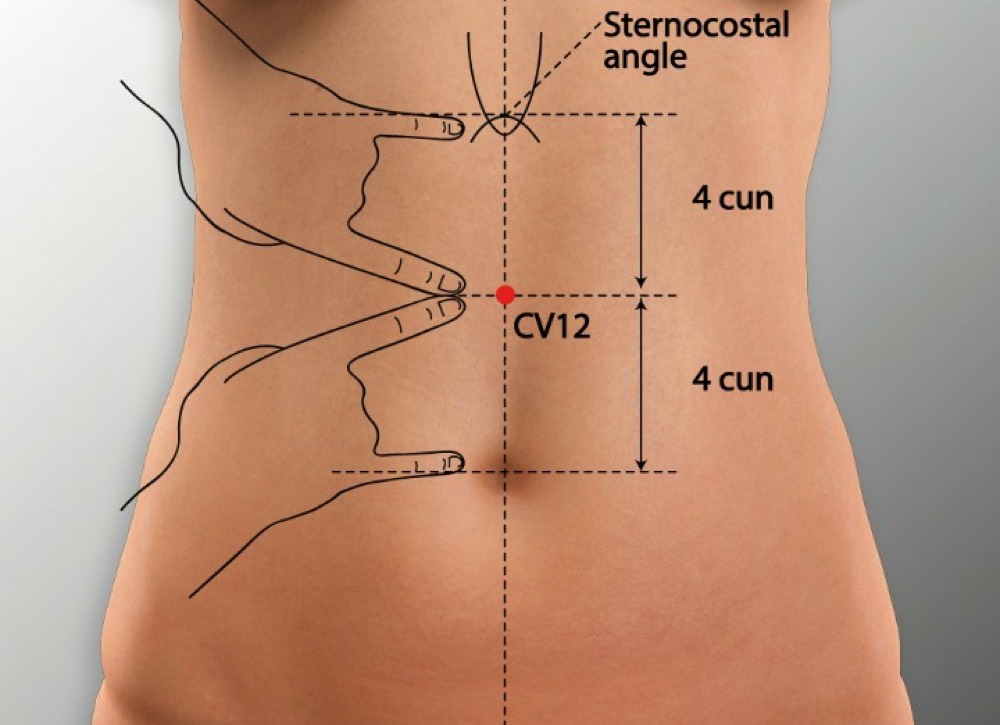
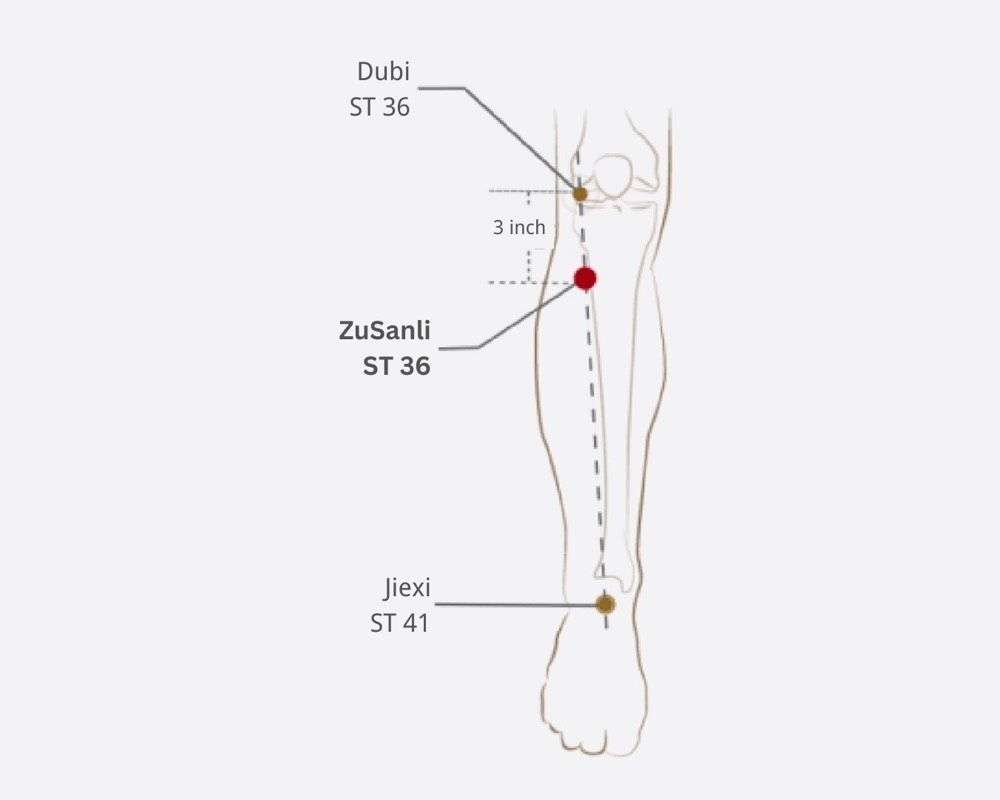
The points classical practice uses here reflect the same logic. Zusanli ST-36 ("Leg Three Li") sits on the stomach channel below the knee and is the tradition’s workhorse for digestive strength. Zhongwan CV-12 ("Middle Cavity") sits midway between the navel and the base of the breastbone, directly over the stomach. Yinlingquan SP-9 ("Yin Mound Spring") sits in the hollow below the inner knee and is the point reached for when heaviness and puffiness dominate.
So the useful question is not "is this diet good?" but "good for which pattern?" A cooling, light, high-raw approach suits someone who runs hot and damp. It is the wrong direction entirely for someone who is already cold and tired.
What’s Real, What’s Myth
Myth: raw is always the healthiest form of a vegetable. Raw food is not nutritionally inferior, but it does arrive needing more work. In my clinic the people who bloom on raw salads are usually the ones who run warm, sleep fine and have strong digestion already; the ones who feel worse are usually already cold or already heavy. Lightly cooking the same vegetables changes almost nothing nutritionally and a great deal in how people feel.
Myth: if a well-designed plan is not working, you need more discipline. In my experience that conclusion sends people into a cycle of trying harder at something that was never matched to them in the first place. Mismatch feels exactly like failure from the inside, which is what makes it so demoralising.
Myth: superfoods work for everyone. Classical food practice has almost no concept of a universally good food — it has foods that are warming, cooling, drying or moistening, and the whole skill is in the match. Goji berries suit a dry, depleted person and can feel cloying to a heavy, damp one.
Myth: Chinese medicine says never eat cold food. It says nothing so absolute. Someone who runs hot with a greasy yellow tongue coating often does well with cooling foods; someone who is cold and depleted does not. The rule is matching, not prohibition.
Real: your tongue is informative and costs nothing to check. A pale, puffy tongue with tooth marks along the edges, a thick white coating, or a red tongue with little coating are three quite different starting points, and they point in different dietary directions.
Six Things You Can Do This Week
1. Run the warm breakfast test. For two weeks, swap the cold smoothie or iced coffee for something cooked — porridge, congee, eggs on toast, soup — and change nothing else. This single swap produces more noticeable change in my clinic than almost any other, and if it makes no difference at all, that is useful information too.
2. Take a ten-minute walk after your evening meal, and press Zusanli ST-36 ("Leg Three Li") for a minute on each side beforehand. The point sits one hand-width below the kneecap and a thumb-width outside the shinbone. Gentle, steady pressure — this is not a place to dig.
3. Add chenpi (陈皮, aged tangerine peel) to anything rich. Classical soups almost never contain building ingredients without something to keep them moving, and chenpi is the standard choice. A thumbnail piece in a stew, a braise or a pot of tea is enough.
4. Look at your tongue each morning before eating or brushing, in daylight, for ten seconds. Note three things: colour, puffiness, and coating. Two weeks of this tells you more about your own pattern than a month of reading.
5. Eat to comfortable, not to full. The Suwen chapter "Shang Gu Tian Zhen Lun" (《素问·上古天真论》) puts moderation in food and drink — 食饮有节 — first among the habits of people who stayed well into old age. Note that this is about steadiness and rhythm, not about going hungry.
6. Change one variable at a time. Pick one swap, hold it for two weeks, and track three markers: your energy at four in the afternoon, how heavy you feel on waking, and how your digestion settles after meals. Changing six things at once tells you nothing about which one mattered.
When to See a Doctor
Some digestive changes need a medical assessment rather than a dietary experiment. See your GP promptly for weight loss you did not intend, blood in your stool or black stools, difficulty or pain on swallowing, persistent vomiting, or abdominal pain that is new, severe or waking you at night.
Book an appointment too if bloating is new and persistent over several weeks, particularly if you are over fifty, or if it comes with a change in bowel habit that has lasted more than three weeks. These are the situations where the standard investigations matter and a food experiment simply delays things.
Long-standing fatigue that does not shift with better meals deserves basic blood work — iron, B12, thyroid function, blood sugar — before you conclude it is dietary. I ask for this routinely, because roughly one in five times it changes the picture entirely.
One more thing, said plainly. If you have a history of disordered eating, or if reading about food rules brings up anxiety, please do not run self-directed food experiments. Speak with your GP or a psychologist first — that is the right order, and there is no shame in it.
Which Constitution This Usually Points To
If light, cooling, raw approaches leave you bloated, cold and flat, you are most often looking at a qi-deficient (气虚质) or yang-deficient (阳虚质) picture, where warm and cooked suits far better. If rich, warming, tonic-style eating leaves you heavy, greasy-tongued and foggy, a phlegm-damp (痰湿质) or damp-heat (湿热质) picture is more likely.
And if most things work reasonably well and nothing dramatic happens either way, that is its own useful answer — a balanced constitution (平和质) mostly needs steadiness rather than intervention.
If you would rather not work this out by trial and error, the quick assessment on this site walks you through 29 gentle questions in about three minutes and gives you a daily plan matched to your type, including which foods suit you and which ones are better left alone.
Watch: Jimmy explains this in the clinic
Keep Reading
Seven Everyday Foods
Ordinary supermarket items the tradition has used for centuries — and who each one actually suits.
Read →Seasons Across Hemispheres
How to translate seasonal Chinese medicine advice if you live south of the equator — or moved.
Read →After Long Travel
Still out of step a week after landing — and the order to put the day back together.
Read →The Iced Coffee Question
Why four cold brews a day flatten some men and not others — and the swaps that cost you nothing.
Read →Breakfasts That Hold You
Why a healthy breakfast can leave you flat by ten — and three warm swaps that don’t.
Read →Aged Tangerine Peel
The most used ingredient in Chinese home cooking, and the least known outside it.
Read →Find Your Constitution
29 gentle questions, about three minutes, and you have your TCM body type — so this guidance actually fits you.
Take the quick quiz →Related
Learn about the Balanced Constitution constitution →Frequently Asked Questions
Does this mean I should never eat salad?
Not at all. It means noticing what happens after you do. If a raw lunch leaves you comfortable and clear-headed, it suits you. If it reliably leaves you bloated, heavy or cold in the afternoon, lightly cooking the same vegetables, or adding something warming like ginger, usually solves it without giving anything up.
Is intermittent fasting bad in Chinese medicine?
The tradition has no position on it as such, since it is a modern format. What classical practice would ask is whether your digestion is strong enough to go long stretches without work. People who run warm and robust often do well; people who go shaky, cold and irritable by late morning are usually being asked for more than they have.
How long before I know whether a change suits me?
Two weeks is usually enough to see a direction, and six weeks to be confident. Give it that long before judging, hold the other variables steady, and track how you feel in the late afternoon rather than immediately after eating — that is where the difference tends to show up most clearly.
Can my body type change over time?
Yes, and it usually does. Constitution shifts with age, season, stress, illness and life stage, which is why the plan that suited you in your thirties may not suit you now. Rechecking every season, rather than settling on one label for life, is the more useful habit.
Last updated: 2026-07-13
This page offers general TCM educational perspectives, not medical advice or a diagnosis. For any health concern, please consult a licensed healthcare professional.