The Dried Peel in Every Chinese Kitchen — Why It Belongs in Your Afternoon and in Every Rich Dish
The ingredient that stops everything else from sitting heavily, and the one worth ordering first.
Reviewed by Jimmy Yu, Certified Acupuncturist · Updated 2026-07-13
Quick answer
Chenpi (陈皮, aged tangerine peel) is used in Chinese home cooking to keep rich food moving and to settle a heavy, distended middle. Classical texts describe it as taking its direction from whatever it is paired with, which is why it appears in almost every tonic soup and in mid-afternoon tea.
The Three O’Clock Heaviness
Lunch was reasonable and it is still sitting there at three. The belt feels a size tighter, the head is foggy, and the temptation is something sweet followed by another coffee.
It is worse after a rich meal, worse in humid weather, and worse on the days that involved sitting still. By six, appetite for dinner is poor and the cycle repeats itself the next day.
In a Chinese household there is an unremarkable answer to this, and it is not a supplement. Someone puts a piece of dried orange peel in a pot of hot water.
It is the most used ingredient in Chinese home cooking and almost unknown in Western kitchens, which makes it the single most useful thing to order if you are going to buy one ingredient.
How Chinese Medicine Reads It
Chenpi (陈皮) is the sun-dried peel of a particular mandarin, aged for years — the name means "aged peel", and older is genuinely valued more highly. The best grades are aged for decades and priced accordingly, though the ordinary kind from a Chinese grocer works perfectly well.
Li Shizhen described it in the Bencao Gangmu (《本草纲目》) with a line that explains why it appears in so many formulas: paired with building ingredients it builds, paired with draining ones it drains, paired with rising ones it rises, paired with descending ones it descends — 同补药则补,同泻药则泻,同升药则升,同降药则降.
That is an unusual description. Most ingredients in the tradition have a fixed direction. This one takes its direction from its company, which makes it the natural companion ingredient rather than a lead.
Its own function is described in two parts: it moves qi in the middle of the body, and it dries dampness. In plain terms, it keeps things from sitting and settles the heavy, distended feeling that follows a rich meal.
This is why classical soups almost never contain rich building ingredients without it. Tonics are heavy by nature, and heavy things sit — the peel is what stops a nourishing soup from becoming an uncomfortable evening.
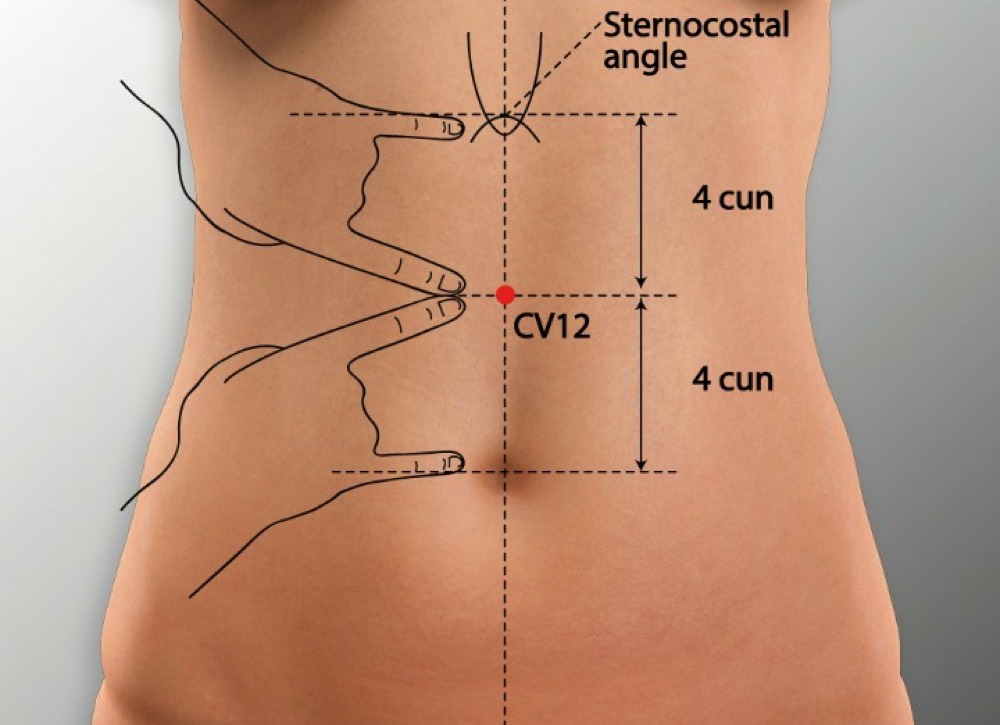
For the mid-afternoon it is used on its own or with a little hawthorn, in a weak tea rather than a strong decoction. And it pairs naturally with Zhongwan CV-12 ("Middle Cavity"), midway between the navel and the base of the breastbone, if you want to do something as well as drink something.
What’s Real, What’s Myth
Myth: you can use ordinary dried orange peel from a supermarket orange. Not really. The variety matters, the ageing matters, and fresh peel is more pungent and irritating rather than mellow. It is also worth noting that most supermarket citrus is waxed and sprayed, which is a good reason not to dry your own from it.
Myth: it is a slimming ingredient. It is not, and I would rather that idea did not attach itself to it. What it does is help rich food move, which people often notice as less bloating — a different thing from any effect on weight, and worth being accurate about.
Myth: more is better. A thumbnail-sized piece in a pot is the ordinary amount. Large quantities over long periods are drying, and in someone who is already dry — night heat, dry mouth, a red tongue with little coating — regular use does not suit at all.
Myth: it is a Chinese-only ingredient with no Western equivalent. Functionally, it sits near the role that bay leaf, fennel seed or caraway play in European cooking — aromatics added to heavy dishes so they sit more easily. Every food culture worked this out; ours mostly forgot why.
Real: it is the safest single ingredient to add to almost any dish in this tradition. Of everything I suggest, this is the one with the fewest cautions attached and the widest usefulness.
Five Ways to Use It This Week
1. Mid-afternoon tea. One thumbnail piece in a mug or small pot of hot water, left five minutes, sipped between two and four. That is the whole recipe. It fills the same role the second biscuit and third coffee were filling, and it settles a heavy middle rather than adding to it.
2. In anything rich. A piece in a stew, a braise, a bone broth or a bean dish. This is the classical safeguard against nourishing food sitting heavily, and it is the reason it appears in almost every tonic soup in the tradition.
3. With hawthorn (山楂) after a large meal. A few slices of dried hawthorn with the peel makes the standard after-a-feast tea. Important: skip the hawthorn entirely if you are pregnant, might be, or have heavy periods — that caution applies to hawthorn, not to the peel.
4. With dry-fried coix seed (炒薏米) in congee, if mornings are heavy. A small handful of the dry-fried form — not the raw form — with rice and a piece of peel. This is the standard breakfast for a heavy, foggy start.
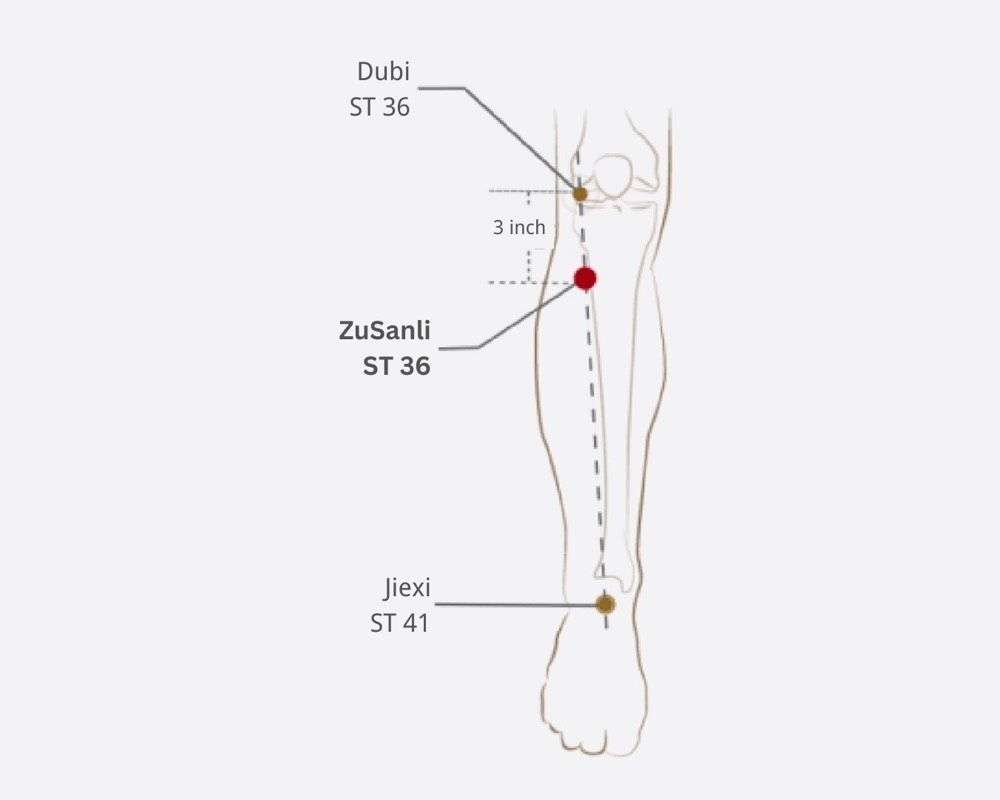
5. Warm the middle alongside it. A warm palm or covered heat pack over Zhongwan CV-12 ("Middle Cavity") for five to ten minutes when you are distended, then a minute of pressure at Zusanli ST-36 ("Leg Three Li") on each side, sitting down and not on an empty stomach.
When to See a Doctor
Persistent bloating is worth a proper look rather than a longer run at a tea. See your GP for bloating that is constant rather than fluctuating, for a change in bowel habit lasting more than three weeks, or for any bloating with unintended weight loss. In women, persistent bloating with abdominal or pelvic discomfort should always be assessed.
Seek medical advice promptly for blood in your stool or black stools, difficulty or pain on swallowing, persistent vomiting, or abdominal pain that is severe, new or waking you at night.
And avoid regular use if you are markedly dry — night heat, dry mouth and throat, a red tongue with little coating — since the drying quality is the wrong direction for that pattern. Occasional use in a soup is fine; a daily habit is not.
Which Constitution This Usually Points To
Heaviness after meals, a thick greasy tongue coating, a foggy head and symptoms that worsen in humid weather point toward a phlegm-damp constitution (痰湿质). This ingredient suits that pattern about as well as anything in the tradition, and the dry-fried form of coix seed goes with it.
It also has a place in almost every other pattern as a companion rather than a lead — in a qi-deficient picture it keeps building foods from sitting, and in a qi stagnation picture it supports the digestion taking the pressure from above.
The one pattern it does not suit as a daily habit is the dry, yin-deficient picture (阴虚质), where drying is the wrong direction. If you are not sure which of these you are, the quick assessment on this site walks you through 29 gentle questions in about three minutes and gives you a daily plan matched to your type.
Keep Reading
How to Clear Dampness
The TCM view on heaviness, bloating, and that waterlogged feeling.
Read →What Does My Tongue Say?
Reading coating, colour, teeth marks and shape the TCM way.
Read →Morning Fog and Heaviness
Why you wake up unrefreshed after eight hours — and the pattern Chinese medicine calls dampness.
Read →Tap the Side of Your Body
A five-minute morning routine along the outer thigh for the days you wake up heavy and slow.
Read →The Spring Reset Myth
Why a juice week leaves so many people colder and flatter — and what the classics said instead.
Read →Stiff Back From Sitting
Why stretching the sore spot does so little — and where the classics send you instead.
Read →Find Your Constitution
29 gentle questions, about three minutes, and you have your TCM body type — so this guidance actually fits you.
Take the quick quiz →Related
Learn about the Phlegm-Dampness constitution →Frequently Asked Questions
Where do I buy it and what should I look for?
Any Chinese grocer or online herbal supplier. Look for pieces that are dark brown rather than bright orange, dry and slightly leathery, with a deep mellow smell rather than a sharp citrus one. It keeps for years in a sealed jar away from light, so a small bag lasts a long time.
Can I make it myself from orange peel?
It will not be the same ingredient. The variety and the years of ageing are what produce the mellow, aromatic quality the tradition uses, and fresh peel is sharper and more irritating. Supermarket citrus is also usually waxed and sprayed, which is a further reason not to.
How much is a normal amount?
A thumbnail-sized piece in a mug or a pot, or one to two pieces in a family-sized soup. This is a companion ingredient rather than a main one, and larger amounts over long periods are drying rather than more effective.
Can I drink it every day?
For most people with a heavy, damp picture, yes — a weak afternoon tea is an ordinary daily habit in Chinese households. If you are dry, with night heat and a red tongue with little coating, keep it to occasional use in cooking instead.
Last updated: 2026-07-13
This page offers general TCM educational perspectives, not medical advice or a diagnosis. For any health concern, please consult a licensed healthcare professional.