The Line Down the Side of Your Body — Why Tapping It Lifts Morning Sluggishness Better Than Another Coffee
Five minutes, no equipment, and a channel the classics considered the hinge of the whole system.
Reviewed by Jimmy Yu, Certified Acupuncturist · Updated 2026-07-13
Quick answer
The gallbladder channel runs down the side of the head, ribs and outer leg. Tapping along the outer thigh from hip to knee for a few minutes each morning is a traditional way to wake up a sluggish start. It suits heavy, foggy mornings better than more caffeine, and takes about five minutes.
The Body That Takes Two Hours to Start
Some people wake up and are simply awake. Others are upright, moving, and functionally still asleep until half past nine, and no amount of good intentions the night before changes it.
The ones who describe it best mention the sides of the body. Stiff along the outer thighs, tight through the ribs, a neck that does not want to turn as far one way as the other. Sitting has usually been a big part of their week.
There is often a sleep detail too — waking at some point between eleven and one and lying there for a while, then sleeping heavily until the alarm and waking unrefreshed.
And there is the coffee arithmetic. The first one works. The second does less. By the third the afternoon is worse and the following morning is worse still, which is roughly where most people decide there is nothing to be done.
How Chinese Medicine Reads It
The Lingshu chapter "Jing Mai" (《灵枢·经脉》) traces the gallbladder channel down the side of the body — from the outer corner of the eye, around the ear, in a zigzag over the side of the skull, down the side of the neck and ribs, along the outer thigh and the outer lower leg to the fourth toe. If you drew a line down your side seam, you would be close.
The Suwen chapter "Liu Jie Zang Xiang Lun" (《素问·六节藏象论》) makes a striking claim about it
凡十一脏取决于胆
all eleven organs take their decision from the gallbladder. Commentators have argued about that line for centuries, but the general reading is that this channel is the hinge, the part of the system that lets things turn and get going.
《素问·六节藏象论》
The organ clock adds the other half. In the Chinese medicine sequence, gallbladder time is the double hour from eleven at night to one in the morning, which is why people with this pattern so often report lying awake in exactly that window.
Morning sluggishness in this framework is the yang failing to rise cleanly. Add damp — heaviness, a thick tongue coating, a head that feels wrapped — and the rise is slower still, because what is heavy resists being lifted.
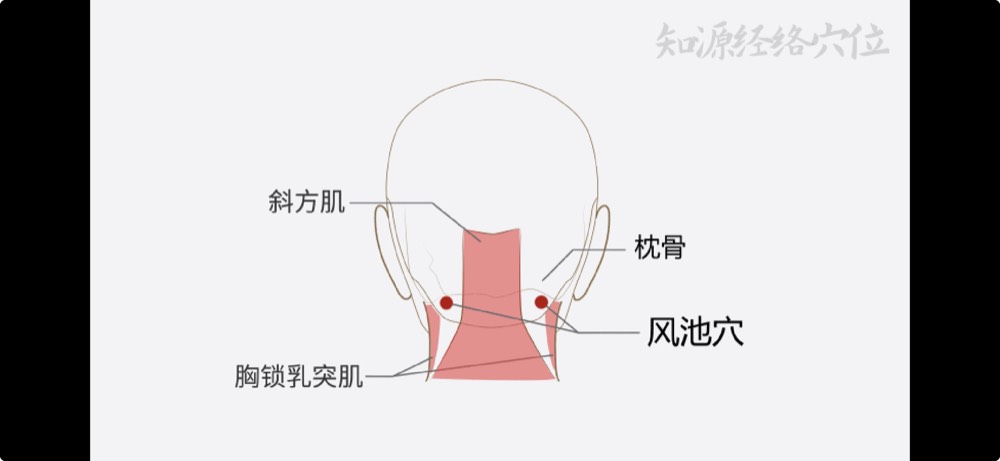
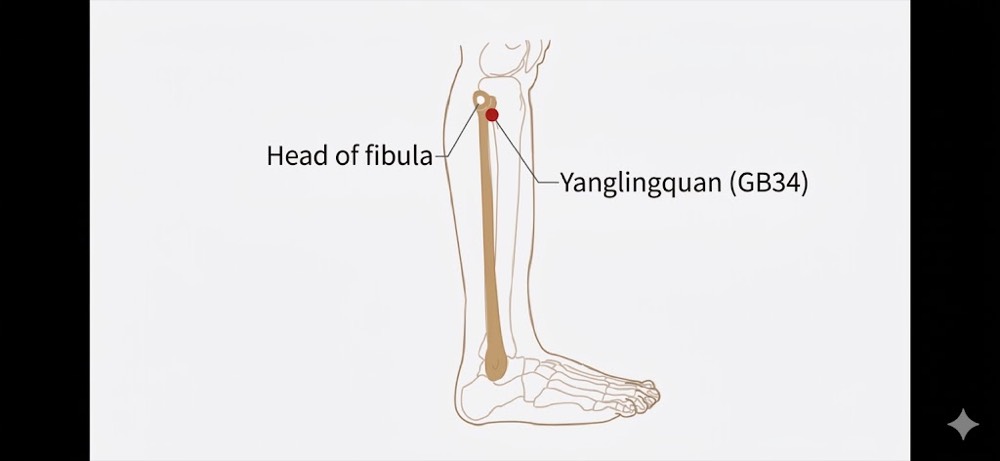
Tapping suits this channel for a practical reason: it runs mostly over places you can reach on yourself, over muscle and bone rather than anything delicate. Fengchi GB-20 ("Wind Pool") sits in the two hollows at the base of the skull. Fengshi GB-31 ("Wind Market") is easy to find — stand with your arm hanging, and it is where your middle fingertip touches the outer thigh. Yanglingquan GB-34 ("Yang Mound Spring") sits in the dip just below and in front of the bony bump on the outside of the lower leg, below the knee.
That last point is the meeting point of the sinews in classical theory, listed among the eight gathering points in the Nanjing (《难经·四十五难》) — which is why it comes up whenever stiffness and tightness are the theme.
What’s Real, What’s Myth
Myth: harder tapping is better. The outer thigh tolerates a fair bit, but the aim is a rhythmic wake-up rather than a beating. Loose fists, comfortable force, steady rhythm. People who tap hard enough to bruise are not getting more from it.
Myth: it is a way of clearing out what the body does not need. That framing is everywhere online and it is not what the classics describe. What tapping does is stimulate a channel and get you moving in the morning, which is useful and modest, and it does not need to be dressed up as more.
Myth: if you wake between eleven and one, that alone identifies your problem. The organ clock is a useful pointer, not a verdict. Alcohol, a late heavy meal, an overheated bedroom and a full bladder all produce the same waking, and I would rule those out before reading anything into the timing.
Myth: morning fog means you are not getting enough sleep. Sometimes it does. But when eight or nine hours reliably produce an unrefreshed morning, the amount is not the variable, and adding more sleep tends to deepen the heaviness rather than lift it.
Real: doing it before you eat, in the first ten minutes of the day, makes a noticeable difference. The same five minutes at lunchtime does much less. Something about meeting the sluggishness at the point where it forms matters here.
Five Things You Can Do This Week
1. Tap the outer thigh for two minutes. Sit on the edge of the bed, make loose fists, and tap from the hip down to just above the knee along the outer side, then back up. Steady rhythm, comfortable force, both legs. Find Fengshi GB-31 ("Wind Market") first by letting your arm hang — where your middle fingertip lands is the line.
2. Hold Yanglingquan GB-34 ("Yang Mound Spring") for a minute each side. Find the bony bump on the outside of your lower leg below the knee, then drop into the dip just below and in front of it. This is the one to use if stiffness rather than fog is your main complaint.
3. Work Fengchi GB-20 ("Wind Pool") for a minute. Both thumbs into the two hollows at the base of the skull, either side of the neck muscles, pressing slightly upward and inward while you let your head tip back a little. Gentle. This is a sensitive area and it does not need force.
4. Add a side stretch. Standing, clasp your hands overhead and lean slowly to each side for three slow breaths, four times. This lengthens the same line the tapping wakes up, and doing both takes less than a minute more.
5. Get outside within the first hour. Ten minutes of daylight and walking does more for a slow morning than the tapping does, and the two together do more than either. If you can move the first coffee to after the walk rather than before it, better again.
When to See a Doctor
Waking unrefreshed has medical explanations worth ruling out. The one I refer on most often is disturbed breathing during sleep — loud snoring, anyone noticing you stop breathing, or falling asleep easily during the day all warrant asking your GP about a sleep study. No morning routine substitutes for that.
See your doctor promptly for a headache that is severe and sudden, a headache worst on waking with vomiting, new confusion or memory change, or any weakness, numbness or change in speech. Do not press or tap anything and wait.
Stop tapping and see your GP if there is pain in the leg itself rather than stiffness, particularly one-sided calf pain with swelling, warmth or redness, or leg pain that comes on when walking and eases with rest. Avoid tapping over varicose veins, recent injuries, or any area that is numb.
Fatigue that has been building over months deserves basic blood work — thyroid function, iron, B12, blood sugar — before you conclude it is a matter of routine. And if low mood has been present most days for a fortnight, that belongs with your GP too.
Which Constitution This Usually Points To
Heavy, foggy mornings that lift once you move, alongside a thick tongue coating, sluggish digestion and symptoms that worsen in humid weather, point toward a phlegm-damp constitution (痰湿质). For that pattern the tapping is the easy part, and reducing sweet, rich, cold food is the part that actually shifts it.
If the mornings are more stiff than heavy, with tight ribs, sighing and a mood that tracks with pressure at work, a qi stagnation constitution (气郁质) is the more likely reading, and brisk walking matters more than anything you tap.
These two overlap often enough that guessing is a poor strategy. The quick assessment on this site walks you through 29 gentle questions in about three minutes and gives you a daily plan matched to your type, including where to put your effort first.
Watch: Jimmy explains this in the clinic
Keep Reading
How to Clear Dampness
The TCM view on heaviness, bloating, and that waterlogged feeling.
Read →What Does My Tongue Say?
Reading coating, colour, teeth marks and shape the TCM way.
Read →Morning Fog and Heaviness
Why you wake up unrefreshed after eight hours — and the pattern Chinese medicine calls dampness.
Read →Aged Tangerine Peel
The most used ingredient in Chinese home cooking, and the least known outside it.
Read →The Spring Reset Myth
Why a juice week leaves so many people colder and flatter — and what the classics said instead.
Read →Stiff Back From Sitting
Why stretching the sore spot does so little — and where the classics send you instead.
Read →Find Your Constitution
29 gentle questions, about three minutes, and you have your TCM body type — so this guidance actually fits you.
Take the quick quiz →Related
Learn about the Phlegm-Dampness constitution →Frequently Asked Questions
How hard should I tap?
Firm enough to feel clearly, light enough that you could keep going for five minutes without wincing. Loose fists and a steady rhythm. If you are bruising, it is too hard — and there is nothing gained by pushing past comfortable.
Is there a best time of day?
The first ten minutes after getting up, before eating, is where people notice the most. The same routine at lunchtime does considerably less. Avoid doing it right before bed, since for some people it is stimulating enough to delay sleep.
Who should not do this?
Avoid tapping over varicose veins, recent injuries, any numb area, or if you have a bleeding disorder or take blood-thinning medication — check with your doctor in that case. During pregnancy, keep to light tapping on the outer thigh only and check with your own practitioner first.
What if I keep waking between eleven and one?
Rule out the ordinary things first: alcohol in the evening, a late heavy meal, a warm bedroom, screens late. If those are all addressed and the waking continues for more than a few weeks, it is worth discussing with your GP rather than reading too much into the timing alone.
Last updated: 2026-07-13
This page offers general TCM educational perspectives, not medical advice or a diagnosis. For any health concern, please consult a licensed healthcare professional.