Low Back Stiff After Sitting — Why Tapping the Back of Your Legs Beats Another Stretch
A four-line verse from the Ming dynasty sends you to the back of the knee, not to the sore spot.
Reviewed by Jimmy Yu, Certified Acupuncturist · Updated 2026-07-13
Quick answer
Stiffness after long sitting is often a channel problem rather than a muscle one. A classical verse sends practitioners to Weizhong BL-40 ("Bend Middle") behind the knee for all low back and upper back complaints, and tapping down the back of the legs suits this pattern better than stretching into the sore area.
The First Thirty Seconds After Standing Up
You have been at the desk for two hours and standing up takes a moment of negotiation. The low back is stiff rather than painful, you walk a few steps like someone much older, and by thirty seconds in it has mostly gone.
It comes back the next time you sit. And the description is heaviness more than sharpness — a wearing, dragging quality, as though the area were wrapped rather than injured.
People almost always respond by stretching. More hamstring stretches, more forward folds, a foam roller, and after six months the stiffness is exactly where it was.
The detail that usually explains the failure is this: it is worse in humid weather and after a heavy meal, and better after twenty minutes of walking. That is not how a tight muscle behaves.
How Chinese Medicine Reads It
The Suwen chapter "Xuan Ming Wu Qi" (《黄帝内经·素问·宣明五气》) has a line every desk worker should know
久视伤血,久卧伤气,久坐伤肉,久立伤骨,久行伤筋
prolonged looking harms the blood, prolonged lying harms the qi, prolonged sitting harms the flesh, prolonged standing harms the bones, prolonged walking harms the sinews.
《黄帝内经·素问·宣明五气》
Prolonged sitting harms the flesh. Not the sinews — which is what stretching addresses — but the flesh, which in this system belongs to the Spleen and to the movement of fluid through the body.
That is why this kind of stiffness behaves like dampness rather than like tightness. Damp is described as heavy, sticky and slow, worse in humid weather and after rich food, and better with movement. Read that list again against your own experience of it.
The channel involved is the Bladder channel, and its course is the reason the classical answer sits so far from the sore area. The Lingshu chapter "Jing Mai" (《灵枢·经脉》) traces it from the inner corner of the eye, over the top of the head, down either side of the spine, through the buttock, down the back of the thigh, through the back of the knee, down the calf and out to the little toe.
The Ming dynasty verse of the four command points, recorded in the Zhenjiu Daquan (《针灸大全》), gives the working shorthand
肚腹三里留,腰背委中求
for the belly, stay with Zusanli; for the low and upper back, seek Weizhong.
《针灸大全》
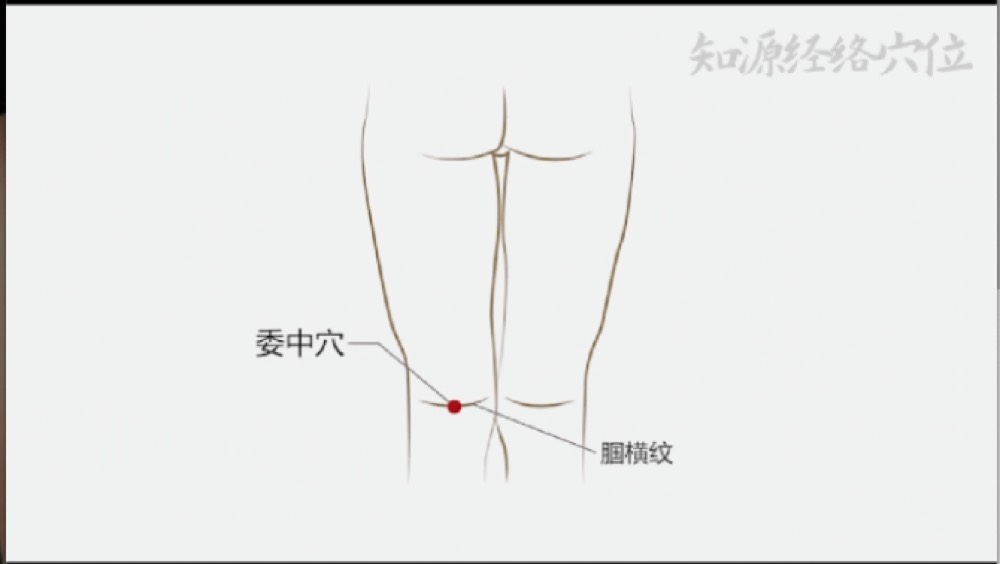
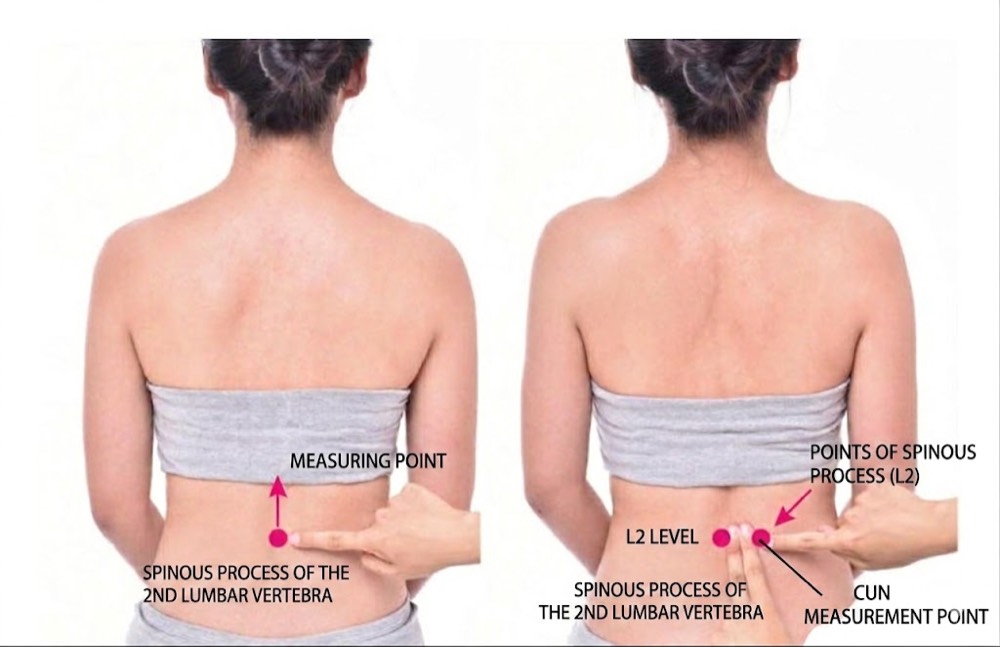
Weizhong BL-40 ("Bend Middle") sits in the middle of the crease behind the knee. Chengshan BL-57 ("Mountain Support") sits in the notch below the calf muscle where it divides, about halfway between the knee crease and the heel. Shenshu BL-23 ("Kidney Transport") sits either side of the spine at waist level.
What’s Real, What’s Myth
Myth: stiffness always means tight muscles that need lengthening. Sometimes it does. But stiffness that is worse in humid weather, worse after a heavy meal, better with movement and accompanied by heavy legs and a thick tongue coating is behaving like a fluid problem, and stretching a fluid problem produces very little.
Myth: you should stretch into the sore area. For this pattern, working the channel below it usually does more, which is exactly what the classical verse is telling you. Digging into an area that is heavy and congested tends to leave it more irritable rather than looser.
Myth: a standing desk solves it. Prolonged standing has its own entry in that same classical line, and people who go from all-day sitting to all-day standing frequently swap one complaint for another. What the tradition points at is changing position regularly, not choosing a better single position.
Myth: the back of the knee is a safe place to press hard. It is not — there are blood vessels and nerves close to the surface there. Firm but moderate pressure or tapping is appropriate; deep gouging is not, and anyone with varicose veins or a history of blood clots should not press there at all.
Real: getting up every forty minutes outperforms everything else on this list. Two minutes of walking six times a day changes this pattern more reliably than one long session of anything.
Five Things You Can Do This Week
1. Tap down the back of both legs, two minutes. Standing or with your foot on a chair, use loose fists to tap from the buttock down the back of the thigh, past the back of the knee, down the calf to the ankle, then back up. Comfortable force, steady rhythm. Do it in the morning and again mid-afternoon.
2. Hold Weizhong BL-40 ("Bend Middle") for a minute each side. It sits in the centre of the crease behind the knee. Moderate steady pressure with the thumb, not deep digging. Stop immediately and see a doctor if there is any swelling, warmth, redness or one-sided tenderness in the calf right now — that needs assessing before anyone touches the leg. Also skip this point entirely if you have varicose veins behind the knee, a bleeding disorder, or take blood-thinning medication.
3. Press Chengshan BL-57 ("Mountain Support") for a minute each side. Find the notch where the calf muscle splits, roughly halfway between the knee crease and the heel. This one is often strikingly tender in people who sit all day, and it eases over a few weeks.
4. Warm the low back rather than stretching it. Rub your palms together and rub firmly up and down over Shenshu BL-23 ("Kidney Transport") at waist level until the area feels warm, two to three minutes. Then keep it covered and out of any air-conditioning draught.
5. Set a forty-minute timer and stand up when it goes. Two minutes of walking, no phone. This is the least interesting item and the one that produces most of the result, which is generally how it goes with prolonged sitting.
When to See a Doctor
Some back symptoms need same-day medical attention rather than a routine. Numbness in the groin or inner thighs, difficulty controlling your bladder or bowels, or weakness in a leg all need urgent assessment.
See your GP for back pain that is severe, that wakes you at night, that came on after a fall, that comes with fever, or that has been steadily worsening over weeks. Also for pain that travels down a leg past the knee with numbness or weakness, and for any back pain with unintended weight loss.
Stop the leg work and see a doctor promptly for one-sided calf pain with swelling, warmth or redness — that needs ruling out properly and is not something to tap or massage. The same goes for cramping in the calves that comes on when walking and eases with rest.
Avoid pressure behind the knee entirely if you have varicose veins there, a bleeding disorder, or take blood-thinning medication, and check with your doctor before doing any of this if you have had a knee or back operation.
Which Constitution This Usually Points To
Heaviness rather than sharpness, worse in humid weather and after rich meals, better with movement, alongside a thick tongue coating and foggy mornings, points toward a phlegm-damp constitution (痰湿质). For that pattern the food matters as much as the tapping — less sweet, less fried, less cold — and dry-fried coix seed (炒薏米) with chenpi (陈皮) is the classical kitchen pairing.
If the stiffness comes with a cold, aching low back that is better with a heat pack and worse in cold weather, a yang-deficient picture (阳虚质) is more likely, and warmth on the low back matters more than anything you tap.
If it is tight rather than heavy and tracks with your workload, qi stagnation (气郁质) is leading, and brisk walking does more than either.
The quick assessment on this site walks you through 29 gentle questions in about three minutes and gives you a daily plan matched to your type, including whether your stiffness is a damp problem or a cold one.
Keep Reading
How to Clear Dampness
The TCM view on heaviness, bloating, and that waterlogged feeling.
Read →What Does My Tongue Say?
Reading coating, colour, teeth marks and shape the TCM way.
Read →Morning Fog and Heaviness
Why you wake up unrefreshed after eight hours — and the pattern Chinese medicine calls dampness.
Read →Tap the Side of Your Body
A five-minute morning routine along the outer thigh for the days you wake up heavy and slow.
Read →Aged Tangerine Peel
The most used ingredient in Chinese home cooking, and the least known outside it.
Read →The Spring Reset Myth
Why a juice week leaves so many people colder and flatter — and what the classics said instead.
Read →Find Your Constitution
29 gentle questions, about three minutes, and you have your TCM body type — so this guidance actually fits you.
Take the quick quiz →Related
Learn about the Phlegm-Dampness constitution →Frequently Asked Questions
How is this different from ordinary tight hamstrings?
Tight hamstrings respond to stretching and improve steadily over weeks. This pattern does not — it is heavier than it is tight, worse in humid weather and after heavy meals, and better after twenty minutes of walking. If six months of stretching has changed nothing, that is the clue.
How hard should I tap?
Firm enough to feel clearly, light enough to keep going for two minutes without wincing. Loose fists, steady rhythm, and stop well short of bruising. The back of the knee itself should be pressed rather than struck, and only moderately.
Is it safe to press behind the knee?
For most people, with moderate pressure, yes. Never if there is swelling, warmth or one-sided tenderness in the calf right now — that needs a doctor first. And not at all if you have varicose veins there, a bleeding disorder, or take blood-thinning medication.
How long before the stiffness improves?
Most people notice the first thirty seconds after standing are easier within a week or two, mainly from the forty-minute timer rather than the tapping. Deeper change takes six weeks, and if the damp picture is there, the food changes are what shift it.
Last updated: 2026-07-13
This page offers general TCM educational perspectives, not medical advice or a diagnosis. For any health concern, please consult a licensed healthcare professional.