The Breakfast That Leaves You Flat by Ten — Three Warm Alternatives That Don’t
The ingredients on your breakfast are probably fine. The temperature is the variable nobody checks.
Reviewed by Jimmy Yu, Certified Acupuncturist · Updated 2026-07-13
Quick answer
Chinese medicine describes digestion as a warm process, so a cold breakfast asks the body to warm it before anything useful happens. In people whose digestion is already weak this shows up as bloating, fogginess and hunger returning within an hour. Warm cooked breakfasts hold most people until lunch.
Hungry Again at Half Past Nine
The breakfast is usually beyond criticism on paper. Greek yoghurt with berries and seeds, or a smoothie with spinach and protein powder, or overnight oats from the fridge.
What follows is the complaint. A soft, distended belly by nine. Genuine hunger again by half past. A fogginess that does not lift until the second coffee, and then an eleven o’clock snack that was not part of the plan.
People almost always respond by changing the ingredients. More protein, fewer carbohydrates, different berries, a different powder. The pattern usually stays where it is.
The variable that rarely gets changed is the temperature — and in my clinic it is the one that produces the fastest result of anything I ask people to try.
How Chinese Medicine Reads It
The classical image for digestion is a pot over a steady flame. Food goes in, warmth transforms it, and what comes out is usable. Everything the tradition says about eating follows from that picture.
Li Dongyuan built a whole text on it in the Jin dynasty — the Piweilun (《脾胃论》) — with the line 内伤脾胃,百病由生: when the spleen and stomach are damaged from within, a hundred problems arise. His claim was that most chronic depletion starts at the digestion rather than in the organ that seems to be complaining.
The Suwen chapter "Bi Lun" (《素问·痹论》) adds a caution about quantity as well as quality
饮食自倍,肠胃乃伤
when food and drink are doubled, the stomach and intestines are harmed. Both the amount and the demand matter.
《素问·痹论》
A cold breakfast is a demand. Before anything nourishing comes out of it, the body has to bring it up to temperature, and in a person with a strong flame that costs nothing noticeable. In someone already tired, cold or bloated it is a withdrawal at the worst possible moment of the day.
Morning matters more than other meals in this framework because it is when the system is starting up. Classical timing puts the digestive hours in the mid-morning, which is precisely when people report the bloating and the fog.
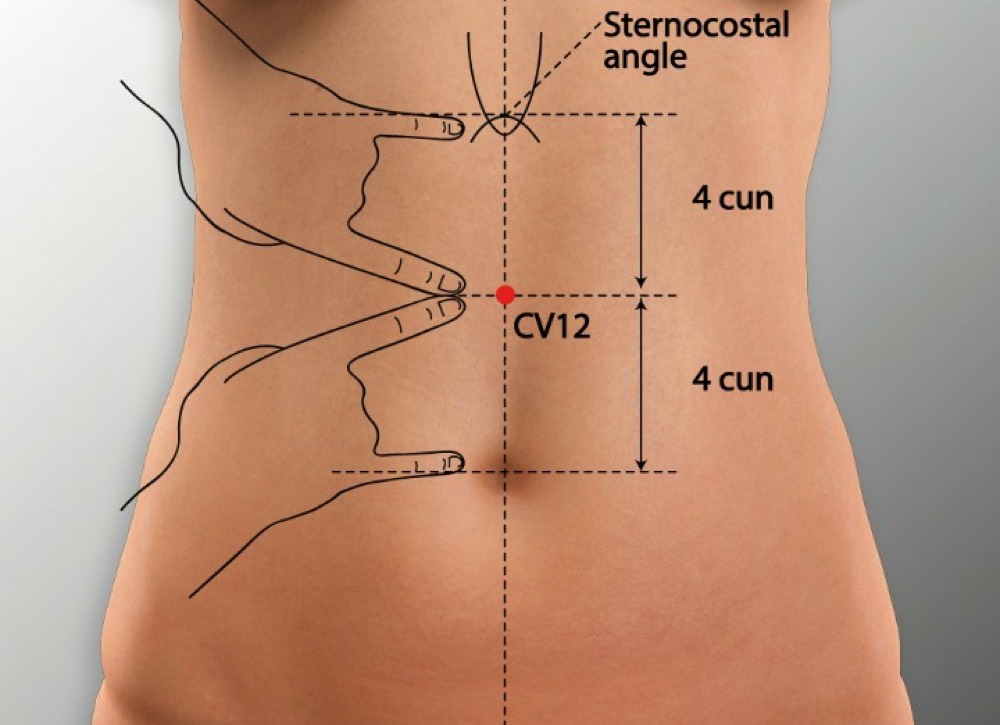
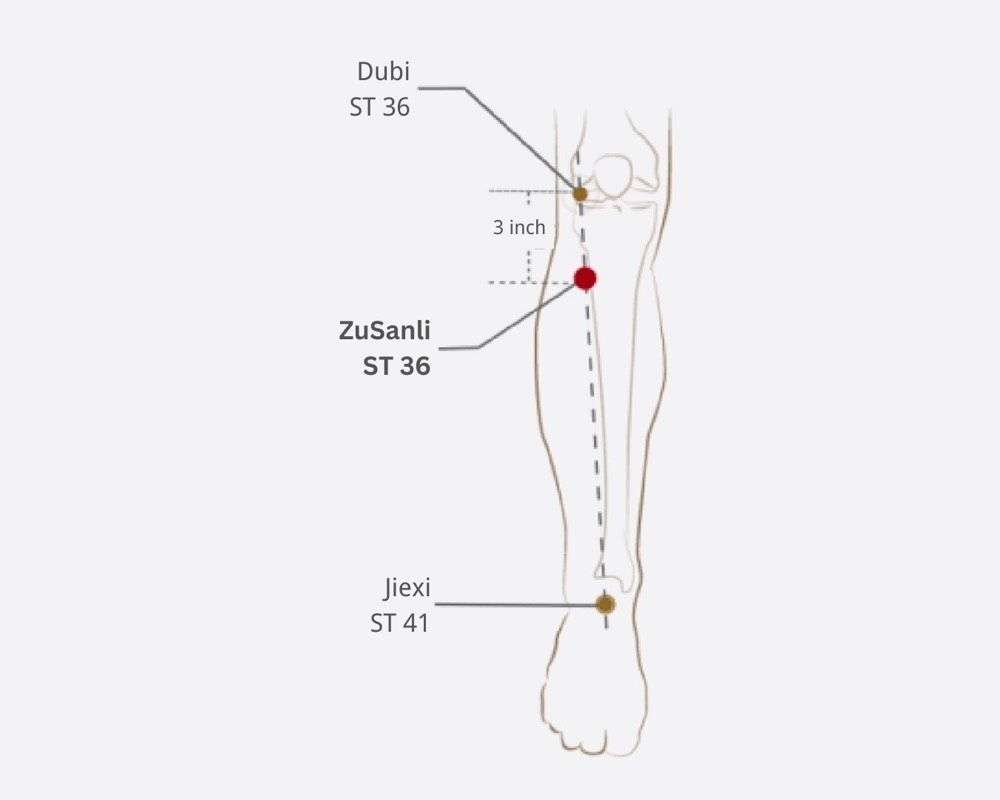
The points that support this are Zusanli ST-36 ("Leg Three Li"), a hand-width below the kneecap and a thumb-width outside the shinbone, and Zhongwan CV-12 ("Middle Cavity"), midway between the navel and the base of the breastbone, directly over the stomach.
What’s Real, What’s Myth
Myth: a smoothie is the healthiest breakfast available. The ingredients may be excellent. The form — cold, raw, in volume, drunk quickly — is the hardest possible presentation for a weak digestion, which is why so many people feel worse on an objectively better breakfast.
Myth: if you are still hungry an hour later you need more protein. Sometimes true. But if you are also bloated and foggy rather than simply hungry, that combination points at how well the meal is being handled rather than at what was in it. Adding protein to a meal that is not being processed well tends to add to the heaviness.
Myth: skipping breakfast is fine for everyone. Some people genuinely do well on it — usually the ones who run warm and robust. If you go shaky, cold and irritable by eleven and then eat everything in sight at two, the tradition would say you are being asked for more than you have.
Myth: warm breakfast means a heavy breakfast. It does not. Congee is one of the lightest meals in the tradition, and a simple soup or a couple of eggs is not heavy either. What changes is the temperature, not the size.
Real: two weeks is enough to know. This is one of the few changes where people can run a clean experiment on themselves, because the marker — how you feel at ten and at four — is obvious and comes daily.
Three Warm Breakfasts, and Three Habits
1. Congee, the classical default. A quarter cup of rice with plenty of water, simmered until soft — twenty-five minutes on the stove, or overnight in a slow cooker. Add whatever you like: an egg stirred in at the end, shredded chicken, a little sweet potato, spring onion. This is the tradition’s meal for a tired digestion and it is genuinely light.
2. Warm oats, not overnight oats. Cooked porridge with a tablespoon of ground black sesame, a few walnuts, and stewed fruit rather than raw. Cinnamon or a slice of fresh ginger if you run cold. This is the closest warm equivalent to what most people are already eating.
3. Soup or eggs, if sweet breakfasts do not suit you. A bowl of last night’s soup, or two eggs with cooked greens, is a perfectly ordinary breakfast in most of the world and suits this pattern well. Nobody is required to eat a sweet breakfast.
4. Stew the fruit rather than skipping it. Apples or pears simmered five minutes with a little cinnamon give you the same fruit in a form that asks far less. This is the single easiest swap for smoothie drinkers.
5. Press Zusanli ST-36 ("Leg Three Li") for a minute each side after eating, sitting down, and take a ten-minute walk after your evening meal. Both support the system doing the work rather than adding to its load.
6. Hold the coffee until after you have eaten something. Coffee on an empty stomach is harder work for this pattern than coffee after food, and for people with the bloating picture it is often the largest single variable.
When to See a Doctor
Some digestive symptoms need a medical assessment rather than a breakfast experiment. See your GP promptly for unintended weight loss, blood in your stool or black stools, difficulty or pain on swallowing, persistent vomiting, or abdominal pain that is severe, new, or waking you at night.
Book an appointment for a change in bowel habit lasting more than three weeks, particularly if you are over fifty, and for bloating that is persistent rather than fluctuating. In women, persistent bloating with abdominal or pelvic discomfort should always be assessed rather than managed at home.
Ask about coeliac disease and food intolerances if symptoms are consistent with particular foods regardless of how they are prepared, and ask for iron, B12 and thyroid function if fatigue has been building over months.
And again, plainly: if you have a history of disordered eating, or if changing meals brings up anxiety, speak with your GP or a psychologist before running food experiments on yourself.
Which Constitution This Usually Points To
Bloating after meals, hunger returning quickly, fogginess in the mid-morning, breathlessness on stairs and a soft voice point toward a qi-deficient constitution (气虚质) with a weak digestive flame. The rule for this pattern is to stop the drain before adding anything — and cold breakfasts are the most frequent drain.
If the picture is more cold than tired — loose morning stools, cold hands, a strong preference for hot food — a yang-deficient constitution (阳虚质) is the more likely reading, and warmth matters even more.
If it is heaviness with a thick greasy tongue coating and a foggy head, a phlegm-damp constitution (痰湿质) leads, and reducing sweetness matters as much as raising the temperature.
The quick assessment on this site walks you through 29 gentle questions in about three minutes and gives you a daily plan matched to your type, including what a suitable breakfast actually looks like for you.
Keep Reading
Always Tired After Sleeping?
When a full night's rest still leaves you exhausted — the TCM view.
Read →Why Do I Sweat So Easily?
Daytime sweat, night sweats, sweaty palms — the TCM reading.
Read →When You Fit Two Types
Cold hands but mouth ulcers? Tired but wired? How to read a mixed constitution and what to work on first.
Read →When the Famous Point Backfires
Light-headed and flat after pressing the point below your knee? The technique, not the point, is usually the problem.
Read →The Classical Sweat Pair
Why one pair of points was used for both drenching sweat and no sweat at all — and how the direction changes.
Read →Late Autumn Burnout in Men
Why the same flat, heavy tiredness arrives every year around the same time — and what the classics said to do about it.
Read →Find Your Constitution
29 gentle questions, about three minutes, and you have your TCM body type — so this guidance actually fits you.
Take the quick quiz →Related
Learn about the Qi Deficiency constitution →Frequently Asked Questions
Is congee not just white rice?
It is, and that is rather the point. In classical food thinking a long-cooked grain is the least demanding thing you can give a tired digestion, which is why congee appears in the tradition as a food for recovery. What you add to it — egg, chicken, vegetables — carries the rest of the nutrition.
What if I have no time in the morning?
A slow cooker started the night before, or last night’s soup reheated, both take under two minutes in the morning. Two eggs take four. Lack of time is real, but it usually rules out elaborate breakfasts rather than warm ones.
Can I still have a smoothie?
Try warm breakfasts for two weeks first, then decide with better information. Most people who notice a difference end up keeping smoothies for warm afternoons rather than cold mornings, which is an easy compromise to keep.
How quickly should I notice a change?
Faster than most things in this tradition. Many people report a difference in the mid-morning bloating and fog within four or five days, and a clearer picture by two weeks. If nothing at all changes in a fortnight, temperature is not your variable and it is worth looking elsewhere.
Last updated: 2026-07-13
This page offers general TCM educational perspectives, not medical advice or a diagnosis. For any health concern, please consult a licensed healthcare professional.