Waking at Four Every Morning — What the Body Clock Says About the Lungs
The hour is the clue. Same time every night is information; a bad night is just a bad night.
Reviewed by Jimmy Yu, Certified Acupuncturist · Updated 2026-07-13
Quick answer
The Chinese medicine body clock assigns each two-hour period to an organ system, and three to five in the morning belongs to the Lung. Repeatedly waking in that window — particularly with grief, worry or a dry cough alongside it — is read as a Lung pattern rather than a sleep problem.
Awake at Ten Past Four Again
The thing people find unsettling is the precision. Not "I sleep badly", but awake at four, or close enough, night after night, often without an alarm clock anywhere in the story.
The first half of the night is usually fine. It is the second half that comes apart — awake, alert in an uncomfortable way, and then a long stretch of thinking before a shallow hour of sleep just before the alarm.
What comes with it varies, and the variation is the useful part. For some people it is a tight chest or a dry cough. For others it is a low, flat sadness that has no obvious subject, or a churning about something that will not seem important by nine.
A single bad night means nothing. The same hour repeatedly, for weeks, is what the tradition reads as a pattern worth noticing.
How Chinese Medicine Reads It
Classical medicine divides the day into twelve two-hour periods and assigns each to an organ system, describing qi as moving through the channels in a fixed sequence. Three to five in the morning is the Lung period, and it is where the whole cycle begins.
The Suwen chapter "Ling Lan Mi Dian Lun" (《黄帝内经·素问·灵兰秘典论》) describes the Lung as
相傅之官,治节出焉
the office of the minister, from which regulation and rhythm issue. Not just breathing: the setting of pace and order for the whole system.
《黄帝内经·素问·灵兰秘典论》
The Lung in this system also governs the defensive layer at the surface of the body and, distinctively, is paired with grief. The Suwen chapter "Ju Tong Lun" (《素问·举痛论》) puts it in three characters — 悲则气消, sorrow dissolves the qi.
That pairing is why the flat, unspecific sadness people describe at four in the morning is not incidental in this framework. It is part of the same picture as the dry cough, the tight chest and the tendency to catch every chill going around.
Two other hours are worth knowing for contrast, because they are the ones people most often confuse this with. One to three in the morning belongs to the Liver and tends to come with anger, frustration and a busy churning mind. Eleven at night to one belongs to the Gallbladder, and is the classic hour of the person who cannot get to sleep in the first place.
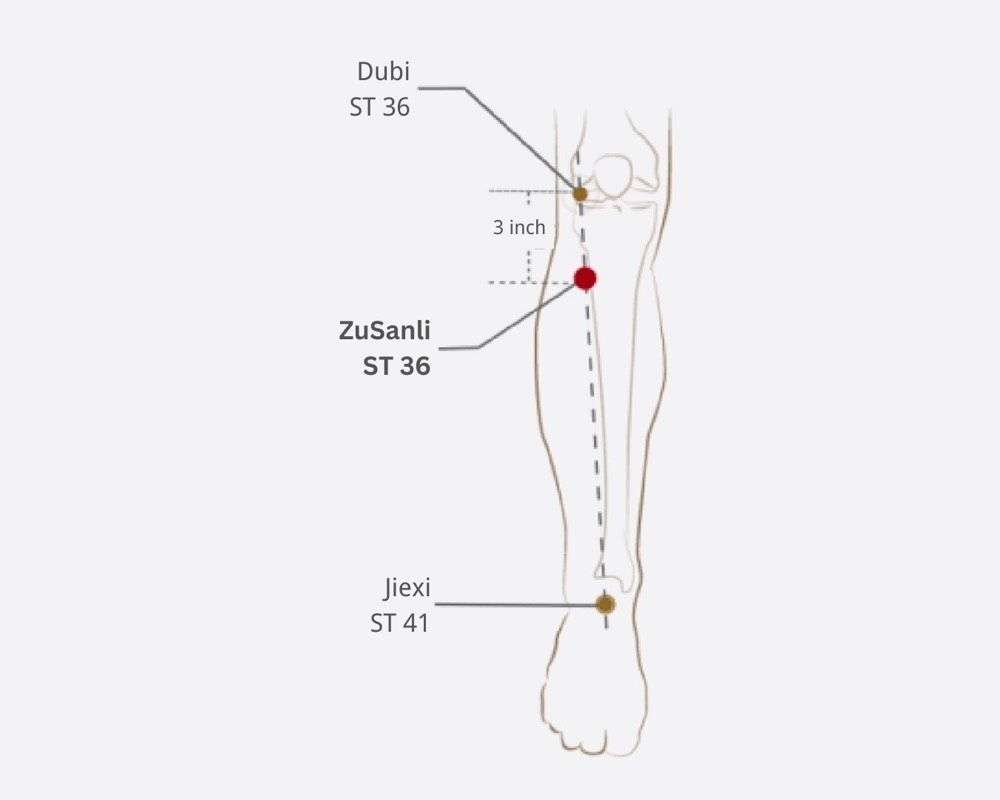
The points here are Taiyuan LU-9 ("Great Abyss"), on the wrist crease on the thumb side where you feel the pulse; Lieque LU-7 ("Broken Sequence"), just above the wrist on the thumb side edge; and Zusanli ST-36 ("Leg Three Li") below the knee, since in this system the Lung is supplied by the digestion.
What’s Real, What’s Myth
Myth: waking at a particular hour identifies your problem. The body clock is a pointer, not a verdict, and it is worth using with a light hand. Alcohol, a late heavy meal, an overheated bedroom, a full bladder and sleep apnoea all produce early-hours waking and are far more common explanations. Rule those out first.
Myth: if you wake at four you should get up and be productive. For a depleted person, turning a wakeful hour into a working hour tends to entrench the pattern. Staying warm, in the dark, breathing slowly, without a screen, works better than making a virtue of it.
Myth: the tightness in your chest at four means something is wrong with your heart. Usually it does not — but this is the one symptom where I would rather you checked than assumed. Chest pain or pressure spreading to the jaw, neck, back or arm, or with breathlessness or sweating, needs emergency care regardless of the hour.
Myth: this is just what getting older is like. Sleep does change with age — it becomes lighter and earlier. Waking at the same hour every night with a distinct set of symptoms is a different thing, and it is worth looking at rather than accepting.
Real: sadness at four in the morning is real and it is not a character flaw. The classics paired the Lung with grief two thousand years ago, and I have lost count of the people who were relieved simply to hear the pattern described.
Six Things You Can Do This Week
1. Rule out the ordinary things first, for two weeks. No alcohol in the evening, dinner finished three hours before bed, a cooler bedroom, and no screens for the last half hour. If the waking stops, you have your answer and you can stop reading about organ clocks.
2. Keep your upper back and chest warm at night. In this framework the Lung is the most exposed system, and a cool draught across the upper back in the small hours is a common and easily fixed contributor.
3. Breathe out longer than you breathe in when you wake. Four counts in, six or eight out, for five minutes, staying warm and in the dark. Do not check the time — knowing it is ten past four is the thing that turns waking into a bad night.
4. Press Taiyuan LU-9 ("Great Abyss") and Lieque LU-7 ("Broken Sequence") in the evening. The first sits on the wrist crease on the thumb side where the pulse is; the second just above the wrist on the thumb-side edge. A minute each, gentle, before bed rather than at four.
5. Support the supply line during the day. Zusanli ST-36 ("Leg Three Li") for a minute each side after your evening meal, and a warm cooked breakfast. In this system the Lung is fed by the digestion, so the daytime habits matter more than the night-time ones.
6. Eat for moistening if there is dryness. Pears lightly stewed, white fungus (银耳), lily bulb (百合) and a little honey are the classical autumn foods for a dry cough and a dry throat. Not for children under one, and not if you have a heavy, damp picture with a thick tongue coating.
When to See a Doctor
Sleep apnoea is the most important thing to rule out and the most frequently missed. If you snore loudly, if anyone has noticed you stop breathing, if you wake gasping, or if you fall asleep easily during the day, ask your GP about a sleep study. It causes exactly this pattern and no routine will touch it.
Seek emergency care for chest pain or pressure spreading to the jaw, neck, back or arm, or with breathlessness, sweating or nausea, at any hour. See your GP promptly for breathlessness that wakes you and eases when you sit up, for ankle swelling with night-time breathlessness, or for a cough lasting more than three weeks.
Book an appointment for coughing up blood, for night sweats that soak the bedding, for unintended weight loss, or for any of these alongside a fever. And if you have asthma or an ongoing lung condition, early-hours waking with wheeze is a sign your management needs reviewing.
On the mood side, said plainly: if the sadness at four in the morning is part of a mood that has been low most days for a fortnight, if you have lost interest in things you enjoyed, or if you are having thoughts of harming yourself, please speak to your GP or a mental health professional. Early-morning waking with low mood is a recognised pattern that responds well to proper support, and this article is not a substitute for it.
Which Constitution This Usually Points To
Early-hours waking with a flat mood, a soft voice, breathlessness on stairs, easy sweating and a tendency to catch every chill going around points toward a qi-deficient constitution (气虚质) with the Lung leading. That pattern is rebuilt slowly, through sleep, warm regular food and moderate exercise rather than anything dramatic.
If the waking comes instead with heat, a dry mouth, warm palms and soles and light dreamy sleep, a yin-deficient constitution (阴虚质) is the more likely reading, and nourishing rather than warming is the direction.
If it comes with frustration, tight ribs and a churning mind, and sits closer to one to three in the morning, qi stagnation (气郁质) is leading and brisk daily walking matters more than anything else here.
The quick assessment on this site walks you through 29 gentle questions in about three minutes and gives you a daily plan matched to your type, including which evening habits actually suit you.
Keep Reading
Always Tired After Sleeping?
When a full night's rest still leaves you exhausted — the TCM view.
Read →Why Do I Sweat So Easily?
Daytime sweat, night sweats, sweaty palms — the TCM reading.
Read →When You Fit Two Types
Cold hands but mouth ulcers? Tired but wired? How to read a mixed constitution and what to work on first.
Read →When the Famous Point Backfires
Light-headed and flat after pressing the point below your knee? The technique, not the point, is usually the problem.
Read →The Classical Sweat Pair
Why one pair of points was used for both drenching sweat and no sweat at all — and how the direction changes.
Read →Late Autumn Burnout in Men
Why the same flat, heavy tiredness arrives every year around the same time — and what the classics said to do about it.
Read →Find Your Constitution
29 gentle questions, about three minutes, and you have your TCM body type — so this guidance actually fits you.
Take the quick quiz →Related
Learn about the Qi Deficiency constitution →Frequently Asked Questions
Does waking at four always mean the lungs?
No. The body clock is a pointer worth noticing, not a conclusion. Alcohol, late meals, a warm room, a full bladder and disturbed breathing in sleep are all more common causes of early-hours waking, and they are worth ruling out before reading anything into the hour itself.
What is the difference between waking at one and waking at four?
In the body clock, one to three belongs to the Liver and typically comes with frustration, a busy churning mind and tight ribs. Three to five belongs to the Lung and comes more with flat sadness, a dry cough or a tight chest. The accompanying symptoms are more informative than the exact time.
Should I get up or stay in bed?
Stay in bed if you are warm and reasonably comfortable, breathing out slowly and without checking the time. If you are still awake after twenty or thirty minutes and getting frustrated, get up briefly somewhere dim and warm, without screens, and return when sleepy — but do not turn it into working time.
How long before the pattern changes?
If it is the ordinary causes, two weeks of the basics usually settles it. A constitutional pattern takes longer — six to eight weeks of consistent daytime habits. If the waking persists beyond that, or comes with low mood or breathlessness, see your GP rather than persisting alone.
Last updated: 2026-07-13
This page offers general TCM educational perspectives, not medical advice or a diagnosis. For any health concern, please consult a licensed healthcare professional.