The Three O’Clock Collapse — Why Your Focus Drops With Your Digestion
The classics say the clear yang rises to the head. When it does not, this is the hour you notice.
Reviewed by Jimmy Yu, Certified Acupuncturist · Updated 2026-07-13
Quick answer
Chinese medicine connects clear thinking to what it calls the clear yang rising to the head, and that depends on the digestion. A heavy lunch in a weak digestive system leaves nothing rising, which is why the three o’clock fog follows the meal rather than the workload.
The Hour You Stop Being Useful
You could set a clock by it. Fine until about half past two, and then a thickness comes down over your thinking that no amount of determination shifts.
The signature is specific. Not sleepy exactly — heavy. Rereading the same paragraph three times. A belt that feels tighter than it did at noon. Eyelids that want to close in a meeting you actually care about.
And the tell that separates this from ordinary tiredness: it is worse after a bigger lunch and better after a smaller one. Some men have noticed and assumed it was blood sugar; others have never connected the two at all.
What almost everyone does about it is add a third coffee, which buys ninety minutes and makes both the evening and the following morning worse.
How Chinese Medicine Reads It
The Suwen chapter "Yin Yang Ying Xiang Da Lun" (《黄帝内经·素问·阴阳应象大论》) sets out the mechanism in eight characters
清阳出上窍,浊阴出下窍
the clear yang emerges through the upper openings, the turbid yin descends through the lower ones.
《黄帝内经·素问·阴阳应象大论》
The clear yang, in this framework, is the refined part of what you eat, rising to the head to support clear thinking, clear vision and clear hearing. The turbid part goes downward and out. Two directions, one process.
Li Dongyuan wrote an entire essay on what happens when that process falters — 脾胃虚则九窍不通, when the spleen and stomach are weak the nine openings do not function well. Fog, heavy head, dull hearing, tired eyes. He was describing your three o’clock.
Here is the part that makes it practical. Digestion in this system is a warm process that takes energy to run. A large, cold, rich or rushed lunch is a substantial job, and while the system is doing that job, there is less rising to the head. The bigger the lunch, the deeper the trough.
Classical timing places the digestive hours in the mid to late morning, which means a heavy lunch lands somewhat after the system’s strongest window rather than within it. This is one reason the tradition makes the midday meal the main one and the evening meal the lighter one — the opposite of how most working men eat.
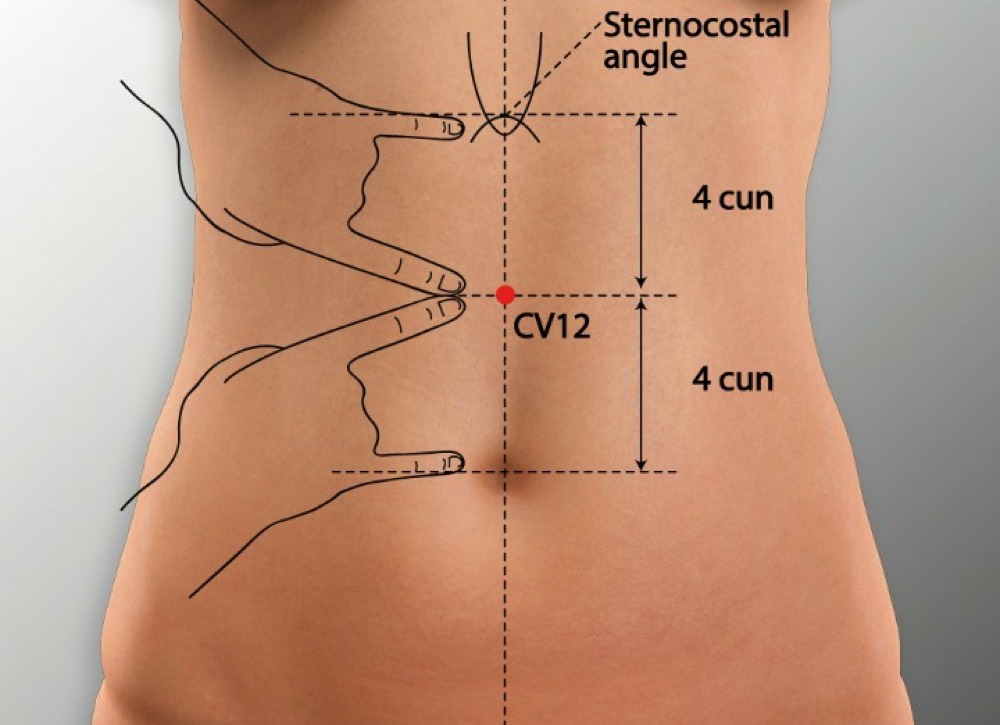
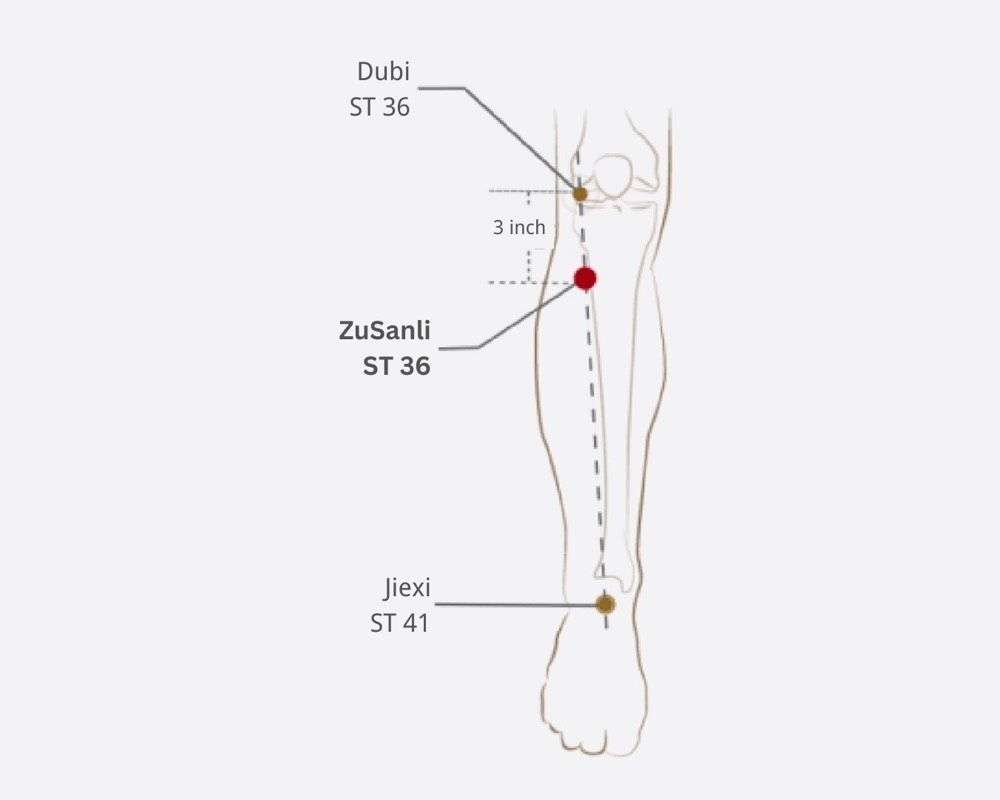
The points are the ones this whole territory uses. Zusanli ST-36 ("Leg Three Li") sits a hand-width below the kneecap and a thumb-width outside the shinbone. Zhongwan CV-12 ("Middle Cavity") sits midway between the navel and the base of the breastbone. Baihui GV-20 ("Hundred Convergences") sits at the crown, where a line between your ear tips crosses the midline.
What’s Real, What’s Myth
Myth: the afternoon crash is a discipline problem. It follows a meal, it tracks with the size of that meal, and it happens to people who are otherwise perfectly disciplined. Framing it as willpower is why so many men escalate the caffeine instead of changing the lunch.
Myth: skipping lunch avoids it. Some men do fine on that. Many go shaky and irritable by four and then eat an enormous dinner, which moves the problem rather than solving it. If skipping leaves you cold and unfocused rather than sharp, it is not your solution.
Myth: a big salad is the light option. Cold and raw in volume is not light in this framework — it is a substantial demand on a warm process. A bowl of soup or a modest warm meal is genuinely lighter, and men who make that swap notice within the week.
Myth: more coffee is neutral. The third coffee borrows against your evening and your next morning at a poor rate of exchange. Most men can identify which cup is doing the borrowing once they pay attention for a week.
Real: a twenty-minute walk after lunch beats every other intervention here. Not a stroll to the sandwich shop and back — twenty minutes at an easy pace. It is the single most effective thing in this article and the one hardest to schedule.
Five Things You Can Do This Week
1. Halve the lunch for two weeks and see what happens at three. Not a diet — just a smaller portion of the same food, warm and cooked rather than cold. This is the cleanest experiment available and it usually answers the question within four days.
2. Walk for twenty minutes after eating. If twenty is impossible, ten is worth having. Movement after a meal is described in the tradition as what keeps the process moving, and it is the most reliable item on this list.
3. Press Zusanli ST-36 ("Leg Three Li") for a minute each side, sitting, about half an hour after lunch. Moderate steady pressure, and not on an empty stomach. This is the point the four command points verse assigns to the belly.
4. Warm the middle when it is heavy. A warm palm over Zhongwan CV-12 ("Middle Cavity"), midway between navel and breastbone, for five minutes when you feel distended. Then a small pot of chenpi (陈皮, aged tangerine peel) tea instead of the third coffee.
5. Tap Baihui GV-20 ("Hundred Convergences") lightly for a minute when the fog arrives. Find where a line between your ear tips crosses the midline, and tap with your fingertips. It is a modest thing that buys you the ten minutes to get up and walk.
When to See a Doctor
A predictable post-lunch dip is ordinary. Falling asleep involuntarily, or being unable to stay awake in meetings or while driving, is not — that needs assessment. Ask your GP about a sleep study if you snore loudly, if anyone has noticed you stop breathing, or if you doze off easily during the day.
See your GP for fatigue that has been building over months regardless of what you eat, and ask for thyroid function, iron and ferritin, B12, blood sugar and a general check if you are over forty. Sleepiness after meals with excessive thirst, frequent urination or unintended weight change is worth checking for blood sugar problems specifically.
Book an appointment for persistent bloating, for a change in bowel habit lasting more than three weeks, for blood in your stool or black stools, or for upper abdominal pain that is severe or waking you at night.
And if you are relying on stimulants to get through the working day, if your mood has been low most days for a fortnight, or if you are drinking more in the evening to come down, that is worth raising with your doctor rather than managing alone.
Which Constitution This Usually Points To
An afternoon fog that follows meals, with bloating, tiredness after eating, a soft voice and breathlessness on stairs, points toward a qi-deficient constitution (气虚质) with a weak digestive flame. The rule for this pattern is smaller and warmer rather than more — and the ten-minute walk after every meal does more than most things men buy.
If the dominant experience is heaviness with a thick greasy tongue coating and a head that feels wrapped, a phlegm-damp constitution (痰湿质) is leading, and cutting sugar, fried food and cold drinks matters more than portion size.
If the fog comes with a bitter taste, urgent bowels and a yellow greasy coating, that is a damp-heat picture (湿热质), and the food direction changes again — raw coix seed rather than dry-fried, and less alcohol.
The quick assessment on this site walks you through 29 gentle questions in about three minutes and gives you a daily plan matched to your type, including what a lunch that suits you actually looks like.
Keep Reading
Always Tired After Sleeping?
When a full night's rest still leaves you exhausted — the TCM view.
Read →Why Do I Sweat So Easily?
Daytime sweat, night sweats, sweaty palms — the TCM reading.
Read →When You Fit Two Types
Cold hands but mouth ulcers? Tired but wired? How to read a mixed constitution and what to work on first.
Read →When the Famous Point Backfires
Light-headed and flat after pressing the point below your knee? The technique, not the point, is usually the problem.
Read →The Classical Sweat Pair
Why one pair of points was used for both drenching sweat and no sweat at all — and how the direction changes.
Read →Late Autumn Burnout in Men
Why the same flat, heavy tiredness arrives every year around the same time — and what the classics said to do about it.
Read →Find Your Constitution
29 gentle questions, about three minutes, and you have your TCM body type — so this guidance actually fits you.
Take the quick quiz →Related
Learn about the Qi Deficiency constitution →Frequently Asked Questions
Is this just blood sugar?
Blood sugar is part of the picture and worth having checked, especially with thirst, frequent urination or weight change. What the pattern view adds is why the same lunch produces a crash in one man and not another, and why portion size, temperature and a post-meal walk change it so reliably.
Would a bigger breakfast help?
Often, yes. A warm cooked breakfast tends to make a smaller lunch feel adequate, which is where the benefit comes from. Classical practice also makes the midday meal the main one and the evening meal the lighter one, which is worth trying if your evenings allow it.
Should I nap instead?
A short nap of twenty to thirty minutes suits many men and the tradition has no objection. Longer than that tends to deepen the heaviness rather than clear it, particularly in a damp picture, and it eats into the night. Twenty minutes and a walk beats an hour on the sofa.
How long before the afternoon changes?
Faster than most things — many men notice within four or five days of halving the lunch and walking afterwards. If two weeks of that changes nothing at all, the variable is elsewhere, and that is the point to ask your GP for blood work rather than adjusting further.
Last updated: 2026-07-13
This page offers general TCM educational perspectives, not medical advice or a diagnosis. For any health concern, please consult a licensed healthcare professional.