The Sadness That Arrives With the Shorter Days — Why the Classics Paired Autumn With Grief
Every season was given an organ and an emotion. Autumn got the Lung, and the Lung got sorrow.
Reviewed by Jimmy Yu, Certified Acupuncturist · Updated 2026-07-13
Quick answer
Chinese medicine pairs autumn with the Lung and the Lung with grief, and describes the season’s job as gathering inward. Low mood that returns each autumn fits that pairing, and the classical response is to support the Lung and the defensive layer rather than to push through at summer intensity.
It Arrives With the Clocks
People can usually name the fortnight. The light goes, and within a couple of weeks something has flattened — less interest in things, a heaviness getting going in the mornings, a wish to be at home rather than out.
What surprises people is the specific quality of it. Not agitated. Not anxious. A wistfulness that attaches itself to nothing in particular, and that in a good year lifts again in spring.
The physical side runs alongside it. Skin and lips drier than in summer. A dry, tickly throat. Catching whatever is going around, twice, in a season where you used to catch nothing.
And a detail that comes up often: it began, or got noticeably worse, after a year that involved a loss or a large change. That is worth taking seriously rather than filing under weather.
How Chinese Medicine Reads It
The Suwen chapter "Si Qi Tiao Shen Da Lun" (《黄帝内经·素问·四气调神大论》) gives autumn a job: 容平 — levelling off, gathering in. It advises sleeping earlier and rising earlier, keeping the mind quiet, and 收敛神气 — drawing the spirit inward.
That is an instruction to reduce output for a stretch of the year, written by people who had noticed that bodies do not run at one setting for twelve months.
Autumn is paired with the Lung in this system, and the Suwen chapter "Yin Yang Ying Xiang Da Lun" (《素问·阴阳应象大论》) pairs the Lung in turn with its emotion: 在志为忧 — its feeling is sorrow.
The Suwen chapter "Ju Tong Lun" (《素问·举痛论》) adds the mechanism in three characters: 悲则气消 — grief dissolves the qi. Not agitates. Dissolves. That is a precise description of how low mood in this season actually feels: energy going out of things rather than tension building up.
The Lung in this framework also governs the defensive layer at the surface of the body and is described as disliking dryness. That is why the same season brings the flat mood, the dry throat and the tendency to catch things — the classics read them as one picture rather than three coincidences.
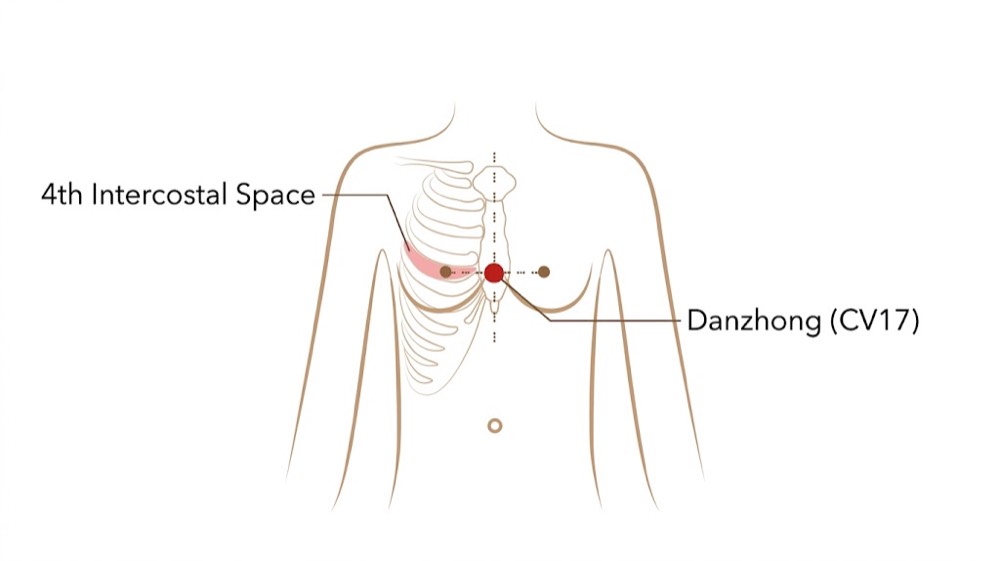
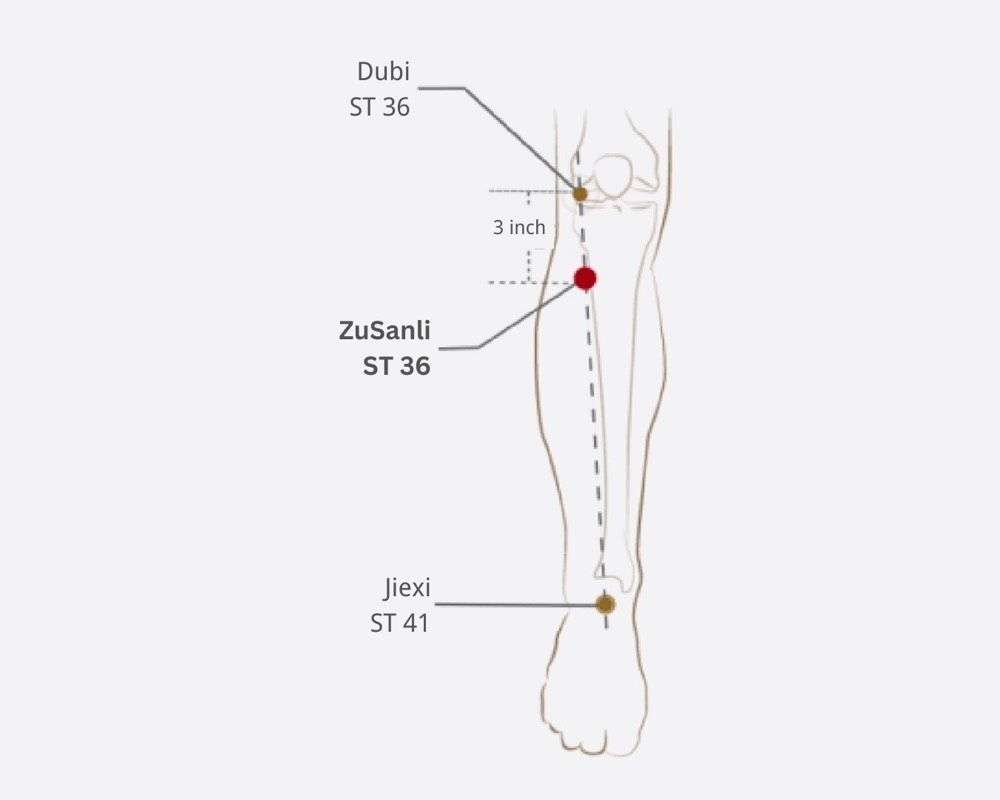
The points are the Lung channel and the chest. Taiyuan LU-9 ("Great Abyss") sits on the wrist crease on the thumb side, where you feel the pulse. Lieque LU-7 ("Broken Sequence") sits just above the wrist on the thumb-side edge. Danzhong CV-17 ("Chest Centre") sits on the midline in the centre of the breastbone — on the bone itself. Zusanli ST-36 ("Leg Three Li") supports the digestion, which in this system is what supplies the Lung.
What’s Real, What’s Myth
Myth: seasonal low mood is not a real thing. Seasonal patterns of low mood are well recognised in medicine, there are effective approaches including light therapy, and it is worth raising with your GP rather than absorbing each year. The classical pairing is a useful frame; it is not a reason to skip the appointment.
Myth: you should push through at the same intensity. In classical terms autumn is the gathering season, and doing more when the year is asking for less is the reliable route to hitting a wall in November. Reducing output is the instruction, not a concession.
Myth: rest alone will lift it. Rest suits depletion. What most people with this pattern need alongside it is light and gentle movement — a twenty-minute walk outside in the first hours of daylight does more than an extra hour in bed.
Myth: the sadness needs to be got rid of. The classics gave the season an emotion and did not call it a fault. In my clinic, people are often relieved to hear that a quieter, more inward autumn is a recognised shape rather than something failing in them. That said — recognised is not the same as beyond help, and if it is affecting your life, see someone.
Real: the physical and emotional halves respond together. People who address the dryness, the sleep and the daylight usually report the mood shifting alongside, which is one of the more useful things about approaching it this way.
Six Things to Do as the Light Goes
1. Get outside in the first hour of daylight, ten to twenty minutes, and walk while you are there. This is the strongest lever available and the one people skip because it is unimpressive. Start it in early autumn rather than waiting until you feel flat.
2. Follow the season rather than fighting it. Earlier nights, less scheduled in the evenings, and a reduced rather than increased training load. Doing less on purpose in autumn is what the classical instruction actually says.
3. Eat for the dryness. Pears lightly stewed, white fungus (银耳), lily bulb (百合) and a little honey are the classical autumn foods for a dry throat and dry skin. Not for children under one, and go lighter if you have a heavy, damp picture with a thick tongue coating.
4. Work the Lung points in the evening. Taiyuan LU-9 ("Great Abyss") on the wrist crease at the thumb side, and Lieque LU-7 ("Broken Sequence") just above the wrist on the thumb-side edge, a minute each side, gently.
5. Open the chest. Tap Danzhong CV-17 ("Chest Centre") lightly with your fingertips for a minute — on the midline of the breastbone, on the bone — then stand and take six slow breaths with your arms opening wide on the in-breath. Most people find themselves sighing, which is the point.
6. Keep the back of the neck covered outdoors, and keep breakfast warm. The Lung governs the surface in this framework, and the two most reliable ways to support it through autumn are unremarkable: stay covered in wind, and eat something warm to start the day.
When to See a Doctor
Please read this section rather than skimming it. If your mood has been low most days for two weeks or more, if you have lost interest in things you normally enjoy, if you are sleeping or eating very differently, or if you are finding it hard to function at work or at home, speak to your GP. Seasonal patterns of low mood are recognised and there are effective approaches, including light therapy, talking therapies and medication.
If you have any thoughts of harming yourself, or feel that life is not worth continuing, please contact your GP, a crisis line, or emergency services now. That is not a step down from anything described here, and you do not need to wait until it gets worse.
Book an appointment if you are drinking more to manage the evenings, if you are withdrawing from people you would normally see, or if this has been getting worse year on year rather than staying the same.
On the physical side: see your GP for fatigue building over months, for a cough lasting more than three weeks, for breathlessness that is new, or for repeated infections in one season. Ask for thyroid function, iron and ferritin, B12 and vitamin D — vitamin D in particular is worth checking at higher latitudes.
Which Constitution This Usually Points To
Flat autumn mood alongside a soft voice, breathlessness on stairs, easy sweating, dry throat and catching whatever is going around points toward a qi-deficient constitution (气虚质) with the Lung leading. That is built slowly — sleep, warm regular meals, daylight and moderate exercise — rather than through anything dramatic.
If the dominant experience is dryness with night heat, warm palms and light dreamy sleep, a yin-deficient constitution (阴虚质) is more likely, and nourishing rather than warming is the direction.
If the season brings sensitivity — sneezing, itchy eyes, a nose that runs in cold wind — rather than flatness, a special-sensitivity constitution (特禀质) is leading, and preparing the boundary six weeks early matters more than anything else.
The quick assessment on this site walks you through 29 gentle questions in about three minutes and gives you a daily plan matched to your type and to the season where you actually live — which for southern hemisphere readers means March to May rather than September to November.
Keep Reading
Always Tired After Sleeping?
When a full night's rest still leaves you exhausted — the TCM view.
Read →Why Do I Sweat So Easily?
Daytime sweat, night sweats, sweaty palms — the TCM reading.
Read →When You Fit Two Types
Cold hands but mouth ulcers? Tired but wired? How to read a mixed constitution and what to work on first.
Read →When the Famous Point Backfires
Light-headed and flat after pressing the point below your knee? The technique, not the point, is usually the problem.
Read →The Classical Sweat Pair
Why one pair of points was used for both drenching sweat and no sweat at all — and how the direction changes.
Read →Late Autumn Burnout in Men
Why the same flat, heavy tiredness arrives every year around the same time — and what the classics said to do about it.
Read →Find Your Constitution
29 gentle questions, about three minutes, and you have your TCM body type — so this guidance actually fits you.
Take the quick quiz →Related
Learn about the Qi Deficiency constitution →Frequently Asked Questions
Is this the same as seasonal affective disorder?
They overlap. Seasonal patterns of low mood are a recognised medical picture with effective approaches, and this article describes how the same seasonal shape is read in Chinese medicine. The two are not alternatives — if it is affecting your life, see your GP, and use the seasonal habits alongside whatever they suggest.
Why does autumn bring a dry throat as well as low mood?
Because the tradition pairs the season with the Lung, which it describes as disliking dryness and as governing both the surface of the body and the feeling of sorrow. The flat mood, the dry throat and the tendency to catch things are read as one picture rather than three separate problems.
When should I start?
Early autumn, before you feel flat — the classical instruction is to follow the season as it turns rather than to react once you are already in it. In the southern hemisphere that means March, and in the northern hemisphere September.
Does light therapy fit with this approach?
Yes, and it is worth asking your GP about. Daylight in the first hour of the morning is the low-tech version of the same idea, and a light box is the reliable option where the mornings are genuinely dark. Nothing in the seasonal habits described here conflicts with it.
Last updated: 2026-07-13
This page offers general TCM educational perspectives, not medical advice or a diagnosis. For any health concern, please consult a licensed healthcare professional.