Gluten-Free and Still Bloated — What Chinese Food Thinking Looks At Instead of One Ingredient
Most of the tradition’s staple foods contain no wheat at all. The changes that matter are elsewhere.
Reviewed by Jimmy Yu, Certified Acupuncturist · Updated 2026-07-13
Quick answer
Removing gluten addresses one ingredient; Chinese medicine looks at temperature, texture and quantity as well. Most classical staples — rice, congee, millet, sweet potato, coix seed — are naturally wheat-free, which makes the tradition unusually easy to follow on a gluten-free diet.
You Did the Hard Part and It Didn’t Work
People arrive having done something genuinely difficult. Eighteen months without bread, pasta, beer or anything containing wheat, held carefully, including at other people’s houses.
And the bloating is better but not gone. The three o’clock fog is still there. The mornings are still heavy. The energy is still not what it was, and now the diet is narrower and eating out is a negotiation.
Then the detail that usually explains a good deal: the replacements. Gluten-free bread and pastries, rice cakes with cold toppings, cold quinoa salads, smoothies, and a great deal more sugar than before, because that is what the gluten-free aisle largely contains.
The ingredient changed. The temperature, the texture and the quantity did not. In this tradition those three are at least as important, which is what the rest of this article is about.
How Chinese Medicine Reads It
The Suwen chapter "Yi Fa Fang Yi Lun" (《黄帝内经·素问·异法方宜论》) observes that people in different regions ate differently and developed different complaints, and concludes that the skilled physician
杂合以治,各得其所宜
blends the approaches so each person gets what suits them.
《黄帝内经·素问·异法方宜论》
The relevant point is that the tradition never had a single forbidden ingredient list. It had a method for matching, which is why it transfers so easily onto a diet already restricted for other reasons.
What classical food thinking actually looks at is threefold. Temperature: is it warm and cooked, or cold from the fridge? Texture: is it soft and long-cooked, or dense and raw? Quantity: how much arrived at once, and how quickly?
A gluten-free diet built on cold rice cakes, cold quinoa and smoothies scores badly on all three, which is why so many people find the change less transformative than they hoped. Meanwhile a diet built on congee, soups, millet and cooked vegetables scores well on all three and happens to contain no wheat at all.
That is the useful accident at the centre of this article. The staples of classical Chinese food practice — rice, congee, millet, sweet potato, coix seed, mung bean — are naturally wheat-free. You are not adapting the tradition to fit a gluten-free diet. You are mostly already there.
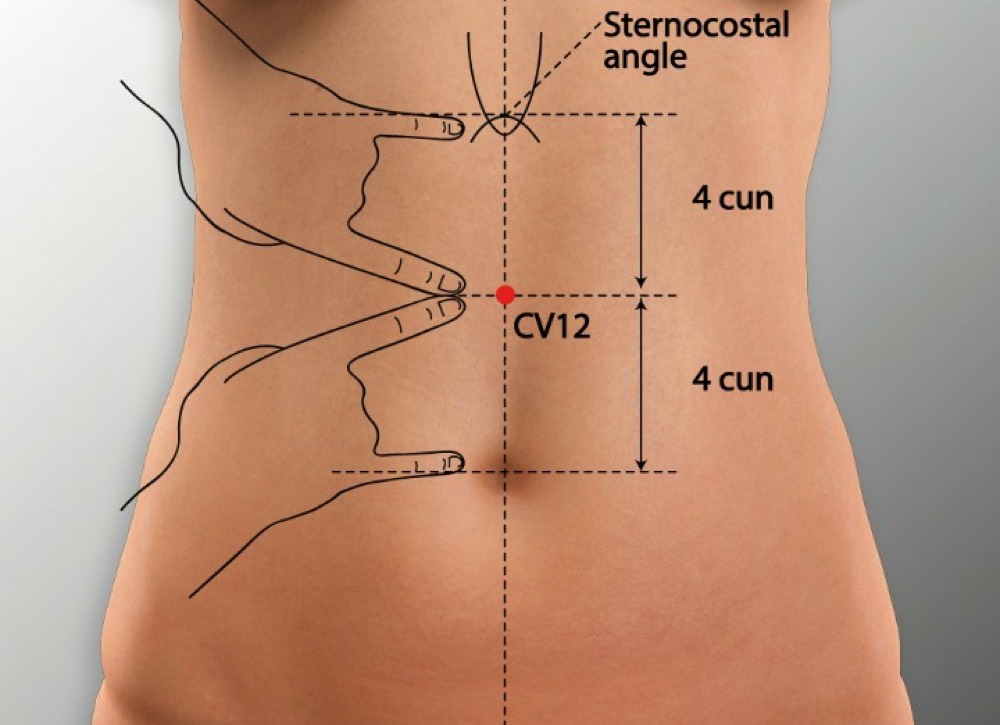
The supporting points remain the same: Zusanli ST-36 ("Leg Three Li"), a hand-width below the kneecap and a thumb-width outside the shinbone, and Zhongwan CV-12 ("Middle Cavity"), midway between the navel and the base of the breastbone.
What’s Real, What’s Myth
Myth: gluten-free automatically means gentler on digestion. Many gluten-free products are higher in sugar and refined starch than what they replaced, and in this framework sugar in quantity generates the heavy, damp picture people are trying to get rid of. Reading the label rather than the front of the packet usually explains a lot.
Myth: if cutting gluten did not work, you need to cut something else. This is how people end up with eight foods they can eat and no more energy than when they started. In my clinic the more productive move at that point is to change how food is prepared rather than to remove another category.
Myth: Chinese medicine requires noodles and dumplings. Both are wheat, both are late additions in the history of the tradition, and neither is anywhere near the centre of its food thinking. Rice and congee are the classical staples.
Myth: coeliac disease and gluten sensitivity are the same conversation. They are not, and this matters. Coeliac disease is a specific condition that needs proper testing and strict lifelong avoidance — if you have removed gluten without ever being tested, tell your GP, because testing requires gluten to be in the diet.
Real: the tongue coating tells you whether the replacements are working. If your tongue still has a thick greasy coating eighteen months in, the damp picture has not shifted, and the gluten-free aisle is the first place I would look for why.
Six Things You Can Change This Week
1. Switch the main starch to rice, congee or millet. All three are naturally wheat-free, all three are soft and long-cooked, and all three sit far more easily than gluten-free bread. Millet in particular is described in the tradition as supportive of the digestion and settling in the evening.
2. Make breakfast warm. Congee, millet porridge, or cooked eggs with vegetables. If your current gluten-free breakfast is cold — a smoothie, cold gluten-free toast, yoghurt with granola — this is the change most likely to shift the mid-morning fog.
3. Cut the gluten-free baked goods for two weeks. Not forever, just long enough to see what they were contributing. This is the single most informative fortnight available to anyone who has been gluten-free for a year without the result they wanted.
4. Add dry-fried coix seed (炒薏米) to your congee if mornings are heavy. Dry-fried, not raw — the raw form is cooling and belongs to a different pattern. A small handful with rice and a thumbnail of chenpi (陈皮, aged tangerine peel).
5. Cook the vegetables. Cold quinoa salads and raw vegetable bowls are the standard gluten-free lunch and the hardest form for a weak digestion. Roasted, steamed or in soup, with the same ingredients, changes how the afternoon goes for most people.
6. Have your bloods checked if you have not. A restricted diet held for a year deserves iron, ferritin, B12 and vitamin D at minimum, and a coeliac conversation with your GP if you were never formally tested.
When to See a Doctor
This section matters more than usual here. If you removed gluten without being tested for coeliac disease, tell your GP — testing is unreliable once gluten has been out of the diet, and it may need to be reintroduced under supervision for a period. Coeliac disease has implications beyond digestion, so it is worth knowing rather than assuming.
See your GP for bloating that is persistent rather than fluctuating, for a change in bowel habit lasting more than three weeks, for unintended weight loss, or for blood in your stool or black stools. In women, persistent bloating with abdominal or pelvic discomfort should always be assessed.
Ask for iron and ferritin, B12, vitamin D, calcium and thyroid function if you have been on a restricted diet for a year or more. Nutritional gaps are common with long-term restriction and they produce fatigue and fog that no amount of food adjustment will fix.
And if your list of safe foods has been getting shorter, if eating out has become distressing, or if food takes up a large part of your thinking, please talk to your GP or a dietitian. Narrowing further on your own is the direction I would most want to steer you away from.
Which Constitution This Usually Points To
Bloating, tiredness after eating, loose stools and a soft voice after a long period of dietary restriction point toward a qi-deficient constitution (气虚质). Restriction itself is depleting when it goes on for years, and this pattern needs building — warm, cooked, regular and adequate — rather than further narrowing.
If heaviness and a thick greasy tongue coating dominate, a phlegm-damp constitution (痰湿质) is the more likely reading, and the sugar in the gluten-free replacements is usually the main culprit rather than any grain.
If bloating tracks with your stress rather than your food, the lead is qi stagnation (气郁质), and that explains why eighteen months of careful eating changed less than expected.
The quick assessment on this site walks you through 29 gentle questions in about three minutes and gives you a daily plan matched to your type, built around foods that are naturally wheat-free.
Keep Reading
Always Tired After Sleeping?
When a full night's rest still leaves you exhausted — the TCM view.
Read →Why Do I Sweat So Easily?
Daytime sweat, night sweats, sweaty palms — the TCM reading.
Read →When You Fit Two Types
Cold hands but mouth ulcers? Tired but wired? How to read a mixed constitution and what to work on first.
Read →When the Famous Point Backfires
Light-headed and flat after pressing the point below your knee? The technique, not the point, is usually the problem.
Read →The Classical Sweat Pair
Why one pair of points was used for both drenching sweat and no sweat at all — and how the direction changes.
Read →Late Autumn Burnout in Men
Why the same flat, heavy tiredness arrives every year around the same time — and what the classics said to do about it.
Read →Find Your Constitution
29 gentle questions, about three minutes, and you have your TCM body type — so this guidance actually fits you.
Take the quick quiz →Related
Learn about the Qi Deficiency constitution →Frequently Asked Questions
Is rice better than gluten-free bread?
For this framework, generally yes. Rice — especially cooked soft as congee — is warm, soft and undemanding, while gluten-free bread is often dense, dry and high in refined starch and sugar. Both are wheat-free; only one of them is easy on a weak digestion.
What about oats?
Oats are described in the tradition as warm and supportive, and certified gluten-free oats suit most people well as cooked porridge. If you have coeliac disease, use only certified gluten-free oats and check with your own clinician, since a minority react to oats themselves.
Is millet worth trying?
Yes, and it is under-used in Western kitchens. It is naturally wheat-free, cooks like rice or porridge, and the tradition describes it as supporting the digestion and settling in the evening. It is worth two weeks as your main grain if rice has become monotonous.
Should I try reintroducing gluten?
That is a conversation for your GP, not for an article. If you have coeliac disease, no. If you have never been tested, tell them, because testing needs gluten in the diet. Either way, do not reintroduce it on your own if you have had a clear reaction to it in the past.
Last updated: 2026-07-13
This page offers general TCM educational perspectives, not medical advice or a diagnosis. For any health concern, please consult a licensed healthcare professional.