The Four O’Clock Pull Toward Something Sweet Isn’t Hunger — It’s a Loop
The Neijing pairs sweet with the digestion, and notes that too much of it produces fullness. That is the loop.
Reviewed by Jimmy Yu, Certified Acupuncturist · Updated 2026-07-13
Quick answer
Chinese medicine pairs the sweet taste with the Spleen, the system governing digestion, and the Neijing notes that too much sweetness produces fullness in the middle. A heavy, damp digestion generates a pull toward sweetness that feeds the same pattern, which is why it recurs at the same hour.
It Arrives at the Same Time Every Day
You are not hungry in any ordinary sense. Lunch was two hours ago. And at four o’clock there is a specific, insistent pull toward something sweet — not toward food, toward sweetness.
What separates it from hunger is that it does not respond to food. A proper meal at four does not settle it. Half a biscuit does, for about twenty minutes, and then it is back.
The company it keeps is consistent. A heavy, foggy head. A belt tighter than at noon. A thick coating on the tongue that has been there so long it looks normal. And mornings that start slow regardless of how long you slept.
Before anything else: this article is not about eating less, and nothing here involves going hungry. It is about why the pull exists and how to take the pressure off it.
How Chinese Medicine Reads It
The Suwen chapter "Yin Yang Ying Xiang Da Lun" (《黄帝内经·素问·阴阳应象大论》) pairs each taste with an organ system, and sweetness is paired with the Spleen — the whole capacity to turn food into usable energy. A little sweetness supports it. That pairing is the starting point.
The Suwen chapter "Qi Bing Lun" (《素问·奇病论》) then supplies the limit, and it is unusually direct
肥者令人内热,甘者令人中满
rich food generates internal heat, sweet food produces fullness in the middle.
《素问·奇病论》
Fullness in the middle. That is the heavy, distended, foggy quality people describe, and in this framework it is what an overloaded digestion produces rather than what it needs.
Here is the loop. A digestion that is heavy and damp does not extract energy efficiently, so you feel flat. Flat prompts a pull toward the fastest available lift, which is sweetness. Sweetness in quantity generates more damp. The pattern deepens, and the pull arrives earlier the next day.
This is why the craving is worse in humid weather, worse after a heavy weekend, and worse on the days that started with a cold or skipped breakfast. It tracks with the state of the digestion, not with how long since you ate.
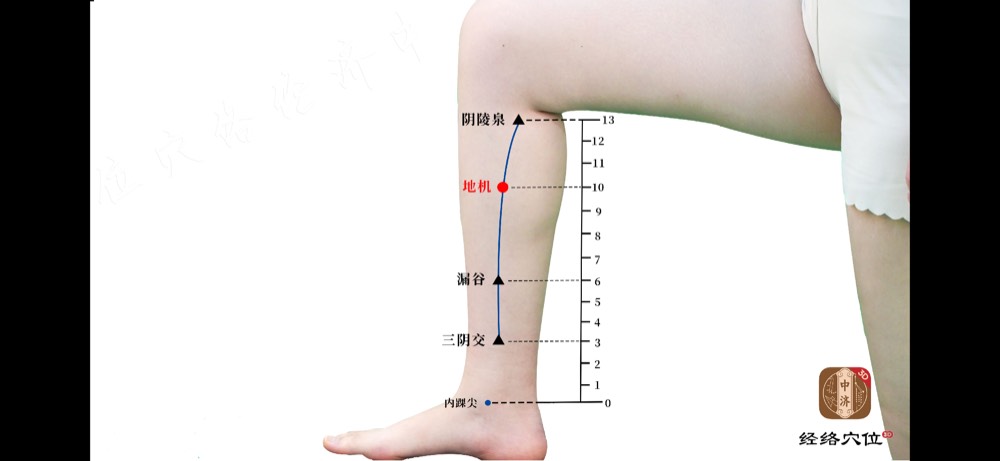
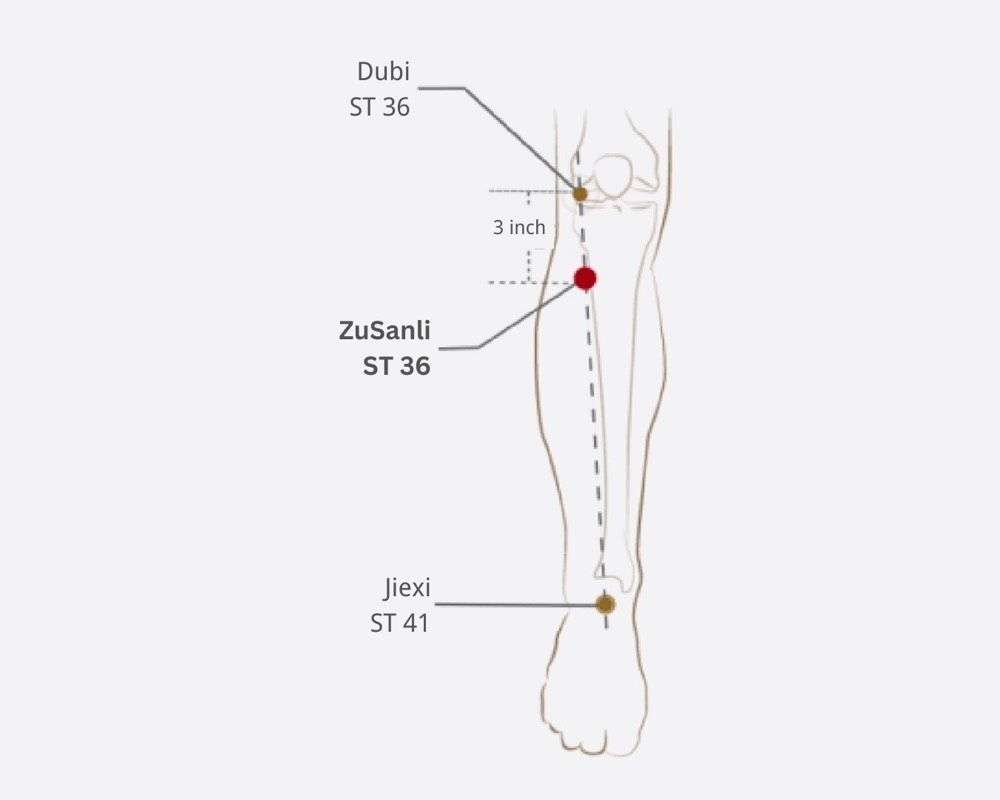
The points support the flame rather than suppress the appetite. Zusanli ST-36 ("Leg Three Li") sits a hand-width below the kneecap and a thumb-width outside the shinbone. Yinlingquan SP-9 ("Yin Mound Spring") sits in the hollow below the inner knee. Zhongwan CV-12 ("Middle Cavity") sits midway between the navel and the base of the breastbone.
What’s Real, What’s Myth
Myth: it is a willpower problem. It arrives at the same hour, it tracks with humidity and with what you ate two days ago, and it happens to people who are disciplined in every other part of their lives. Framing it as character is inaccurate, and in my experience it makes the loop tighter rather than looser.
Myth: the answer is to cut all sugar and hold on. Abrupt total restriction produces a difficult fortnight and, for many people, a rebound. Reducing steadily while making the breakfast warm and the lunch adequate takes the pressure off the loop instead of fighting it.
Myth: eat more protein and it will disappear. Protein helps some people considerably. In this framework, if the underlying picture is heavy and damp, a large rich protein-heavy meal can add to the heaviness. Warm, cooked and moderate suits this pattern better than large and rich in either direction.
Myth: artificial sweeteners solve it. They remove the sugar and keep the taste, and the pull toward sweetness is usually unchanged. Some people find them useful as a transition; few find the craving itself goes away.
Real: the breakfast decides the afternoon. Of everything here, a warm cooked breakfast is the change that most reliably softens the four o’clock pull — and it acts on the previous variable rather than on the moment of craving.
Six Things You Can Do This Week
1. Make breakfast warm and cooked, for two weeks. Porridge, congee, eggs, soup. Not less food — different food. This is the highest-yield item and it works on the morning rather than on four o’clock.
2. Make lunch adequate and warm. Under-eating at lunch is one of the most common reasons the afternoon falls apart, and eating a proper cooked lunch away from your desk changes the shape of the whole afternoon.
3. Walk for ten to twenty minutes after lunch. Movement after eating keeps the process moving in this framework, and it lands directly on the hour the craving would otherwise arrive.
4. Have something warm at half past three, before the pull starts. Chenpi (陈皮, aged tangerine peel) tea, or warm water with ginger. Meeting the hour before it arrives works considerably better than resisting it once it has.
5. Reduce the source steadily rather than all at once. Fewer sweet drinks first, then fewer fried and rich foods, over three or four weeks. Cutting the source is the classical first step for a damp picture, and gradual is what people actually sustain.
6. Press Zusanli ST-36 ("Leg Three Li") and Yinlingquan SP-9 ("Yin Mound Spring") for a minute each side in the afternoon, and warm Zhongwan CV-12 ("Middle Cavity") with a palm for five minutes when the middle feels heavy.
When to See a Doctor
This section matters more than usual. If you have a history of disordered eating, if food takes up a large part of your thinking, if you find yourself eating in a way that feels out of your control, or if reading about food rules brings up distress, please speak with your GP or a psychologist before making changes. That is the right first step, not a lesser one, and self-directed restriction is the specific thing to avoid.
See your GP for cravings alongside excessive thirst, frequent urination, unintended weight change, or blurred vision, and ask about blood sugar. Persistent fatigue with cravings is also worth basic blood work — thyroid function, iron and ferritin, B12.
Book an appointment for shakiness, sweating or confusion that is relieved by eating, particularly if it happens between meals or wakes you at night. That pattern needs proper assessment rather than a dietary experiment.
And if low mood, anxiety or a difficult stretch is driving the reaching for sweetness — which is common and entirely human — that is worth raising with your GP too. Addressing it there tends to do more than any change to the biscuit tin.
Which Constitution This Usually Points To
A pull toward sweetness with heaviness, a thick greasy tongue coating, foggy mornings, a soft distended middle and everything worse in humid weather points toward a phlegm-damp constitution (痰湿质). For this pattern the order is fixed: cut the source gradually first, then support the digestion — and the warm breakfast is where it starts.
If the craving comes with genuine flat exhaustion, a soft voice, breathlessness on stairs and tiredness after eating, a qi-deficient constitution (气虚质) is underneath. There the answer is more support rather than less food — adequate warm meals, earlier nights, and gentler exercise.
If it tracks with stress rather than with the hour, arriving in difficult weeks and absent on holiday, qi stagnation (气郁质) is leading, and brisk walking before the afternoon does more than any food change.
The quick assessment on this site walks you through 29 gentle questions in about three minutes and gives you a daily plan matched to your type, including what a suitable breakfast and lunch actually look like for you.
Keep Reading
How to Clear Dampness
The TCM view on heaviness, bloating, and that waterlogged feeling.
Read →What Does My Tongue Say?
Reading coating, colour, teeth marks and shape the TCM way.
Read →Morning Fog and Heaviness
Why you wake up unrefreshed after eight hours — and the pattern Chinese medicine calls dampness.
Read →Tap the Side of Your Body
A five-minute morning routine along the outer thigh for the days you wake up heavy and slow.
Read →Aged Tangerine Peel
The most used ingredient in Chinese home cooking, and the least known outside it.
Read →The Spring Reset Myth
Why a juice week leaves so many people colder and flatter — and what the classics said instead.
Read →Find Your Constitution
29 gentle questions, about three minutes, and you have your TCM body type — so this guidance actually fits you.
Take the quick quiz →Related
Learn about the Phlegm-Dampness constitution →Frequently Asked Questions
How do I tell this from real hunger?
Real hunger settles with a proper meal and is fairly unfussy about what that meal is. This is specific to sweetness, does not settle with a savoury meal, and returns within half an hour of a small sweet thing. It also arrives at a consistent hour rather than tracking how long since you ate.
Do I have to cut sugar completely?
No, and abrupt total restriction is the approach most likely to rebound. Reduce the sweet drinks first, keep breakfast warm and lunch adequate, and let the pull soften over three or four weeks. Nothing here requires you to go hungry.
Why is it worse in humid weather?
Because dampness in this framework is worsened by external humidity, and the craving tracks the state of the digestion rather than the clock. Most people with this pattern notice their worst weeks are muggy ones, which is a useful confirmation that you are reading it correctly.
How long before the craving eases?
Most people notice the pull is softer in the second week, mainly from the warm breakfast and an adequate lunch. The underlying heaviness and tongue coating take six to eight weeks. If nothing shifts at all, have your GP check blood sugar, thyroid function and iron.
Last updated: 2026-07-13
This page offers general TCM educational perspectives, not medical advice or a diagnosis. For any health concern, please consult a licensed healthcare professional.